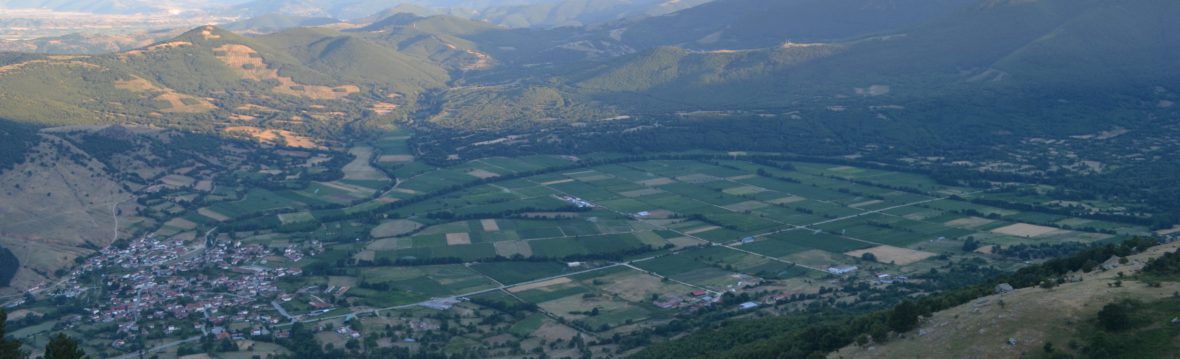

The dialectal vocabulary of Western Macedonia—especially the villages of Florina (Lerin), Prespa, Kastoria (Kostur), and Zelenich (Sklithro)—preserves an extraordinary record of linguistic continuity and cultural endurance. Words such as појата (outdoor pen), бразда (furrow), огниште (hearth), and гора (forest) are more than relics of speech; they are living layers of identity carried orally through centuries of change.
This vernacular inheritance aligns with Mario Alinei’s Continuity Paradigm (La teoria della continuità, 1996, 2000), which proposes that European languages developed in situ, reflecting long-term regional stability rather than abrupt ethnic replacement. Within this paradigm, the Macedonian dialects of the Florina–Prespa–Zelenich region—rich in Proto-Slavic and even pre-Slavic survivals—represent tangible evidence of deep linguistic rootedness in the same ecological and cultural landscape.
This view is further reinforced by Florin Curta’s groundbreaking research in The Making of the Slavs (2001), where he argues that the traditional model of a mass Slavic migration into the Balkans is more a Byzantine ideological invention than historical fact. Curta challenges the notion of a clearly defined Slavic ethnos arriving from the north, suggesting instead that “Slavs” emerged as a discursive and political category imposed by imperial powers. The archaeological and linguistic continuity seen across the Balkans, including Macedonia, is better understood as localized development, not abrupt demographic replacement. In this light, the persistence of Slavic-rooted vocabulary in Zelenich and surrounding areas speaks not to migration but to cultural and linguistic endurance within a stable population long rooted in the region.
This continuity is not abstract but is embodied in the Zelenichki Lafovi—the recorded words, expressions, and idioms of the village of Zelenich (Sklithro). Each “laf” connects scholarly theory with living memory, testifying to how language, land, and identity endure through everyday speech. Each entry—whether купанка, појата, пондила, мутлук, or буниште—is a word carved from time itself, linking the ancient tongue of the land to voices that still echo across Western Macedonia.
This glossary, originally compiled by Peter Ghiza under the title “Zelenichki Lafovi,” records the words and expressions traditionally spoken by the Macedonian community of Sklíthro (Zelenich) in the Florina/Lerin region. More than a simple collection of vocabulary, it represents a living record of local speech shaped over centuries through daily use, oral tradition, and cultural exchange. The glossary captures the richness of the Macedonian language as spoken in Zelenich, with its foundation in Slavic roots, its absorption of borrowings from neighbouring languages such as Ottoman/Turkish and Greek, and its preservation of dialectal forms unique to the region.
By gathering and safeguarding these words, the glossary plays a vital role in preserving a linguistic heritage that might otherwise be lost through assimilation and generational change. It provides future researchers, community members, and descendants of Zelenich with a direct link to the spoken language of their ancestors, serving both as a linguistic resource and as a cultural testament. In this way, the glossary does not merely list words; it affirms identity, continuity, and the enduring presence of the Macedonian language in Sklíthro-Zelenich.
Appendix: Zelenichki Lafovi (Macedonian Glossary A–Z by Peter Ghiza)
Below follows the Zelenichki Lafovi—a curated collection of dialect words, glosses, and cultural notes from Zelenich (Sklithro). Each entry is prefaced by the dialect word and accompanied by its meaning, etymology, and local significance.
| Macedonian (Cyrillic) | Latin Transliteration | English Gloss | Notes |
| Абре | Abre | Hey! (interjection) | Common Balkan interjection |
| Адвокат | Advokat | Lawyer | From Latin via Ottoman (⁴ Latin/International) |
| Аеродром | Aerodrom | Airport | Loan from Greek/French (³ Greek loan) |
| Ајде | Ajde | Come on / Let’s go | Widespread in Balkans |
| Ако | Ako | If | Slavic root (¹ Slavic root) |
| Април | April | April | Loan from Latin (⁴ Latin/International) |
| Арапин | Arapin | Arab (sometimes Negro) | Now pejorative |
| Арменија | Armenija | Armenia | Place name |
| Арно | Arno | Good / Fine | Dialectal form |
| Архитект | Arhitekt | Architect | Internationalism (⁴ Latin/International) |
| Баба | Baba | Grandmother / Old woman | Slavic root (¹ Slavic root) |
| Баклава | Baklava | Baklava (dessert) | Turkish loan (² Turkish/Ottoman loan) |
| Балкан | Balkan | Balkan | Geographic |
| Балкон | Balkon | Balcony | Loan from Italian/French |
| Балтија | Baltija | Axe | Turkish loan (² Turkish/Ottoman loan) |
| Банана | Banana | Banana | Loanword |
| Бања | Banja | Bath | Slavic root (¹ Slavic root) |
| Бел/o | Bel/o | White | Slavic root (¹ Slavic root) |
| Биолица | Violitsa | Buffalo | Slavic root (¹ Slavic root) |
| Бисер | Biser | Pearl | Slavic root (¹ Slavic root) |
| Бише/Бишка | Biše/Biška | Colloquial “pig-like” person | Metaphorical / dialect |
| Боб | Bob | Beans — older/dialectal word | Slavic root (¹ Slavic root) |
| Боп | Bop | ||
| Божиќ | Božik | Christmas | Christian holiday |
| Борба | Borba | Fight / Struggle | Slavic root (¹ Slavic root) |
| Бразда | Brazda/Brazdi | Irrigation furrow/s | Slavic root (¹ Slavic root) |
| Брат | Brat | Brother | Slavic root (¹ Slavic root) |
| Брзо | Brzo | Quickly | Slavic root (¹ Slavic root) |
| Будала | Budala | Fool, idiot | Turkish loan (² Turkish/Ottoman loan) |
| Буниште | Bunište | Dump, refuse pile, garbage heap, or place where waste is thrown. | Slavic root (¹ Slavic root) |
| Бултија | Bultija | Axe or hatchet | Turkish loan (² Turkish/Ottoman loan) or Slavic roots |
| Bетар | Vetar | Wind | Slavic root (¹ Slavic root) |
| Вилушка | Viluška | Fork | Slavic root (¹ Slavic root) |
| Вино | Vino | Wine | Slavic root (¹ Slavic root) |
| Bода | Voda | Watre | Slavic root (¹ Slavic root) |
| Волк | Volk | Wolf | Slavic root (¹ Slavic root) |
| Волo | Volo | Ox | Slavic root (¹ Slavic root) |
| Вошки | Voshki | Llice (singular: вошка / voshka) | Slavic root (¹ Slavic root) |
| Врата | Vrata | Door | Slavic root (¹ Slavic root) |
| Време | Vreme | Time / Weather | Slavic root (¹ Slavic root) |
| Глава | Glava | Head | Slavic root (¹ Slavic root) |
| Гној | Gnoj | Manure / dung / fertilizer | Slavic root (¹ Slavic root) |
| Градина | Gradina | Garden | Slavic root (¹ Slavic root) |
| Гредa | Greda | Beam or rafter | Slavic root (¹ Slavic root) |
| Гредa | Greda | Walk/come (to go, to move toward) | Slavic root (¹ Slavic root) |
| Гредe | Grede | Coming/“beams” (plural of greda) | Slavic root (¹ Slavic root) |
| Гробишта | Grobišta | Cemetery | Slavic root (¹ Slavic root) |
| Грозје | Grozje | Grapes | Slavic root (¹ Slavic root) |
| Грозен | Grozen | Ugly | Slavic root (¹ Slavic root) |
| Грција | Grcija | Greece | Place name |
| Говедар | Govedar | Herder (Cattle) | Slavic root (¹ Slavic root) |
| Горна | Gorna | Upper | Slavic root (¹ Slavic root) |
| Господ | Gospod | Lord | Slavic root (¹ Slavic root) |
| Гостин | Gostin | Guest | Slavic root (¹ Slavic root) |
| Гуска (pl. гуски) | Guška/guški | Goose / geese | Slavic root (¹ Slavic root) |
| Гуша | Guša | Throat | Slavic root (¹ Slavic root) |
| Гуши | Gushi | Hug/cuddle | Slavic root (¹ Slavic root) |
| Да | Da | Yes | Slavic root (¹ Slavic root) |
| Дава | Dava | Gives | Slavic root (¹ Slavic root) |
| Далеку | Daleku | Far | Slavic root (¹ Slavic root) |
| Дама | Dama | Lady | Loan from French |
| Дар | Dar | Gift | Slavic root (¹ Slavic root) |
| Двор | Dvor | Yard | Slavic root (¹ Slavic root) |
| Дете | Dete | Child | Slavic root (¹ Slavic root) |
| Девет | Devet | Nine | Slavic root (¹ Slavic root) |
| Ден | Den | Day | Slavic root (¹ Slavic root) |
| Денес | Denes | Today | Slavic root (¹ Slavic root) |
| Добро | Dobro | Good | Slavic root (¹ Slavic root) |
| Добредојде | Dobredojde | Welcome | Slavic root (¹ Slavic root) |
| Дож | Dosh | Rain | Slavic root (¹ Slavic root) |
| Дојде | Doide | “Arrived” or “came” | Slavic root (¹ Slavic root) |
| Долина/Дол | Dolina/Dol | Valley | Slavic root (¹ Slavic root) |
| Долна | Dolna | Lower | Slavic root (¹ Slavic root) |
| Дрво | Drvo | Wood | Slavic root (¹ Slavic root) |
| Дурпе (ме дурпе) | Drpe | “it prickles / it tingles / it irritates my skin” | Slavic root (¹ Slavic root) |
| Дуре (ме дуре) | Dupe (me dupe) | “my butt itches” | Slavic root (¹ Slavic root) |
| Душа | Dusha | Soul | Slavic root (¹ Slavic root) |
| Еден | Eden | One (masc.) | Slavic root (¹ Slavic root) |
| Една | Edna | One (fem.) | Slavic root (¹ Slavic root) |
| Европа | Evropa | Europe | Loan from Greek/Latin (³ Greek loan) (⁴ Latin/International) |
| Ефтин | Eftin | Cheap | Turkish loan (² Turkish/Ottoman loan) |
| Eш | Esh | Porcupine | Slavic root (¹ Slavic root) |
| жулто | Zúlto / Žulto | Colour yellow | Slavic root (¹ Slavic root) |
| Забава | Zabava | Party / Entertainment | Slavic root (¹ Slavic root) |
| Заборави | Zaboravi | Forgot | Slavic root (¹ Slavic root) |
| земја | Zemja | earth/land | Slavic root (¹ Slavic root) |
| Запад | Zapad | West | Slavic root (¹ Slavic root) |
| Засек | Zasek | The closure of a brazda (irrigation furrow) | Slavic root (¹ Slavic root) |
| Зелник | Zelnik | A staked filo pie of greens | Slavic root (¹ Slavic root) |
| Збор | Zbor | Word / Speech | Slavic root (¹ Slavic root) |
| Зима | Zima | Winter | Slavic root (¹ Slavic root) |
| Здравје | Zdravje | Health | Slavic root (¹ Slavic root) |
| Злато | Zlato | Gold | Slavic root (¹ Slavic root) |
| Знае | Znae | Knows | Slavic root (¹ Slavic root) |
| Змија | Zmija | Snake | Slavic root (¹ Slavic root) |
| Зрно | Zrno | Grain / seed / kernel / bead / small particle | Slavic root (¹ Slavic root) |
| Јаболко | Jabolko | Apple | Slavic root (¹ Slavic root) |
| Јаде | Jade | Eats | Slavic root (¹ Slavic root) |
| Јадење | Jadenje | Food / Meal | Slavic root (¹ Slavic root) |
| Јагне | Jagne | Lamb | Slavic root (¹ Slavic root) |
| Јазик | Jazik | Language / Tongue | Slavic root (¹ Slavic root) |
| Јануари | Januari | January | Loan from Latin (⁴ Latin/International) |
| Каде | Kade | Where | Slavic root (¹ Slavic root) |
| Кафе | Kafe | Coffee | Turkish/Arabic loan (² Turkish/Ottoman loan) |
| Камен | Kamen | Stone/rock | Slavic root (¹ Slavic root) |
| Капа | Kapa | Hat / Cap | Slavic root (¹ Slavic root) |
| Катастрофа | Katastrofa | Catastrophe | Loan from Greek (³ Greek loan) |
| Kajmak | Kajmak | A thick, creamy layer of milk fat | Turkish/Arabic loan (² Turkish/Ottoman loan) |
| Kиjani | Kijani | Refers to people (usually women) who spun wool into thread | Slavic root (¹ Slavic root) |
| Kладурма | Kladurma | A rough stone-paved surface | Slavic root (¹ Slavic root) |
| Колива | Koliva | Hut, small house | Slavic root (¹ Slavic root) |
| Коза | Koza | Goat | Slavic root (¹ Slavic root) |
| Козар | Kozar | Goat herder | Slavic root (¹ Slavic root) |
| Kопам | Kopam | Dig | Slavic root (¹ Slavic root) |
| Kопан | Kopan | Chicken leg or drumstick | Slavic root (¹ Slavic root) |
| Kопан | Kopan | A larger, heavier digging hoe/ Wooden Laundry Beater | Slavic root (¹ Slavic root) |
| Копачка | Kopachka | Digging tool, e.g., a hoe or spade | Slavic root (¹ Slavic root) |
| Kошара | Koshara | Sheepfold, pen | Slavic root (¹ Slavic root) |
| Крава | Krava | Cow | Slavic root (¹ Slavic root) |
| Кревет | Krevet | Bed | Slavic root (¹ Slavic root) |
| Kрив | Kriv | Crooked/bent/guilty | Slavic root (¹ Slavic root) |
| Kрило | Kriljo | Wing (of a bird, insect, angel, etc.) | Slavic root (¹ Slavic root) |
| Крв | Krv | Blood | Slavic root (¹ Slavic root) |
| Кромид | Kromid | Onion | Slavic root (¹ Slavic root) |
| Круша | Kruša | Pear | Slavic root (¹ Slavic root) |
| Kуќа | Kuḱa | House | Slavic root (¹ Slavic root) |
| Кумур | Kumur | Coal | Turkish loan (² Turkish/Ottoman loan) |
| Kупанка | Kupanka | Trough or basin for washing or bathing | Slavic root (¹ Slavic root) |
| Kурца | Kurtsa | Crunching or cracking sound | Slavic root (¹ Slavic root) |
| Ладен | Laden | Cold | Slavic root (¹ Slavic root) |
| Лаеж | Laež | Barks | Slavic root (¹ Slavic root) |
| Лакот | Lakot | Elbow | Slavic root (¹ Slavic root) |
| Лампа | Lampa | Lamp | Loan from Greek/Latin (³ Greek loan) (⁴ Latin/International) |
| Лажица | Lažica | Spoon | Slavic root (¹ Slavic root) |
| Лекар | Lekar | Doctor | Slavic root (¹ Slavic root) |
| Лето | Leto | Summer | Slavic root (¹ Slavic root) |
| Лешник | Leshnik | Hazelnut | Slavic root (¹ Slavic root) |
| Ливада | Levada | Meadow/grassy fielf | Slavic root (¹ Slavic root) |
| Лопатка | Lopatкa | Shovel | Slavic root (¹ Slavic root) |
| Лупи | Lupi | Peel | Slavic root (¹ Slavic root) |
| Магаре | Magare | Donkey | Slavic root (¹ Slavic root) |
| Мазник | Maznik | A filo pie coiled into a spiral | Slavic root (¹ Slavic root) |
| Мајка | Majka | Mother | Slavic root (¹ Slavic root) |
| Мајмун | Majmun | Monkey | Turkish loan (² Turkish/Ottoman loan) |
| Македонија | Makedonija | Macedonia | Place name |
| Македонски | Makedonski | Macedonian | Ethnonym/adjective |
| Мал | Mal | Little / Small | Slavic root (¹ Slavic root) |
| Мала | Mala | Neighbourhood | Slavic root (¹ Slavic root) |
| Машина | Mašina | Machine | Internationalism (⁴ Latin/International) |
| Мезда | Mezda | A ditch, small trench, or depression marking the border between two fields or gardens | Slavic root (¹ Slavic root) |
| Мирно | Mirno | Peaceful | Slavic root (¹ Slavic root) |
| Млеко | Mleko | Milk | Slavic root (¹ Slavic root) |
| Млад | Mlad | Young | Slavic root (¹ Slavic root) |
| Мотика | Motika | Hoe | Slavic root (¹ Slavic root) |
| Mрда, мрчи | Mrda/Mrdi | Move | Slavic root (¹ Slavic root) |
| Мртoв | Mrtov | Dead | Slavic root (¹ Slavic root) |
| мутлук | Mutluk | A cool, dark, semi-underground room or cellar | Slavic root (¹ Slavic root) |
| Музика | Muzika | Music | Internationalism (⁴ Latin/International) |
| Mурка | Murka | Grunting, meowing, or purring sounds | Slavic root (¹ Slavic root) |
| Над | Nad | Above / Over | Slavic root (¹ Slavic root) |
| Надвор | Nadvor | Outside | Slavic root (¹ Slavic root) |
| Надолу | Nadolu | Downwards | Slavic root (¹ Slavic root) |
| Надеж | Nadež | Hope | Slavic root (¹ Slavic root) |
| Нагоре | Nagore | Upwards | Slavic root (¹ Slavic root) |
| Нозе | Noze | Legs / Feet | Slavic root (¹ Slavic root) |
| Нос | Nos | Nose | Slavic root (¹ Slavic root) |
| Ноќ | Noḱ | Night | Slavic root (¹ Slavic root) |
| Нива | Niva | Cultivated field | Slavic root (¹ Slavic root) |
| Ништо | Ništo | Nothing | Slavic root (¹ Slavic root) |
| Никој | Nikoj | Nobody | Slavic root (¹ Slavic root) |
| Облак | Oblak | Cloud | Slavic root (¹ Slavic root) |
| Огледало | Ogledalo | Mirror | Slavic root (¹ Slavic root) |
| Огниште | Ognishte | Hearth | Slavic root (¹ Slavic root) |
| Оган | Ogan | Fire | Slavic root (¹ Slavic root) |
| Овца | Ovca | Sheep | Slavic root (¹ Slavic root) |
| Овцаp | Ovchar | Sheppard | Slavic root (¹ Slavic root) |
| Офицер | Oficer | Officer | Loan from French |
| Oрало | Opalo | Plow | Slavic root (¹ Slavic root) |
| Орање | Oraŋje | Plowing | Slavic root (¹ Slavic root) |
| Орел | Orel | Eagle | Slavic root (¹ Slavic root) |
| Орман | Opman | Forest, thick bush | Slavic root (¹ Slavic root) |
| Опашка | Оpashka | Tail | Slavic root (¹ Slavic root) |
| Отвори | Otvor(i) | Open | Slavic root (¹ Slavic root) |
| Пазар | Pazar | Market | Turkish loan (² Turkish/Ottoman loan) |
| Пасиште | Pashiste | Pasture | Slavic root (¹ Slavic root) |
| Пасе | Pace | To graze | Slavic root (¹ Slavic root) |
| Пари | Pari | Money | Slavic root (¹ Slavic root) |
| Пат | Pat | Road / Path | Slavic root (¹ Slavic root) |
| Перe | Pere | Feather | Slavic root (¹ Slavic root) |
| Пет | Pet | Five | Slavic root (¹ Slavic root) |
| Пинџера | Pingera | Window | Slavic root (¹ Slavic root) |
| Писмо | Pismo | Letter | Slavic root (¹ Slavic root) |
| Пита | Pita | Pie | Turkish loan (² Turkish/Ottoman loan) |
| Планина | Planina | Mountain | Slavic root (¹ Slavic root) |
| Плеват ќуќија | Plevat ќuikja | Plunder the house | Slavic root (¹ Slavic root) |
| Плечка | Plechka | Shoulder | Slavic root (¹ Slavic root) |
| Поканици / пуканци | Pookanitsi / pukantsi | To pop, to burst (eg: popcorn) | Slavic root (¹ Slavic root) |
| Покривка | Pokrivka | Anything laid over / cover | Slavic root (¹ Slavic root) |
| Почта | Pošta | Post / Mail | Slavic root (¹ Slavic root) |
| Појас | Pojas | Belt or Sash | Slavic root (¹ Slavic root) |
| Појата | Poyata | Shed, pen, or enclosure | Slavic root (¹ Slavic root) |
| Поле/Полја | pole/polja | Field/Fields | Slavic root (¹ Slavic root) |
| Помош | Pomoš | Help | Slavic root (¹ Slavic root) |
| Понеделник | Ponedelnik | Monday | Slavic root (¹ Slavic root) |
| Пондила | Pondila | Stable / Animal Shelter | Slavic root (¹ Slavic root) |
| Пролет | Prolet | Spring (season) | Slavic root (¹ Slavic root) |
| Работа | Rabota | Work | Slavic root (¹ Slavic root) |
| Работник | Rabotnik | Worker | Slavic root (¹ Slavic root) |
| Радост | Radost | Joy | Slavic root (¹ Slavic root) |
| Рака | Raka | Hand | Slavic root (¹ Slavic root) |
| Рамо | Ramo | Shoulder | Slavic root (¹ Slavic root) |
| Река | Reka | River | Slavic root (¹ Slavic root) |
| Родно | Rodno | Native | Slavic root (¹ Slavic root) |
| Рог | Rog | Horn | Slavic root (¹ Slavic root) |
| Pони | Roni | Crumble / break into bits | Slavic root (¹ Slavic root) |
| Pошки | Roshki | Small twigs or dry branches gathered for kindling or lighting a fire | Slavic root (¹ Slavic root) |
| Pуга | Ruga | Rye | Slavic root (¹ Slavic root) |
| Ругозина | Rugozina | A rug woven from reeds / bulrushes | Slavic root (¹ Slavic root) |
| Сабота | Sabota | Saturday | Church Slavonic |
| Сака | Saka | Wants | Slavic root (¹ Slavic root) |
| Сам | Sam | Alone | Slavic root (¹ Slavic root) |
| Село | Selo | Village | Slavic root (¹ Slavic root) |
| Семе | Seme | Seed | Slavic root (¹ Slavic root) |
| Сено | Seno | Hay | Slavic root (¹ Slavic root) |
| Cестра | Sestra | Sister | Slavic root (¹ Slavic root) |
| Свети Петар | Sveti Petar | Saint Peter | Christian |
| Cвиња | Svinja | Pig | Slavic root (¹ Slavic root) |
| Сирење | Sirenje | Cheese | Slavic root (¹ Slavic root) |
| Сиромав | Siromav | Poor | Slavic root (¹ Slavic root) |
| Cладко | Slatko | Sweet preserve | Slavic root (¹ Slavic root) |
| Cливи | Slivi | Plums | Slavic root (¹ Slavic root) |
| Cмрди | Smurdi | Stink | Slavic root (¹ Slavic root) |
| Cмурка | Smurka | Sniff | Slavic root (¹ Slavic root) |
| Сокак | Sokak | A small narrow street / lane / alley | Slavic root (¹ Slavic root) |
| Cнег | Sneg | Snow | Slavic root (¹ Slavic root) |
| Срце | Srce | Heart | Slavic root (¹ Slavic root) |
| Стол | Stol | Chair / Table | Slavic root (¹ Slavic root) |
| Стомак | Stomak | Stomach | Slavic root (¹ Slavic root) |
| Страв | Strav | Fear | Slavic root (¹ Slavic root) |
| Струже | Struzhe | Scrape | Slavic root (¹ Slavic root) |
| Cукало | Sukalo | Long rolling pin for making Zelnik | Slavic root (¹ Slavic root) |
| Татко | Tatko | Father | Slavic root (¹ Slavic root) |
| Теле | Tele | Calf (a young cow) | Slavic root (¹ Slavic root) |
| Телефон | Telefon | Telephone | Internationalism (⁴ Latin/International) |
| Телевизија | Televizija | Television | Internationalism (⁴ Latin/International) |
| Топол | Topol | Warm | Slavic root (¹ Slavic root) |
| Трговец | Trgovec | Merchant | Slavic root (¹ Slavic root) |
| Три | Tri | Three | Slavic root (¹ Slavic root) |
| Тројца | Trojca | Three (people) | Slavic root (¹ Slavic root) |
| Трпа (Ме трпа) | Trpa | “I’m itchy” or “it itches” | Slavic root (¹ Slavic root) |
| Тркало | Trkalo | Wheel | Slavic root (¹ Slavic root) |
| Трпение | Trpenie | Patience | Slavic root (¹ Slavic root) |
| Тумба | Tumba | Hill | Slavic root (¹ Slavic root) |
| Турција | Turcija | Turkey | Place name |
| Туршија | Turšija | Pickled food | Turkish loan (² Turkish/Ottoman loan) |
| Убав | Ubav | Beautiful | Slavic root (¹ Slavic root) |
| Убаво | Ubavo | Beautiful (adv.) | Slavic root (¹ Slavic root) |
| Училиште | Učilište | School | Slavic root (¹ Slavic root) |
| Ум | Um | Mind | Slavic root (¹ Slavic root) |
| Утро | Utro | Morning | Slavic root (¹ Slavic root) |
| Фабрика | Fabrika | Factory | Loan from Latin (⁴ Latin/International) |
| Фарма | Farma | Farm | Loan from Latin (⁴ Latin/International) |
| Фасул | Fasul | Beans | Turkish loan (² Turkish/Ottoman loan) |
| Февруари | Februari | February | Loan from Latin (⁴ Latin/International) |
| Фторник | Ftornik | Tuesday | Church Slavonic |
| Хаир | Hair | Blessing, good fortune | Turkish loan (² Turkish/Ottoman loan) |
| Хартија | Hartija | Paper | Greek loan (³ Greek loan) |
| Хартија Мапа | Hartija Mapa | Map | Greek loan (³ Greek loan) |
| Цар | Tsar | King | Slavic root (¹ Slavic root) |
| Царица | Tsaritsa | Queen | Slavic root (¹ Slavic root) |
| Цест | Chest | Honour | Slavic root (¹ Slavic root) |
| Цастиме | Chestime | “To give in honor of” or “to treat others.” | Slavic root (¹ Slavic root) |
| Црква | Crkva | Church | Slavic root (¹ Slavic root) |
| Црно | Crno | Black | Slavic root (¹ Slavic root) |
| Чај | Čaj | Tea | Turkish loan (² Turkish/Ottoman loan) |
| Чевли | Čevli | Shoes | Slavic root (¹ Slavic root) |
| Чешма | Česhma | Faucet / Spring | Turkish loan (² Turkish/Ottoman loan) |
| Чисто | Čisto | Pure / Clean | Slavic root (¹ Slavic root) |
| Чорап | Čorap | Sock | Turkish loan (² Turkish/Ottoman loan) |
| Џамбас | Džambas/Jambas | Wheeler-dealer / middleman | Turkish loan (² Turkish/Ottoman loan) |
| Шадрван | Shadravan | a fountain | Turkish loan (² Turkish/Ottoman loan) |
Nineteenth-Century Macedonian Print Culture: Pejčinović and Pulevski
The foundations of Macedonian national identity can also be traced to early printed works of the 19th century. Kiril Pejčinović’s *Comfort to Sinners* (1840), published in Salonika, was written deliberately in the local Macedonian vernacular rather than in the archaic Church Slavonic style, affirming the legitimacy of spoken Macedonian as a literary medium (Halcyon, 2001). Later, Gjorgji Pulevski’s *Three-Language Dictionary* (1875) not only provided Macedonian alongside Albanian and Turkish but also explicitly defined the Macedonians as a “nation” with their own language, customs, and fatherland (Halcyon, 2001).
These works demonstrate that long before the testimonies of Delta, Dragoumis, or Myrivilis, Macedonian intellectuals themselves articulated a vision of Macedonian distinctiveness, rejecting assimilation into Bulgarian or Serbian identities. When placed alongside the Zelenichki Lafovi glossary and modern human rights reports, they establish a historical continuum: Macedonian identity was spoken, printed, and defended from the 19th century to the present.
Macedonian Identity in Early 20th-Century Greek Testimonies: Dragoumis, Delta, and Myrivilis
The early 20th century was a period of violent contestation in Macedonia, with Greek, Bulgarian, and Serbian national projects all attempting to assimilate the region’s diverse population. Despite these pressures, certain Greek intellectuals and writers inadvertently preserved vital evidence of a distinct Macedonian identity. This paper highlights three such testimonies:
1. Ion Dragoumis (1878–1920), Greek diplomat and nationalist thinker, who in consular reports referred to the local Slavic speech as the Macedonian dialect.
2. Penelope Delta (1874–1941), novelist, whose work Στα μυστικά του βάλτου (In the Secrets of the Swamp, 1937) described both a Macedonian language and Macedonian consciousness.
3. Stratis Myrivilis (1890–1969), war writer, whose first edition of Ζωή εν τάφω (Life in the Tomb, 1924) included the villagers’ self-declaration: “Only Macedonian Orthodox.”
Together, these three testimonies from within Greek literature and diplomacy challenge homogenizing narratives and underscore the persistence of Macedonian distinctiveness.
Ion Dragoumis: Diplomatic Recognition of the Macedonian Language
During his service as Greek vice-consul in Bitola (Monastir), 1902–1904, Ion Dragoumis described the local Slavic-speaking population’s tongue as the μακεδονική διάλεκτος (Macedonian dialect). He resisted the prevailing categorization of these villagers as simply Bulgarians or Serbs, noting that the correct designation of their everyday speech was Macedonian.
Even as a committed advocate of Hellenism, Dragoumis’ acknowledgment provided indirect validation that Macedonians possessed a distinct language and identity, separate from neighboring national projects.
Penelope Delta: Macedonian Language and Consciousness in Fiction
In Στα μυστικά του βάλτου (In the Secrets of the Swamp), published in 1937, Penelope Delta narrates the complexities of Macedonia during the struggle of 1904–1908. She writes:
«Ήταν ένα κράμα όλων των βαλκανικών εθνικοτήτων τότε η Μακεδονία…
Η γλώσσα τους ήταν η ίδια, μακεδονίτικη…
Εθνική συνείδηση είχαν τη μακεδονική μονάχα.»
Translation: “Macedonia at that time was a mixture of all Balkan nationalities… Their language was the same, Macedonian… Their only national consciousness was Macedonian.”
Although Delta’s novel was a patriotic Greek text, she nevertheless recognized the Macedonian language and national consciousness as real and distinct.
Stratis Myrivilis: “Only Macedonian Orthodox”
In the first edition (1924) of Ζωή εν τάφω (Life in the Tomb), based on his World War I trench experiences, Myrivilis recounts recuperating in the home of a Slav-speaking family living north of the Greek border. One member of the family, asked about their identity, declares:
«Μόναχα ‘Μακεντόν Ορτοντόξ».
(“Only Macedonian Orthodox.”)
This passage was published in the original serial and first book editions (1924, 1930, 1932), but later excised from post-war reprints due to political sensitivities (ergatiki.gr).
The phrase reflects a self-identification: not Bulgarian, Serbian, or Greek, but Macedonian Orthodox. Its later removal underscores the political pressure to erase such expressions.
Significance
These three testimonies reinforce one another:
• Dragoumis provides diplomatic acknowledgment of the Macedonian dialect.
• Delta confirms both the Macedonian language and Macedonian consciousness.
• Myrivilis records the villagers’ own words: “Only Macedonian Orthodox.”
Together, they provide cross-genre evidence—from diplomatic reports, nationalist fiction, and war memoir—that Macedonians were a recognized and self-identified community in the early 20th century.
This continuity demonstrates that Macedonian identity was not an invention of later decades but a lived reality, resisted against assimilation into Greek, Bulgarian, or Serbian national categories.
The testimonies of Dragoumis, Delta, and Myrivilis illustrate how even within Greek discourse, the existence of Macedonians as a distinct people with their own language and consciousness was acknowledged. While each author wrote within the frameworks of Greek nationalism, their words preserve invaluable evidence that Macedonian identity was both recognized and articulated long before contemporary disputes over recognition.
Linguistic Evidence: Zelenichki Lafovi (Sklíthro-Zelenich)
Alongside the testimonies of Dragoumis, Delta, and Myrivilis, the glossary *Zelenichki Lafovi*, compiled by Peter Ghiza, provides direct linguistic evidence of the Macedonian language as spoken in Sklíthro (Zelenich). This collection of words demonstrates the precise mixture that Penelope Delta described in 1937: a Macedonian language rooted in Slavic vocabulary, enriched with Greek ecclesiastical terms, and interwoven with Turkish borrowings from the Ottoman period.
For example, the glossary records words of Slavic origin such as *мајка* (majka, “mother”), *брат* (brat, “brother”), *срце* (srce, “heart”), Turkish/Ottoman loans like *чорап* (čorap, “sock”) and *баклава* (baklava), and Greek loans such as *хартија* (hartija, “paper”). These lexical layers confirm Delta’s observation that Macedonian was a language of cultural contact zones, yet maintained a distinct integrity.
Moreover, the very act of preserving and transmitting this glossary reflects the same Macedonian consciousness that Myrivilis recorded in 1924 when villagers declared themselves “Only Macedonian Orthodox.” The language embodied in these words is not merely a tool of communication but a marker of identity, passed from generation to generation even under pressures of assimilation.
European Commission Recognition of Macedonian in Northern Greece (1993)
In 1993, a European Commission–sponsored research project led by Riki Van Boeschoten investigated the use of minority languages in Northern Greece, with fieldwork concentrated in Florina and Aridea. The study confirmed that Macedonian was not only spoken in these regions but remained a central feature of local identity and daily life, particularly in rural communities (Van Boeschoten, 1993).
The report explicitly recognized Macedonian as a distinct South Slavic language, with three regional dialectal variations inside Greece: Western (Florina and Kastoria), Central (Edessa and Salonika), and Eastern (Serres and Drama) (Van Boeschoten, 1993, p. 16). This academic classification supports the earlier testimonies of Ion Dragoumis, Penelope Delta, and Stratis Myrivilis, each of whom described the language of Macedonia as Macedonian, rather than a derivative of Bulgarian or Serbian.
The report also detailed the history of state repression of the Macedonian language in Greece. Under the Metaxas dictatorship (1936–1941), the public and private use of Macedonian was banned, and following the Greek Civil War, villagers were subjected to “language oaths” and other coercive practices designed to eradicate its use (Van Boeschoten, 1993, pp. 21–23). Despite this, field researchers documented that Macedonian was still spoken widely in the home, transmitted between generations, and preserved in local folklore, music, and oral tradition. In villages such as Xino Nero and Meliti, it was even used in communication with local officials, demonstrating its vitality despite state pressure (Van Boeschoten, 1993, pp. 27–29).
The findings of this European Commission study resonate strongly with the *Zelenichki Lafovi* glossary from Sklíthro (Zelenich). Just as the glossary records the lived vocabulary of a Macedonian-speaking community, the 1993 report demonstrates that these linguistic patterns persisted across Northern Greece into the late 20th century. Together, the scholarly testimonies of Dragoumis, Delta, and Myrivilis, the Lafovi glossary, and the European Commission report provide a continuum of evidence: Macedonian was spoken, named, suppressed, and yet survived as a marker of identity and resilience within Greece.
Modern Human Rights Perspectives on Macedonian Identity
Contemporary human rights reviews have confirmed the long-standing suppression of Macedonian identity in Greece throughout the 20th century. The AMHR Review emphasized that the Greek state consistently denied the existence of a Macedonian minority while simultaneously pursuing assimilationist policies directed at erasing the Macedonian language and culture (AMHR Review, 1993).
The review also stressed the intimate connection between language and identity, noting that the restriction of Macedonian speech was central to broader attempts to eliminate Macedonian self-identification. This analysis complements the earlier testimonies of Dragoumis, Delta, and Myrivilis, each of whom described Macedonian as a distinct language spoken by a distinct people, as well as the Zelenichki Lafovi glossary, which provides living linguistic evidence of these traditions.
Importantly, the AMHR Review highlighted the role of the Macedonian diaspora in preserving language and cultural memory at a time when it was suppressed in Greece. Publications, cultural associations, and linguistic projects undertaken abroad became vital tools of survival. In this context, Peter Ghiza’s compilation of Zelenichki Lafovi can be understood as part of this wider effort of diaspora-driven preservation.
Together with the European Commission report of 1993, the human rights perspective demonstrates that Macedonian language and identity in Greece persisted under conditions of denial and repression. The survival of this heritage, both in local villages such as Sklíthro (Zelenich) and through diaspora initiatives, testifies to the resilience of Macedonian culture.
International Recognition of the Macedonian Language (1977 UN Conference)
The international community formally recognized the Macedonian language in the context of geographical naming practices. At the Third United Nations Conference on the Standardization of Geographical Names, held in Athens in 1977, Resolution 11 entitled “Serbo-Croatian and Macedonian Cyrillic alphabets of Yugoslavia” explicitly recommended the adoption of international systems for the romanization of both Serbo-Croatian and Macedonian geographical names (United Nations, 1977). The inclusion of Macedonian in this resolution affirmed its standing as a distinct language at an international level.
This recognition, adopted at a conference hosted by Greece itself, later formed the basis for Greece’s treaty-level acknowledgment in the Prespa Agreement of 2018. Article 1(3)(c) of the Agreement records: “The official language of the Second Party shall be the ‘Macedonian language’, as recognised by the Third UN Conference on the Standardization of Geographical Names, held in Athens in 1977.” This provision demonstrates that even amidst contested national narratives, Greece ultimately accepted the historical fact of the UN’s recognition of Macedonian as a distinct language.
Together with literary, linguistic, and human rights evidence, the UN and Prespa documentation situates Macedonian identity not only in regional testimony but also in the framework of international recognition.
The evidence assembled across literature, linguistics, human rights reviews, and international recognition demonstrates the persistence of Macedonian identity as both a lived and documented reality. From the 19th-century writings of Pejčinović and Pulevski, through the early 20th-century testimonies of Dragoumis, Delta, and Myrivilis, to the living vocabulary preserved in the Zelenichki Lafovi glossary, Macedonian distinctiveness emerges as a continuous thread that resisted assimilation into Greek, Bulgarian, or Serbian frameworks. Later confirmation by the European Commission (1993), human rights reviews, and the UN’s recognition of the Macedonian language in 1977—subsequently reaffirmed in the Prespa Agreement—places this heritage within a global context. Together, these sources affirm that Macedonian identity was neither an invention nor a retrospective construction, but a resilient reality expressed in speech, writing, and self-identification. Preserving and acknowledging this record is essential not only for understanding the past but also for safeguarding the cultural memory of Macedonians in Greece and beyond.
Special thanks are due to Peter Ghiza for originally compiling this glossary, whose dedication has safeguarded these expressions for future generations.
Etymology Notes:
¹ Slavic root — native Macedonian/Slavic origin
² Turkish/Ottoman loan — borrowed during Ottoman period
³ Greek loan — borrowed from Greek (often via Church or culture)
⁴ Latin/International — internationalisms of Latin/French/English origin
References
Alinei, M. (2009, November). The paleolithic continuity theory on Indo-European origins. Academia.edu – Find Research Papers, Topics, Researchers. https://www.academia.edu/11765622/The_Paleolithic_Continuity_Theory_on_Indo_European_Origins
AMHR Review. (1993). *Macedonian Human Rights Review, Vol. 6*. Toronto: Macedonian Human Rights Committee. https://www.pollitecon.com/Assets/Ebooks/MHR-Review-6.pdf
Anastasovski, N. (2005). *Contestations over Macedonian Identity, 1870–1912*. Doctoral thesis, Victoria University. https://vuir.vu.edu.au/423/3/Anastasovski,%20Nick%20PhD.pdf
Curta, F. (2001). The Making of the Slavs: History and Archaeology of the Lower Danube Region, c. 500–700. Cambridge University Press. https://catdir.loc.gov/catdir/samples/cam031/00052915.pdf?utm_source=chatgpt.com
Delta, P. (1937/2012). *Στα μυστικά του βάλτου* [In the Secrets of the Swamp]. Schooltime.gr PDF edition. https://www.schooltime.gr/wp-content/uploads/2012/07/Sta-mystika-toy-valtoy-www.schooltime.gr_.pdf
Dragoumis, I. (2020). *Ίων Δραγούμης: Στο Μεταίχμιο Ανατολής και Δύσης*. American School of Classical Studies at Athens. https://www.ascsa.edu.gr/uploads/media/Dragoumis_eBook.pdf
Dragoumis, M. (n.d.). Ion Dragoumis, the misguided patriot. Hellenic Communication Service: The Premier Website For Greeks and Greek-Americans. Retrieved April 8, 2025, from https://www.helleniccomserve.com/dragoumis.html
Ghiza, P. (2022, October 17). Zelenichki Lafovi: Glossary of Macedonian words from Sklíthro (Zelenich) [Unpublished manuscript]. Private collection.
Halcyon. (2001, June 27). Two Significant Macedonian Acquisitions. Thomas Fisher Rare Book Library. https://fisher.library.utoronto.ca/sites/default/public/halcyon_june_2001.pdf
Mackridge, P. (2009). Language and National Identity in Greece 1766–1976. smerdaleos | Σμερδαλέος = δεινός, απαίσιος, φοβερός, καταπληκτικός. https://smerdaleos.wordpress.com/wp-content/uploads/2014/06/93323765-mack-ridge-language-and-national-identirty.pdf
Myrivilis, S. (1924). *Η ζωή εν τάφω* [Life in the Tomb]. First edition, Athens. Evidence from original text cited in ergatiki.gr (2022).
Prespa Agreement. (2018). Final Agreement for the settlement of the differences as described in the United Nations Security Council resolutions 817 (1993) and 845 (1993), the termination of the Interim Accord of 1995, and the establishment of a strategic partnership between the Parties. https://treaties.un.org/doc/Publication/UNTS/No%20Volume/55707/Part/I-55707-0800000280544ac1.pdf
United Nations. (1977). Report of the Third United Nations Conference on the Standardization of Geographical Names, Athens, 17 August–7 September 1977. New York: United Nations. https://unstats.un.org/unsd/geoinfo/ungegn/docs/3rd-uncsgn-docs/e_conf_69_4_en.pdf
Van Boeschoten, R. (1993). *Minority Languages in Northern Greece: Study on behalf of the European Commission*. European Bureau for Lesser Used Languages / University of Thessaly. https://www.academia.edu/40399950/Minority_Languages_In_Northern_Greece_Report_to_the_European_Commission
 Sklithro-Zelenich-Sebalći