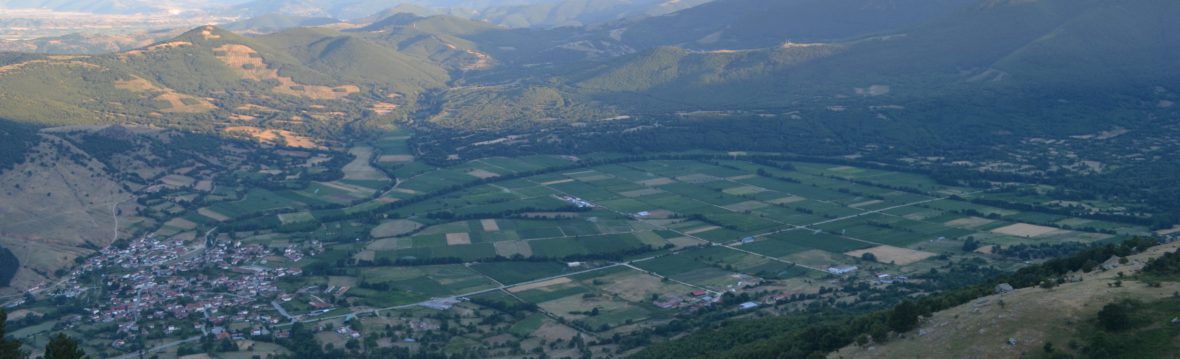

Ten boys from Sklithro
Were called by their homeland
To go and defend
The duty of the state.
One would be an infantryman,
Another a driver,
A third would become a cook,
And one a captain.
All of them kept wondering;
At night they could not sleep:
“But what do I know about driving?
I was born a farmer.”
They became close friends,
Together every evening —
One night they felt sorrow,
The next they dreamed.
“What are you afraid of, boys?”
One shouted out loud.
“We’ll be travelling for free,
At night we’ll be dancing!
We’ll see unknown places,
Ships and airplanes,
And every day we’ll have
A full mess tin of food.”
The boys took courage,
And before night fell
They linked arms with Tangos —
Dance, drink, and plenty of meze.
The next morning
It was a little cold.
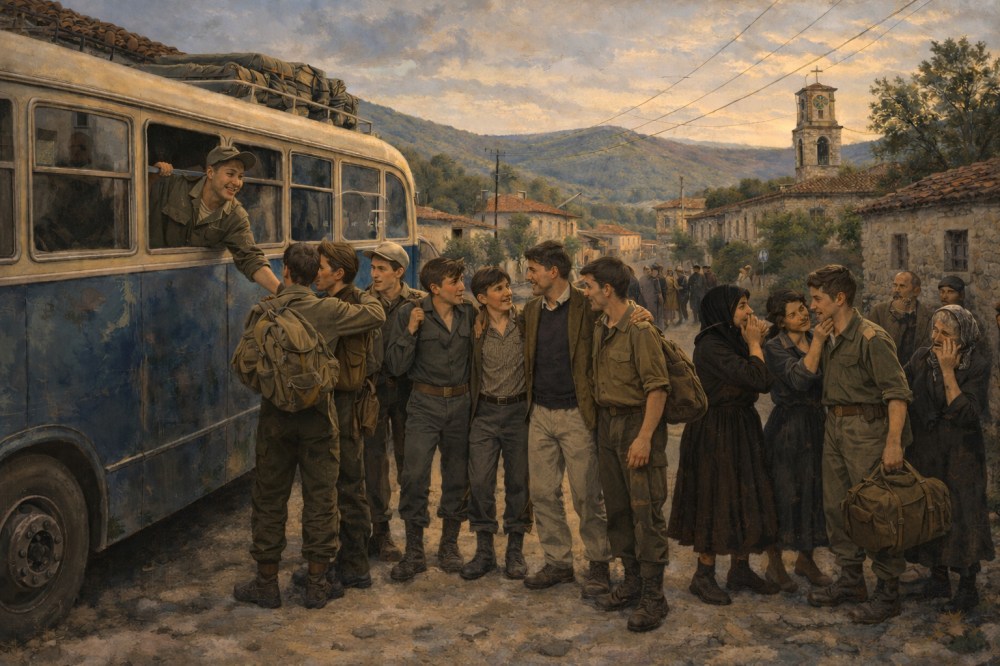
They gathered at the public square
Waiting for the bus.
They listened carefully
To what each mother said:
“Take care, my son,
Don’t lose your safety pin.”
Everyone shouted, “Goodbye, goodbye!”
“Suum na mama sev!”*
“Don’t stick your head
Out of the bus window!”
And one boy then shouted
From inside the bus:
“Motheeer — don’t forget,
The branva (packet) is in the shelf!”
And so they departed,
The ten young lads,
Leaving the village behind
To become soldiers.
* “Suum na mama sev” reflects a dialectal/Macedonian village farewell expression (roughly: “I love you, mother” / “May you be well, mother”), preserved here for cultural authenticity.
 Sklithro-Zelenich-Sebalći