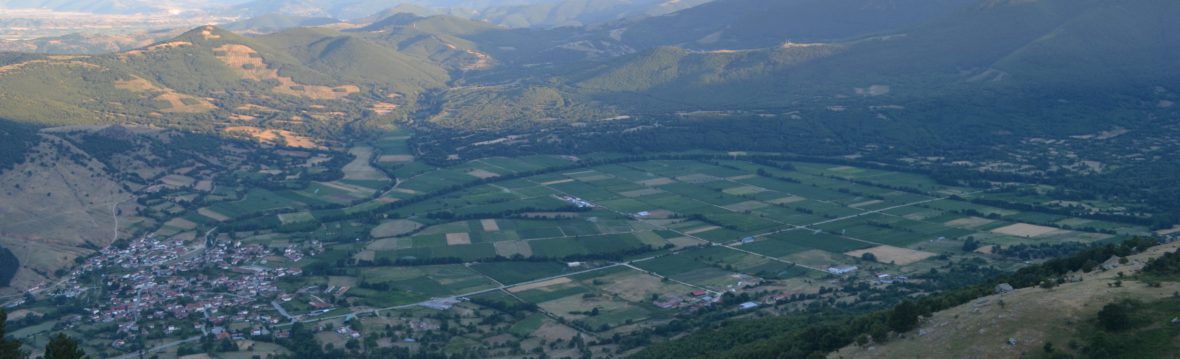

In the mountain villages of Aegean Macedonia — from Florina (Lerin) and Kastoria (Kostur) to Prespa and the surrounding valleys — the Macedonian language once filled the air in songs, stories, and daily life. Its sound was soft and rhythmic, shaped by the land itself. Yet for decades, many Macedonians were not allowed to speak their own language in public. Schools, churches, and local officials insisted on Greek, and children were punished for using Macedonian words. Despite this, the language survived quietly — at home, in the fields, and between trusted neighbours.
One of the most touching examples of this living survival can be heard in the way people say грав (grav), the word for “beans.” In most Aegean Macedonian villages, people simply say гра (gra). It may seem like a small difference, but it carries within it generations of memory, resistance, and belonging — the sound of a language kept alive even when it was forbidden.
How the Word Changed
The word грав (grav) is very old, tracing back to ancient Slavic roots. It comes from the word gorъxъ, meaning “peas” or “beans.” Over centuries, it naturally softened. In the villages of Florina and Kastoria, the final v was dropped, turning грав into гра. It wasn’t an error — it was simply how people spoke in their daily lives: softly, rhythmically, and with ease.
But it also carried a quiet meaning. In many homes, Macedonian words like гра, леб (bread), and вода (water) were whispered instead of shouted, spoken between family members while official life demanded silence. These everyday words became symbols of identity and endurance.
How This Happens in Speech
In Aegean Macedonian speech, final sounds often disappear, especially soft ones like v, b, g, or h. So villagers might say:
- грав → гра (“beans”)
- леб → ле (“bread”)
- снег → сне (“snow”)
- здрав → здра (“healthy”)
- ќерка → ќер (“daughter”)
These simple changes make words flow more smoothly, but they also reveal something deeper: how Macedonian survived through natural speech, not formal teaching. When people weren’t allowed to read or write in their own language, the spoken word — how it sounded and felt — became their main form of preservation.
Where This Way of Speaking Survived
This pattern still lives strongest in the Macedonian-speaking villages of Zelenich (Sklithro), Neret (Polipotamo), D’mbeni (Dendrochor), Visheni (Vyssiniá), Buf (Akritas), and throughout the wider Florina–Kastoria and Prespa regions. Across these communities, people grew up hearing two languages — Macedonian at home and Greek in public. Some older villagers still remember the days when police or teachers would fine or shame families for speaking “the village tongue.”
Yet in private, around kitchen tables or during the harvest, Macedonian remained alive. The shortening of words like грав to гра is part of that living rhythm — not only a sound pattern, but a trace of quiet resistance. It is language as survival.
Why the Change Makes Sense
There are natural linguistic reasons for these changes too. Soft ending sounds like v and h tend to fade when spoken quickly. Macedonian also favours a short, musical rhythm, usually with two syllables. So gra, le, and sne feel natural to say. But in Aegean Macedonia, where Macedonians often had to hide their speech, this natural softness became part of their cultural survival — the speech adapted both to the mouth and to the moment.
The Meaning Behind the Sound
To outsiders, these dropped endings might seem like a dialect quirk. But to the people of Aegean Macedonia, they carry emotional weight. Saying гра instead of грав means more than “beans.” It means: This is how my grandmother spoke. This is how my father whispered. This is ours.
Even today, when younger generations speak Greek more freely and Macedonian less often, words like гра, ле, or сне connect them back to that older sound — the sound of belonging. It is a reminder that the Macedonian language in Greece was never erased; it was simply carried forward quietly, voice to voice, heart to heart.
A Simple Pattern, a Deep Story
In short:
- грав → гра
- леб → ле
- снег → сне
- здрав → здра
- ќерка → ќер
All these changes make speech lighter and more musical. But they also show how deeply the language belongs to its land and its people. The Macedonian spoken in Aegean villages carries not just sound, but story — a story of persistence, dignity, and love for one’s roots.
The Scholars Who Noted It
Linguists such as Blaže Koneski, Bojan Vidoeski, Horace Lunt, and Riki van Boeschoten have documented this speech pattern in detail. They recognized that final-consonant loss is one of the key features of Western and Aegean Macedonian dialects — a sound shaped by mountains, time, and human endurance.
When you hear someone say гра instead of грав, you are hearing more than just a dialect. You are hearing a language that survived silence — the quiet melody of a people who never forgot who they were.
This table presents examples of final consonant weakening and loss as documented in Western Macedonian dialects, particularly in the Florina–Kastoria–Prespa region, including the village of Sklithro–Zelenich. These phonetic reductions illustrate how local oral traditions simplified word endings through centuries of natural speech evolution. They provide key linguistic evidence of Aegean Macedonian dialect identity and its divergence from standard Macedonian forms.
| No. | Consonant Lost | Phonetic Pathway (IPA) | Example (Standard → Dialectal) | Dialect Location / Note | English Meaning |
| 1 | –v | /v/ → [β̞] → [w] → ∅ | грав → гра | Zelenich, D’mbeni | beans |
| 2 | –v | /v/ → ∅ | прав → пра | Kostur highlands | straight, correct |
| 3 | –v | /v/ → [ʋ] → ∅ | здрав → здра | Prespa, Zelenich | healthy |
| 4 | –b | /b/ → [β] → ∅ | леб → ле | Florina area | bread |
| 5 | –b | /b/ → [p] → ∅ | заб → за | Neret, Prespa | tooth |
| 6 | –g | /ɡ/ → [ɣ] → ∅ | снег → сне | Zelenich, D’mbeni | snow |
| 7 | –g | /ɡ/ → ∅ | праг → пра | Kostur mountain zone | doorstep |
| 8 | –k | /k/ → [ç] → ∅ | јастук → јасту | Prespa, Bitola rural | pillow |
| 9 | –k | /k/ → ∅ | јазик → јази | Florina, Zelenich | tongue |
| 10 | –t | /t/ → [d̞] → ∅ | брат → бра | Florina, Neret | brother |
| 11 | –t | /t/ → [θ] → ∅ | свет → све | Kostur | world / light |
| 12 | –t | /t/ → ∅ | пат → па | Prespa villages | road |
| 13 | –s | /s/ → [z̞] → ∅ | глас → гла | Zelenich | voice |
| 14 | –s | /s/ → ∅ | час → ча | Kostur, Prespa | hour |
| 15 | –z | /z/ → ∅ | нос → но | Zelenich | nose |
| 16 | –j | /j/ → [ʝ] → ∅ | стој → сто | Florina | stand (imperative) |
| 17 | –l | /l/ → [ɫ] → [w] → ∅ | гол → го | Prespa, Zelenich | naked |
| 18 | –l | /l/ → [w] → ∅ | дал → да | Kostur | gave |
| 19 | –h | /x/ → [h] → ∅ | грев → гре | Zelenich | sin |
| 20 | –r (cluster) | /r/ → [ɾ] → ∅ | крв → кр’ | Zelenich | blood |
| 21 | –st | /st/ → [s̞] → ∅ | крст → крс / кр’ | Florina | cross |
| 22 | –v (compound) | /v/ → [β̞] → ∅ | лев → ле | Zelenich | left |
| 23 | –d (cluster) | /d/ → ∅ | лад → ла | Kostur, Prespa | cold |
| 24 | –k (loan) | /k/ → [ç] → ∅ | мајсторик → мајстори | D’mbeni | craftsman (nickname) |
| 25 | –m (nasal elision) | /m/ → ∅ | знам → зна | Florina (fast speech) | I know |
| 26 | –f (rare) | /f/ → ∅ | кров → кро | Zelenich | roof |
| 27 | –p (labial) | /p/ → ∅ | теп → те | D’mbeni | slap |
| 28 | –ʃ / –tʃ | /ʃ/ → [ɕ] → ∅ | ноќ → но | Kostur | night |
| 29 | –v (phrase) | /v/ → ∅ | јај грав → јај гра | Zelenich | eat beans |
| 30 | –t (phrase) | /t/ → ∅ | пат снег → па сне | Florina | road [with] snow |
These examples show how words in Western Macedonian dialects often drop their ending sounds naturally during everyday speech. This happens most often with letters like ‘v’, ‘b’, and ‘p’ — called labial sounds because they’re made with the lips — and with ‘k’ and ‘g’ — called velar sounds because they’re made at the back of the mouth. People in the Florina–Kastoria–Prespa area have spoken this way for centuries, giving their dialects a softer, more flowing rhythm making village speech sound musical and distinct, preserving a deep sense of identity and local character. These reductions serve as strong evidence of regional identity and linguistic continuity in the Aegean Macedonian region.
The “Forbidden Language” and the Living Echo of Dialect in Aegean Macedonia
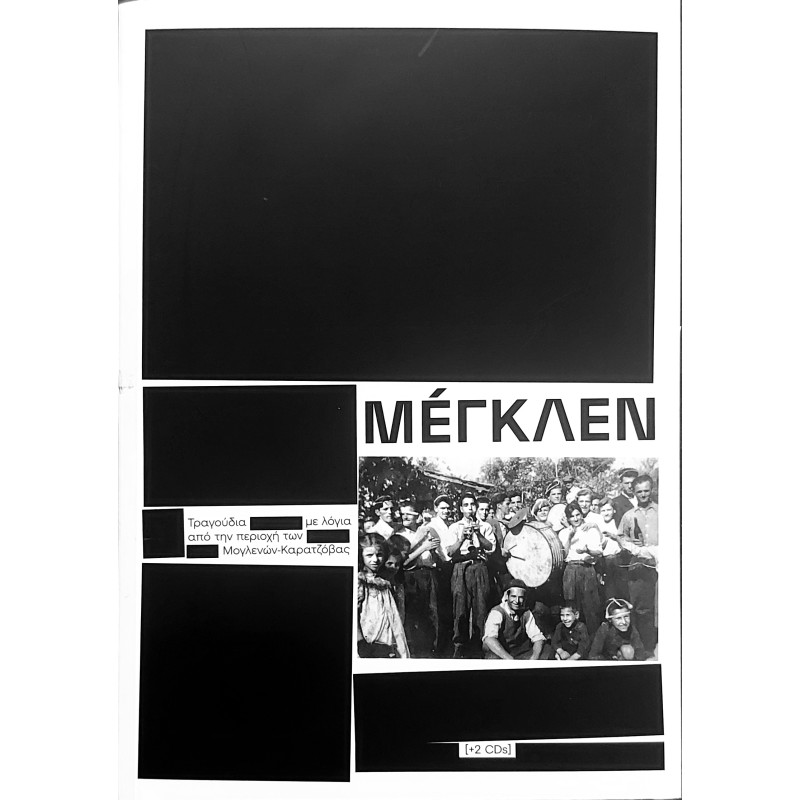
A recent cultural event in Athens, described in the article Η «Απαγορευμένη Γλώσσα» ακούστηκε (και) στο Έτερον (“The ‘Forbidden Language’ Was Heard (also) at Eteron”), offers a powerful contemporary lens through which to understand why dialectal features such as gra instead of grav survived among Aegean Macedonians. The event, dedicated to unveiling the book Μέγκλεν: Τραγούδια με λόγια από την περιοχή Μογλενών – Καρατζόβας, brought to the forefront the once-suppressed Macedonian songs and speech of the Moglen–Karadjova region. Scholars, musicians, and community members listened together as authentic Macedonian verses—collected after years of fieldwork—were performed publicly, some for the first time in generations.
What emerged from this emotional gathering was not only music but a stark reminder of the historic pressures that shaped everyday speech in Macedonia. Participants and presenters spoke openly about the decades of linguistic repression: the punishments in schools, the social stigma, the intense fear of being identified as Macedonian. Many elderly informants who contributed to the book insisted their names be withheld—evidence that even today, speaking Macedonian carries emotional weight and inherited trauma.
This history directly illuminates the subtle yet meaningful phonetic patterns explored in this article, such as the truncation of grav → gra. These features are not linguistic accidents. They are the residue of a community that learned to compress, soften, or disguise its mother tongue in order to survive socially and politically. In homes, in fields, in whispered songs, the language persisted—not in its standardized form, but in the lived, adaptive, intimate form that families carried forward under pressure. Saying gra instead of grav is part of that survival story: an everyday echo of a “forbidden language” that continued to live beneath the surface.
The Athens event also demonstrated that this linguistic and cultural heritage is experiencing a new wave of revival. Younger researchers, musicians, and community members are bringing hidden dialects, songs, and oral histories back into public light. The emotional standing ovation that concluded the evening—filled with tears, pride, and long-suppressed recognition—shows that the Macedonian language has not disappeared; it has simply waited for the moment when it could be heard again.
Placed alongside this renewed cultural awakening, the sound of gra in Aegean Macedonian villages is not merely a dialectal curiosity. It is a linguistic footprint of endurance, identity, and quiet resistance—a reminder that the Macedonian language, even when forced into silence, continued to breathe through the smallest details of everyday speech.
References
Danuševska, M. (1983).Zapadnomakedonski govor vo Kostursko pole. Skopje: Institut za makedonski jazik “Krste Misirkov.” Available in print through the Macedonian Academy of Sciences and Arts (MANU) https://imj.ukim.edu.mk/mk/%D0%98%D0%B7%D0%B4%D0%B0%D0%BD%D0%B8%D1%98%D0%B0/%D0%A1%D0%BF%D0%B8%D1%81%D0%B0%D0%BD%D0%B8%D1%98%D0%B0.aspx?utm_source=chatgpt.com and university library catalogues (e.g., WorldCat OCLC records). https://search.worldcat.org/title/1232410171?utm_source=chatgpt.com
Koneski, B. (1967). *Gramatika na makedonskiot literaturen jazik.* Skopje: Kultura. https://archive.org/details/KoneskiBlazeGramatikaNaMakedonskiotLiteraturenJazik19671953
Updated scholarly edition (MANU 2021): https://manu.edu.mk/wp-content/uploads/2021/11/Koneski-Gramatika-Arberija-18.10-111-tom-za-pecat_.pdf
Lunt, H. G. (1952). *A grammar of the Macedonian literary language.* ’s-Gravenhage: Mouton & Co.. https://archive.org/details/Grammar-of-the-Macedonian-literary-language-horace-g.-lunt
Minas, S. (2025, November 16). Η «Απαγορευμένη Γλώσσα» ακούστηκε (και) στο Έτερον: Μια συγκινητική εκδήλωση γεμάτη οδυνηρές αλήθειες, μουσική και δάκρυα (The “Forbidden Language” was heard (also) at Eteron: A moving event full of painful truths, music and tears). Η ΚΟΚΚΙΝΗ. https://kokkini.org/2025/11/16/%CE%B7-%CE%B1%CF%80%CE%B1%CE%B3%CE%BF%CF%81%CE%B5%CF%85%CE%BC%CE%AD%CE%BD%CE%B7-%CE%B3%CE%BB%CF%8E%CF%83%CF%83%CE%B1-%CE%B1%CE%BA%CE%BF%CF%8D%CF%83%CF%84%CE%B7%CE%BA%CE%B5-%CE%BA%CE%B1/
Van Boeschoten, R. (1994). *Language and identity in the Florina–Kastoria borderland.* [Unpublished research report]. University of Thessaly.
Related study: *Minority Languages in Northern Greece – Report to the European Commission.* https://www.academia.edu/40399950/Minority_Languages_In_Northern_Greece_Report_to_the_European_Commission
Vidoeski, B. (1999). *Dialektite na makedonskiot jazik.* Skopje: Makedonska akademija na naukite i umetnostite (MANU).
Vol. 1 (1998): https://dijalekti.manu.edu.mk/wp-content/uploads/2022/12/Dijalektite_na_makedonskiot_jazik_1.pdf
Vol. 2 (1999): https://dijalekti.manu.edu.mk/wp-content/uploads/2022/12/Dijalektite_na_makedonskiot_jazik_2.pdf
Vol. 3 (1999): https://dijalekti.manu.edu.mk/wp-content/uploads/2022/12/Dijalektite_na_makedonskiot_jazik_3.pdf
 Sklithro-Zelenich-Sebalći