

ECONOMIC CONDITIONS & VULNERABILITY BEFORE THE WAR
Economically, the interwar years were difficult. Crop yields were inconsistent. Imported goods were expensive. Government taxes were heavy. Many families relied on seasonal work in cities or migrant labour abroad. By 1939, the threat of war loomed over an already strained economy.
Young men felt the pressure acutely. Many had served in the Greek army during the 1930s, experiencing discrimination based on language or origin. When mobilization orders came in October 1940, Macedonian villagers marched to the front with mixed feelings—some resigned, some bitter, all uncertain about what awaited them.
THE VILLAGE ON THE EVE OF WAR
On the last calm evenings before the Italian invasion, elders remembered the silence: “The dogs barked differently,” one recalled. Rumours spread of mobilization, of Italian advances, of reservists being called to Florina.
The village priest held special prayers. Families prepared bread, wool clothing, and talismans for sons heading to the front. Women wept quietly at night. Men tried to reassure them, though they were themselves afraid.
This moment was the last breath before five years of fear, violence, hunger, resistance, and moral courage that would define an entire generation.
The interwar years shaped Zelenich’s wartime character. A village that had endured cultural repression without breaking, that had integrated refugees through everyday life, and that had maintained unity across difference—such a village would respond to wartime threats with moral clarity and resilience. Understanding this pre-war foundation is essential to understanding what came next.
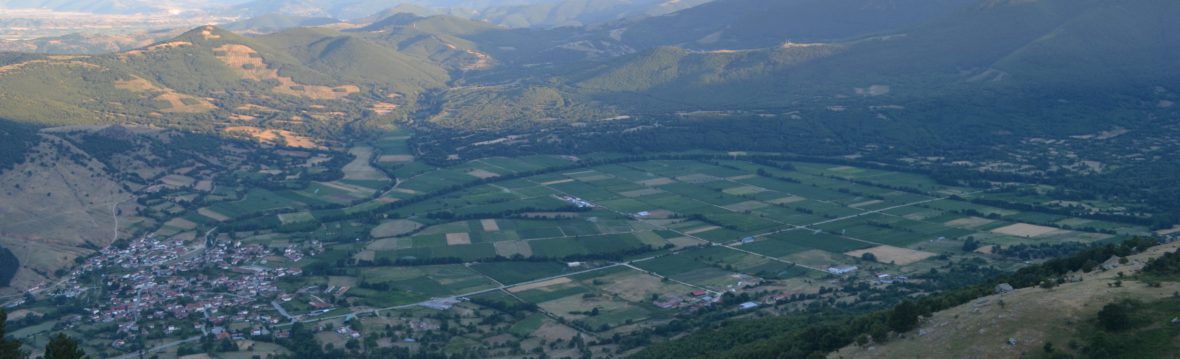
On the eve of the Second World War, Sklithro—known to its people as Zelenich—was a Macedonian-speaking village living under the tightening grip of Greek nation-building. By the 1930s, and especially after the Metaxas dictatorship began in 1936, the state intensified efforts to suppress the Macedonian language and identity. Officials visited villages regularly to enforce bans; speaking Macedonian in public could lead to fines or beatings. Teachers punished schoolchildren for using their dialect, even during play, while police kept lists of families labelled “Slavophones, Bulgarians but, never Macedonians.”
Under this pressure, villagers learned to live with what elders called “two tongues”: Macedonian inside the home and among trusted neighbours, Greek whenever an outsider approached. Songs, wedding rituals, lullabies, and funeral laments continued quietly in the dialect, preserving identity in the private sphere even as the public sphere demanded silence.
Daily life still followed the agricultural cycle, and traditions bound families together in ways that would later prove crucial. The Asia Minor refugees settled in the village after 1923 were, by 1940, fully integrated through shared work and hardship. At the same time, small, clandestine expressions of Macedonian political awareness began to circulate, affirming a distinct identity denied by the state.
Economically strained and politically pressured, the village entered 1940 vulnerable yet unified. Men mobilized for the front with mixed feelings born from discrimination during earlier army service, while families prepared quietly for what was coming. This interwar foundation—resilience under repression, cultural continuity, and a strong communal ethic—shaped how Sklithro-Zelenich would respond to the war’s demands once the fighting reached its doorstep.
THE 1940-1943: WAR ARRIVES IN SKLITHRO-ZELENICH
The years 1940 to 1943 transformed Sklithro-Zelenich from a quiet agricultural community into a village living under conditions of fear, hunger, violence, and moral testing. This chapter covers the Italian invasion of Greece, the brutal conditions on the Albanian front, the story of the five deserters, the German invasion, the first killings, raids from neighbouring villages, the arming of Sklithro-Zelenich, and the dramatic saving of the fifty Madjiri (Asia Minor refugees – known as Prosfigi in Greek). These years created the foundations of the village’s defensive stance and its refusal to surrender to any faction.
During the Axis occupation of Greece (1941–1944), the Macedonian-speaking population found itself trapped between foreign occupiers (German & Bulgarian), competing Greek resistance groups, and nationalist agendas that sought either to assimilate, expel, or them as pawns. The region was carved up: eastern and central Macedonia were annexed by Bulgaria, while western Macedonia (Florina, Kastoria, Edessa) and Epirus fell under German and Italian control.
In the Bulgarian-occupied zones, a harsh campaign of Bulgarization was undertaken. Schools, churches, and administration were switched into Bulgarian, and locals were pressured to declare themselves Bulgarians. At first, some welcomed the Bulgarians as liberators from Greek repression, but enthusiasm collapsed as forced conscription, requisitioning, and brutality set in. Entire villages were punished for showing pro-Greek sympathies, and thousands fled or were deported across the border.
Macedonians in Greece were thus not passive victims but active participants in the anti-fascist struggle, fighting on two fronts: against the Axis occupiers and against their own state’s denial of their existence. Greece used Macedonians to legitimize a Greek national narrative, by framing them as proof of “Greek Macedonia.”
THE ITALIAN INVASION OF GREECE (28 OCTOBER 1940)
At dawn on October 28, 1940, church bells across Greece rang as the Metaxas government issued the call to arms against Mussolini’s invasion. In Sklithro-Zelenich, the news reached the village by word of mouth. Men gathered in the square as families packed bread, salted cheese, wool socks, and homemade talismans. Women embraced their sons tightly at the edge of the village.
Macedonian conscripts marched north toward Florina, then onward to the Albanian mountains. Many had already served in the Greek army and knew the discrimination they would face. Their commanders often mocked their language as a dialect, calling them “Slavophones” or questioning their loyalty. Still, they marched.
CONDITIONS ON THE ALBANIAN FRONT
The front was a frozen nightmare. Soldiers slept in ice-crusted trenches. Frostbite claimed noses, fingers, and toes. Snow buried entire battalions. Supplies often failed to arrive. Many Macedonian soldiers wrote home that they felt they were dying for a state that did not recognize them.
Oral Testimony: Wartime Memory in Sklithro-Zelenich, Western Macedonia, 1940–1945 (Anonymous Informant, 2025)
This oral history, recorded in October 2025 with a male informant from Sklithro- Zelenich, Western Macedonia, documents the profound upheavals experienced by the village between 1940 and 1945. The testimony—blending Macedonian dialect expressions, childhood memories, and community lore—offers an intimate reconstruction of survival during the Italian and German occupations. Edited for clarity and academic cohesion, it preserves the emotional texture and moral depth of village memory during the Second World War.
THE ITALIAN FRONT & THE FIVE DESERTERS
Italy’s invasion of Greece on 28 October 1940 marked the first rupture of the village’s wartime experience. The thunder of artillery from the Albanian frontier could be heard across the valley. As the informant recalled his grandfather saying in Macedonian,
“Bojo sa zafati”—“the battle has begun” (Anonymous Informant, 2025).
Many young Macedonian men from Sklithro-Zlenich were conscripted into the Greek army and sent to the Albanian front. Among them were five men who soon reached a breaking point. Exhausted, starving, half-frozen—abandoned their posts after weeks of combat. They moved at night, hiding in ravines, following familiar mountain paths back toward Western Macedonia. When they reached Sklithro-Zelenich, they hid in a barn, terrified as desertion meant immediate execution.
The man who discovered them was Yani Tsesmegis. His decision would define the village’s moral character. Yani knew the danger the village faced if the deserters were discovered. But he also understood their desperation. After deliberation, he told them he would help—on one condition: they had to return to the front to avoid punishment.
To save their lives, Yani disguised three of them in women’s clothing—scarves, long skirts, and shawls. Under cover of darkness, he escorted them through mountain paths, avoiding Greek patrols. He delivered them back to their unit. They survived.
The remaining two deserters, unwilling to face the front again, fled toward the Yugoslav border and never returned to the village. Their departure created an open wound in the community’s wartime memory—lives diverging permanently under the pressure of fear. As the anonymous informant explained,
“They said they were being sent to die for a country that didn’t even call them its own.”
This sentiment, echoed later by other families, represents one of the earliest acts of quiet defiance within Sklithro-Zelenich, revealing the emotional burden of Macedonians fighting in a national army that not only failed to recognize them as Macedonians but insisted upon erasing their language, identity, and communal distinctiveness. The episode epitomizes the profound moral and psychological complexity faced by conscripted Macedonians, while also highlighting the decisive role of local leadership—embodied in figures such as Yani Tsesmegis—in guiding the village through moments of crisis and safeguarding the survival of its people.
THE GERMAN INVASION (APRIL 1941)
By spring 1941, German forces entered Greece, pushing the Italians from the region. The Italians briefly established a camp in Gornite Levidia (upper fields), the high ground above Sklithro-Zelenich, where soldiers hunted turtles and foraged in desperation—small details that imprinted themselves on young eyes.
When Italy capitulated in 1943, the Germans replaced them. Their first entry into Sklithro-Zelenich ended in tragedy.
THE KILLING OF THE BELL-TOWER BOY
The arrival of the Germans in Sklithro-Zelenich was first sensed as a distant vibration, the low sound of vehicles approaching along the main road east of “Tserna Voda” (Black Water). By then, everyone in the village understood what that noise meant. Giogi Poulios a young boy entrusted with keeping watch was sent up the church bell tower to warn the village of the approaching Germans.
When the first vehicles came into view, he responded as he had been taught: he pulled the bell rope and rang the warning—ding, ding, ding, ding, ding—the clear, rapid pattern every villager recognized as the signal for danger.
The Germans, hearing the bell and assuming it was meant to alert partisans, fired. The ringing stopped abruptly. “He was dead before he could climb down,” the informant recalled, his voice steady but marked by the passage of many years.
Giogi’s two teenage sisters (Vassa & Kata) hurried to the tower. They climbed the worn stone steps and found their brother beside the bell. Together, they carried his bloody body down, quietly grieving as they descended.
“My father had baptized him,” the informant added, the memory still close despite the decades.
In the years that followed, the loss remained an open wound for the family. His mother, especially, carried it heavily; she would often say she would not leave this world until a grandson—born to one of her daughters—was given her son’s name. Her youngest daughter, Marika, quietly held onto that promise. Years later, when her first son was born, she named him Giogi–Georgo, honouring both her brother and her mother’s wish.
Immediately after Georgios Poulios was shot inside the bell tower, German troops spotted a local shepherd, Dimitrios Petsopoulos, attempting to flee toward Galabnik Rock—a natural landmark of the village. Interpreting any movement as resistance or escape, the German detachment opened fire and killed him on the slope below the outcrop.
After that day, the bell tower took on a different meaning for the villagers. Its tones became part of a shared code: dung…dung…dung to mark a funeral, ding-ding-ding-ding to gather the community, and a long, continuous ringing whenever danger approached. The system remained a lifeline throughout the occupation.
OCCUPATION, COLLABORATION, RESISTANCE
In the German and Italian controlled areas of western Macedonia, a different dynamic emerged. The occupiers exploited ethnic tensions, permitting limited use of Macedonian language to undermine Greek nationalism, and sometimes arming local militias. Many Macedonian-speaking villagers sought survival by aligning with whoever promised protection. Some joined collaborationist groups, while others turned to the communist-led resistance. The interwar suppression of Macedonian identity had left deep scars, and now the occupation opened a political space in which the question of minority rights became decisive.
The communist National Liberation Front (EAM) and its army (ELAS) promised recognition of linguistic rights and greater equality, leading to the creation in 1943 of the Slavo-Macedonian National Liberation Front (SNOF). SNOF organized armed units, published material in Macedonian, and drew many peasants into its ranks. This positioned Macedonians squarely on the communist side of the resistance struggle, deepening tensions with right-wing Greek nationalists.
RAID FROM LEHOVO
Soon after occupation, armed men from the nearby Lehovo, an Arvanite-speaking Greek village raided Sklithro-Zelenich. They looted several homes and plundered the Karapalidis and Gogi stores, taking flour, sugar, tools, clothing—anything of value.
“They emptied Gogi’s, Karapalio’s, and even our little store,” the informant remembered.
This betrayal struck deeply, for relations with Lehovo had long been strained by political and ethnic divides. Macedonian villagers felt exposed and vulnerable. Fearful and defenceless, the villagers appealed to the Germans for protection.
ZELENICH REQUESTS PROTECTION — AND THE GERMAN RESPONSE
A delegation of Zelenicheni men went to the German garrison in Amyntaio seeking protection from such raids. The German officer dismissed their plea:
“We cannot protect every village. If you want defence—take guns.”
This statement changed everything.
THE ARMING OF SKLITHRO-ZELENICH
A group of men travelled to Kailari (Ptolemaida) and secured Italian rifles, a machine gun, ammunition, and a British Bren machine gun that was prone to jamming and never worked. They placed the Italian machine gun in the church tower—the same tower where young Giogi Poulios had been killed, , transforming the church into the village’s defensive heart. Old Ottoman rifles were refurbished, bullets filed to fit older chambers.
“You could tell which gun was firing by its sound,” the informant recalled.
Approximately twenty men formed a defensive militia. Their purpose was not ideological: they intended only to protect the village from raids, reprisals, and forced political recruitment. Contrary to some reports, they never participated in any raids against other villages or partisan groups.
This neutrality would confuse and anger every faction in the coming years—Germans, Greek partisans, EDES, and Ohrana.
THE AETOS INCIDENT (1944)
The most dramatic event of these years occurred on the 28th of March 1944 the village of Aetos was struck by one of the harshest German reprisals carried out in the Florina region during the late occupation period. German security forces elements of the SS Police Grenadier units and the GFP (Secret Field Police) swept through Aetos searching for resistance activity and collaborators with ELAS.
During this sweep, a group of villagers was arrested on suspicion of aiding or contacting the partisans. The detainees were held under guard until late morning. According to postwar sworn testimonies housed in Koblenz and Greek state archives, between 11:00 and 12:00, German soldiers marched the prisoners approximately half a kilometre outside the village, along the public road leading from Aetos toward Pedino.
The executions took place right beside the main road, in full view of anyone who might pass. The prisoners were shot in groups, a standard German method to maintain control and prevent collective resistance.
Two prisoners survived despite being wounded, but the rest—between eleven and thirteen villagers—were killed on the spot.
Their deaths were formally registered the next day in the death registry of the community of Aetos, which recorded eleven entries dated 29 March 1944, reflecting the executions of the previous day. The monument erected to honour these fallen heroes identifies 13.


BY THE GERMANS
28-3-1944
Vasileios G. Gioulekas — from Aetos
Dimitrios G. Zachopoulos — ” “
Evangelos S. Konstantinou — ” “
Panagiotis N. Nikolaou — ” “
Konstantinos H. Petrou — ” “
Anastasios G. Rompis — ” “
Dimitrios Ch. Rompis — ” “
Michail E. Rompis — ” “
Dimitrios Ch. Stegiou — from Pedinos
Dimitrios N. Nikolaidis — ” “
Christos S. Kovatidis — from Sitaria
Theodoros D. Tselmis — from Nymfaio
Nikolaos D. Tselmis — ” “
THE MADJIRI INCIDENT
The Germans had been informed—accurately or not—that ELAS collaborators were among the Asia Minor refugee families living in Sklithro–Zelenich. After the Aetos massacre, German troops entered the village and ordered all residents to gather in front of the school. There, the soldiers separated them: Macedonian locals on one side, Asia Minor refugees on the other.
Once the separation was complete, the Germans selected roughly fifty refugees—men and women—and marched them up to the north road (Jiiatos). With armed soldiers positioning themselves along the roadside, it became clear that the refugees were moments away from execution.
Zelenich refused to accept it.
Elders Kuzi Tsilkas and John Tsougios stepped forward. They argued that the refugees had lived peacefully among them for twenty years, that they were part of the village, and that executing them would destroy the moral fabric of the community. Varvara Frangos, one of the refugees, later recalled hearing every word.
The Germans debated. Minutes felt like hours.
Finally, they lowered their weapons and released the refugees
The massacre was prevented, fifty lives were saved.
Oral Testimonies
Participant A – John Tsougios (Interview, September 19, 2004)
In a 2004 interview, John Tsougios recounted standing with the Macedonian men at the schoolyard. He remembered telling the Bulgarian interpreter—clearly and without hesitation—that executing the refugees was unconscionable.
“If the Germans kill the refugees,” Tsougios told him, “they might as well slaughter the entire village.”
According to Tsougios, this statement caused visible hesitation among the Germans and initiated a discussion among their officers.
Participant B – Kuzi Tsilkas (Reconstructed from Oral Accounts)
Multiple independent oral sources identify Kuzi Tsilkas as the principal figure who persuaded the Germans to abandon their plan. Speaking through the interpreter, Tsilkas described the refugees as “honest, hardworking people” trying to survive dire conditions.
He stressed that the refugee and Macedonian families had become intertwined—through shared labour, neighborly cooperation, and even intermarriage.
“These people are part of us,” he is remembered as saying. “To kill them is to destroy our families, our village.”
His calm reasoning appears to have weighed heavily on the German commander.
Participant C – Varvara (Barbara) Frangos (Interview, May 30, 1993)
In 1993, Varvara Frangos, who was among those rounded up, provided firsthand confirmation of the event. She recalled being seized at gunpoint, marched to the top of the village road, and lined up with the men in front and women behind.
Because she had arrived in Macedonia at age six, she understood Macedonian well. She heard every word spoken by Tsilkas and Tsougios as they confronted the interpreter.
“Their bravery saved us,” she said. “I never forgot what they did.”
Her testimony powerfully validates the accounts of Tsilkas and Tsougios.
Participant D – Jerry (Giri) Karapalidis (J. Karapalidis, personal communication, October 21, 2005)
In a letter to his cousin, Jerry recounts the lived experiences of a young Macedonian villager from Zelenich (Sklithro) during the turbulent years of the Metaxas dictatorship, the Second World War, and the early stages of the Greek Civil War. In his letter he remembered German reprisals as villagers were rounded up at gunpoint and lined along the road, threatened with execution if they did not reveal information about the resistance. No one spoke. After hours under the scorching sun, the soldiers released them—but the trauma remained. Jerry and a number of village boys hiding behind the stone walls of a house watched in terror.
This was a defining moment. Sklithro-Zelenich showed that even under the harshest occupation, it would not surrender its moral principles. By 1943, Sklithro-Zelenich was a village transformed—armed yet committed to neutrality, traumatized yet united, threatened by all sides yet refusing to abandon its humanity. The events of 1940–1943 shaped everything that came next: the ELAS attack, the mortar tragedy, the retreat of the Germans, and the beginning of the civil conflict that followed.
The years 1944 and 1945 were the most violent, chaotic, and emotionally devastating in Sklithro-Zelenich’s wartime experience. They marked the collapse of German authority, the rise of partisan and nationalist factions, the direct assault on the village by ELAS forces, the tragic explosion that killed several children, and the beginning of the political fragmentation that would lead Greece into civil war. This chapter integrates all testimonies and regional historical context into one continuous narrative.
THE RISE OF FEAR IN 1944
By early 1944, German power in Western Macedonia was weakening. Their supply lines were disrupted by sabotage, their troops suffered losses on multiple fronts, and morale collapsed. Desperate, the Germans tightened their grip, increasing reprisals and executions. At the same time, ELAS—the Greek communist-led resistance—grew stronger in the mountains surrounding Sklithro-Zelenich, including Nymfaio (Neveska).
Sklithro-Zelenich, armed since 1941 and insisting on neutrality, became a target of suspicion for every faction. ELAS believed the village’s refusal to disarm meant latent collaboration. EDES saw the village as “Slavophone” and potentially sympathetic to SNOF. Ohrana leaders accused the villagers of being uncooperative. The Germans suspected partisan ties. The village stood alone.
THE ELAS ATTACK FROM NYMFAIO (NEVISKA)
In the summer of 1944, ELAS forces advanced toward Sklithro-Zelenich. Their objective was to force the surrender of the village’s weapons and bring the community under partisan control. Sklithro-Zelenich’s defenders—roughly twenty men—took positions behind stone walls, rooftops, and the fortified bell tower.
Fighting erupted at dusk. ELAS fighters opened fire from the tree line. Villagers responded with disciplined volleys from the Italian machine gun, rifles and the Bren gun. The church tower became the central defensive point. Partisans launched mortars from the hillside above the village. One shell struck near the bell tower, sending shrapnel in every direction.
Sterio, one of the defenders, was hit directly. His foot was blown off. His screams echoed across the square. Villagers dragged him to safety under fire.
Despite hours of combat, Sklithro-Zelenich held its ground. ELAS forces did not breach the village. Shortly before dawn, they retreated toward Nymfaio, frustrated and angered.
THE COST OF THE ATTACK
The defenders were exhausted. Homes were damaged. Fear gripped the families sheltering in cellars. But Sklithro-Zelenich’s unity had held. The ELAS attack proved the village’s defensive resolve, yet it also marked Sklithro-Zelenich for later political punishment.
EDES (National Republican Greek League), the dominant non-communist resistance group, was hostile to Macedonian aspirations. It depicted them as potential agents of Bulgaria or Yugoslavia and often targeted their villages with reprisals. For example, in 1943–44 EDES-aligned militias and British-supported nationalist bands raided parts of Kastoria and Florina districts, executing suspected SNOF sympathizers and burning homes.
German counter-insurgency campaigns added to the devastation: the villages of Kleisoura (April 1944) and Pyrgi (1944) were among those wiped out, with hundreds of civilians slaughtered, many of them Macedonian speakers accused of aiding partisans. These atrocities destroyed entire communities, forced mass flight into the mountains, and drove thousands of Macedonians to seek refuge in Yugoslav Macedonia, where Tito’s partisans welcomed them.
THE UNEXPLODED MORTAR AND THE DEATH OF THE CHILDREN
In the days following the attack, an unexploded mortar was found half-buried near the road and the Germans brought it by Izvoro. They attempted to detonate it by firing shots at it but to no avail. A group of boys moved it under walnut tree close to a well-worn path leading up to Izvoro. Unaware of the danger they began to play with it, they rolled it, and then they started jumping on it. The informant (one of the kids who was a bystander, decided to go home and have lunch. Upon reaching his house, he heard a thundering boom!
The explosion that followed killed several children instantly. The walnut tree split in half, its shattered trunk echoing through the valley like a warning. He ran toward the sound, and when he arrived, he saw the unthinkable remnants of the blast caught in the branches above. Mothers rushed barefoot into the street, crying out their children’s names. The entire village descended into grief. At the funerals, silence hung heavy, broken only by the anguished wails of the parents.
This was one of the most emotionally devastating moments in Sklithro-Zelenich’s history. Even decades later, elders recalled the exact positions where the children fell.
BRITISH INTELLIGENCE VIEW OF WESTERN MACEDONIA, 1944 (Based on the report of Captain Patrick Hutchison Evans, British Communications Officer, March–October 1944)
IBy 1944, as German forces began withdrawing from Greece and the struggle for the country’s political future intensified, Western Macedonia stood at a dangerous crossroads. The region had already suffered three overlapping layers of pressure—the Metaxas dictatorship with its harsh assimilationist policies, the brutalities and suspicion of the Axis occupation, and the rising internal tensions that would soon erupt into civil war. Into this landscape arrived Captain Patrick Hutchison Evans, a British communications officer stationed for nine months in the Lerin (Florina) and Kostur (Kastoria) districts. His confidential report to the British Foreign Office remains one of the clearest contemporary testimonies about the people of the region during the final phase of the war.
Evans observed that the population of Western Macedonia was neither Greek nor Bulgarian, but Macedonian, possessing its own language, customs, and cultural life. This identity was obvious to anyone living among the villages, yet it was precisely this reality that Greek officials insisted on denying—even during the war itself. Evans highlighted that the official Greek position, which claimed that no Slavic-speaking minority existed within Greece, was not a factual assessment but a political construction rooted in the Megali Idea, the longstanding ideology of national homogenization. The Greek state, he wrote, had deliberately cultivated a false impression—both domestically and internationally—that the Macedonian population was either nonexistent or merely “Greek peasants who happened to speak a dialect.” This denial shaped how Greek authorities treated villagers throughout the occupation, reinforcing a climate of hostility, mistrust, and cultural erasure.
Accompanying diplomatic correspondence from the British Embassy in Athens supported Evans’ conclusions. British officials acknowledged that the Macedonian population in the region was far larger than Greek census figures claimed and that its political aspirations were not aligned with Bulgaria, as Greek authorities often alleged, but with the broader idea of an eventual independent Macedonia. These reports also noted that Macedonians in Greek-held territory understood themselves as a single people artificially divided by the borders of Greece, Yugoslavia, and Bulgaria after 1913.
Yet Evans also documented something crucial: the deep suspicion with which many Macedonian-speaking villagers viewed the British themselves. Despite being Allied officers fighting against the Axis, British personnel were often associated in the minds of villagers with the Greek monarchy and with the repressive institutions that had dominated their lives during the Metaxas dictatorship. The language bans, school punishments, forced Hellenization measures, and police surveillance of “Slavophone” families had not disappeared during the German occupation; they had continued under collaborationist authorities. To many villagers, Allied uniforms did not guarantee safety or recognition—only the looming return of a state that had long persecuted them.
This wary attitude toward British officers becomes clearer when placed within the broader wartime context. Even before German forces withdrew, Macedonian villagers had endured profound repression from Greek authorities, nationalist groups, and local security forces. The Greek journalist Kondos, writing in Rizospastis, described with disturbing detail how Macedonians in the Lerin and Kostur regions were subjected to beatings, torture, humiliation, and violent suppression of their language. Women, children, and elders were often targeted. These accounts, though spanning both the interwar and wartime periods, show that the machinery of Greek repression remained fully active throughout the occupation. In many villages, German oversight did not replace Greek hostility—it merely added another layer to it.
This environment explains the profound mistrust Evans encountered. For Macedonian-speaking villagers, German occupation did not erase earlier trauma, and liberation did not promise protection. Instead, each shift in power—Metaxas, Germans, partisans, British advisors—felt like yet another change in the uniform of those who would dictate their fate. Local people learned quickly that the danger might not end with the departure of the Germans; it might, in fact, return in familiar forms, backed by Allied legitimacy.
By the time Evans filed his report, Western Macedonia was a region balancing between past repression and future conflict. His observations captured a population struggling to survive not only the military violence of WWII but the deeper struggle for recognition and existence. The villagers’ quiet, persistent Macedonian identity—denied by the state, pressured by occupiers, and misunderstood by outsiders—formed the unspoken heart of the region’s wartime experience. Evans’ testimony, therefore, stands as one of the most honest assessments of what the Macedonian-speaking communities of Western Macedonia endured as the Second World War drew to a close and as the Greek Civil War loomed on the horizon.
By late 1944, Germany began withdrawing north through Kastoria and Florina. Their convoys passed near Sklithro-Zelenich, firing sporadically at suspected partisan hideouts. Villagers hid indoors for hours at a time. Rumours spread that the Germans would burn villages as they retreated. Some villages were burned. Sklithro-Zelenich was spared.
As the last German units passed, villagers emerged cautiously. Liberation, however, did not bring safety. Macedonian communities were exhausted, devastated, and deeply politicized. Many had aligned with ELAS/SNOF and now hoped for cultural rights and recognition but instead faced reprisals from nationalist forces backed by the British.
The image below is the front page of the newspaper Φλογερά Νειάτα (“Flaming Youth”), the organ (official publication) of the Regional Councils of Florina–Kastoria of EPON (Ενιαία Πανελλαδική Οργάνωση Νέων), the youth wing of EAM, the major left-wing resistance movement during WWII. Date: 26 October 1944

This was printed just after the German withdrawal from Western Macedonia (mid-October 1944), during the chaotic liberation period when EPON/EAM was organizing civic life—schools, culture, local committees, and resistance to collaborators.
English Translation: UNITY IN THE STRUGGLE FOR FINAL VICTORY
United, the Greek and Slavomacedonian youth, within the anti-fascist ranks of EPON, draw from the inexhaustible strength of their land as they march toward the final victory. For the complete crushing of fascism. For progress and for a new culture. A culture of solidarity, cooperation, mutual help. In the darkest years of slavery, the youth carried the spirit of the people, preserved its consciousness, and kept its hopes alive. Their sacrifices, their suffering, their bloodshed—and the countless deeds of courage of anonymous young men and women—became the seeds from which new strength, new character, and new dignity grew in the youth of our land. The heroic struggles of the youth, the unity they achieved, the internal discipline and the fiery faith in their cause, are what ultimately guarantee the victory of the people and the liberation of the country. Today, the youth of Greece and Macedonian youth march side by side in perfect unity—proud, disciplined, filled with confidence in their mission. Within the hardest conditions, which tested their resolve and which raised them to the level that history demanded, they forged through countless battles and sacrifices an unbreakable unity. This unity—deep, genuine, and born through struggle—created their heroic tradition. It is this unity that the enemy feared most and tried to undermine through slander, lies, and terror. Yet the youth answered with even greater determination. The liberated villages and towns of Florina and Kastoria greet the youth’s achievements with joy. The youth’s organizations, with tireless efforts, work to strengthen democracy, culture, justice, and the rebirth of our land. Now is the moment for every young man and woman to reinforce this unity, to deepen the bonds forged in struggle, to intensify their effort so that nothing can hinder the march toward final victory.
EPON and the Youth of Western Macedonia, 1944: A Multilingual Resistance
The October 1944 issue of Φλογερά Νειάτα (“Flaming Youth”), the organ of the EPON councils of Florina and Kastoria, offers a vivid glimpse into the social and political atmosphere of Western Macedonia at the moment of German withdrawal. Its lead article, titled “Unity in the Struggle for the Final Victory,” is especially revealing for its explicit reference to both “Greek and Slavomacedonian youth.”
At a time when the Greek state officially denied the existence of a Slavic-speaking minority, EPON not only acknowledged this community but placed Macedonian-speaking youth at the heart of the anti-fascist struggle. This is entirely consistent with British reports from the same period, such as Captain Hutchison Evans’ dispatches, which described the local population as Macedonian in language and culture.
The article emphasizes the forging of unity through hardship: the suffering of the occupation years, the sacrifices of young men and women, and the shared resistance experience across linguistic lines. For many villages—including Sklithro-Zelenich—this represented the first structured political arena in which Macedonian-speaking youth participated as equals, without pressure to renounce their language or identity.
The vision presented is both ideological and practical. EPON called for cooperation, solidarity, mutual help, and “the creation of a new culture” after the war. In the newly liberated towns and villages, youth organizations immediately took on responsibilities: running literacy programs, organizing cultural evenings, repairing war damage, and supporting refugees and orphans.
Yet this moment of optimism was fragile. Within months, growing tensions between EAM/ELAS and emerging right-wing forces—combined with state suspicion toward Macedonian communities—plunged Western Macedonia back into turmoil. The unity celebrated in Φλογερά Νειάτα would soon be tested by partisan fragmentation, state repression, and the pressures that led many Macedonian-speaking youth into the Democratic Army of Greece during the Civil War.
Even so, the newspaper stands today as a rare and unambiguous wartime primary source documenting the presence, role, and recognition of Macedonian youth during the liberation period. It captures a fleeting historical moment when the dream of a shared democratic future—Greek and Macedonian together—still seemed possible.
THE RETURN OF THE GREEK STATE AND NEW PERSECUTIONS
Greek government forces, supported by British troops, returned to Western Macedonia. Immediately, Macedonian villages—including Sklithro-Zelenich—were viewed with suspicion. Armed neutrality during the occupation was interpreted as partisan sympathy or latent Bulgarianism.
Thousands of Macedonians were branded as collaborators or communists, subjected to executions, intimidation, or forced exile. The violence of the occupation years had not only destroyed property and taken lives but also reshaped political identities: what had been a suppressed minority under Greek rule became, by war’s end, a community identified with communism and separatism in the eyes of Greek nationalists. This perception set the stage for even greater persecution during the Greek Civil War (1946–1949), when the mass expulsion of tens of thousands of Macedonians would be carried out.
One of the most bitter injustices of this period was the arrest of Kuzi Tsilkas—the very man who had saved fifty refugees from execution. Instead of being honoured, he was imprisoned. His “crime” was simply his influence as a respected Macedonian elder, which authorities claimed made him a threat to national cohesion.
Villagers understood the message: Macedonian identity remained suspect and feared by the authorities..
THE SHADOW OF CIVIL WAR: The End of the War and the Uncertain Dawn (Western Macedonia & Sklithro-Zelenich)
By 1945, the guns of the Second World War finally fell silent, but peace did not return to Western Macedonia. Instead, the region stood on the threshold of yet another catastrophe. The political vacuum left in the wake of Axis withdrawal quickly filled with suspicion, reprisals, and competing visions for the future of Greece. For the Macedonian population—long targeted, mistrusted, and pressured to abandon their identity—the end of the war signalled not relief, but the beginning of an even more complex struggle.
Across Greece, accusations multiplied.
- The Greek state treated Macedonians as potential separatists, a “problem” to be controlled.
- Nationalist groups dismissed them as “Bulgarians,” amplifying hostility and violence.
- ELAS partisans, despite moments of cooperation, frequently questioned their reliability.
- British missions recorded instances of discrimination, noting the volatile atmosphere.
- Yugoslav advocacy for Macedonian rights only intensified Athenian paranoia.
Amid these cross-pressures, Macedonian communities were forced into impossible choices. Many young men and women joined the Democratic Army of Greece (DAG), hoping armed struggle might secure long-denied equality. Others fled north into Yugoslav Macedonia, seeking safety and recognition. Countless families were torn apart—some by allegiance, others by survival.
For Sklithro-Zelenich, the close of World War II did not bring calm. The village had already endured German occupation, partisan reprisals, raids from neighbouring villages, hunger, and unspeakable personal loss. Yet 1945 placed the community on the precipice of the Greek Civil War, a conflict that promised to be even more divisive and destructive than the war just survived.
The people of Sklithro-Zelenich emerged from World War II battered but unbroken—only to face a new era of pressure, fear, and uncertainty. The war had ended, but for the Macedonians of Western Macedonia, the struggle for dignity, identity, and survival was far from over.
Sources:
[Anonymous photographer]. (2017, July 11). Photograph of Monument in Aetos, Florina, Greece — site connected to WWII German reprisals [Photograph]. Personal collection.
Belegaki, O. (2010). Πτυχές της δράσης της Οχράνας στη Δυτική Μακεδονία με βάση νεότερες βουλγαρικές πηγές (1941-1943) – Aspects of the Okhrana’s activities in Western Macedonia based on modern Bulgarian sources (1941-1943). Aristotle University of Thessaloniki – ΙΚΕΕ – IKEE / Aristotle University of Thessaloniki – Library. Retrieved June 9, 2025, from https://ikee.lib.auth.gr/record/126674/files/GRI-2011-6784.pdf
Cvetanoski, V.(nd). Stefov, R. (2024, March 18, Ed.). Macedonians who suffered in Greek hands. Pollitecon Publications. https://www.pollitecon.com/Assets/Ebooks/Macedonians-Who-Suffered-in-Greek-Hands.pdf
Dordonas, S. N. (1968, September 2). Αντίποινα των Γερμανικών Άρξων Κατόξης στη Μακεδονία (1941-1944) (Retaliation of the German Occupation Forces in Macedonia). https://www.uom.gr. https://www.uom.gr/assets/site/public/nodes/1901/13151-Dordanas_CV_GR.pdf
Evans, P. H. (1944). The macedonians of Aegean Macedonia. Virtual Macedonia. https://vmacedonia.com/history/macedonians-in-greece/the-macedonians-of-aegean-macedonia-a-british-officers-report-1944.html
Flogera Neiata-Φλογερά Νειάτα (“Flaming Youth”) [Photo Image of news article]. (1944, October 26). Wikimedia.org. https://commons.wikimedia.org/w/index.php?search=Flogera+Neiata+1944-10-26.jpg&title=Special%3AMediaSearch&type=image
Frangos, V. (1993, May 30). Interview on German roundup in Sklithro–Zelenich [Interview transcript]. CMHS Oral History Archive.
Gillies, N. (2024, May). Cutting The Gordian Knot: Macedonian Nationalism and Its Complicated Relationship with Bulgaria. ScholarWorks – Boise State University Scholarship and Research. https://scholarworks.boisestate.edu/cgi/viewcontent.cgi?article=3373&context=td
Hammond, N. G. L. (1993). The Allied Military Mission in Northwest Macedonia, 1943–44. Balkan Studies, 32(1), 107–144. https://ojs.lib.uom.gr/index.php/BalkanStudies/article/view/762/871
Karapalidis, J. (2005, October 21). Memoirs of a Macedonian Villager, 1936–1947 – Letter describing experiences in Sklithro–Zelenich. CMHS Oral History Archive.
Kiselinovski, S. (2018, January 24). Greek occupied Macedonia (1913-1989). Canadian Macedonian Heritage Society. https://macedonianhistory.ca/Stefov_Risto/Greek_occupied_Macedonia_e_book.pdf
Konstantinou, A. (2018, October). Μαρτυρίες και πηγές για την εισβολή του βουλγαρικού στρατού στη Φλώρινα (1944) [Testimonies and sources on the invasion of the Bulgarian Army in Florina]. Scribd. https://www.scribd.com/document/661744819
Kostopoulos, T. (2003). Aksomakedoniko Komitato and Ohrana (1943-44): A First Approach [Άξονομακεδονικό Κομιτάτο και Όχρανα (1943-44): Μια Πρώτη Προσέγγιση]. LINK
Kostopoulos, T. (2018, February 9). Το Μακεδονικό στη δεκαετία του ’40 (The Macedonians in the decade 40’s). elaliberta.gr. LINK
Koumaridis, G. (Supervisor), Matthaiou, A. (Advisor), & Van Boeschoten, R. (Advisor). (2002). Όψεις της κατοχής και της αντίστασης στη δυτική Μακεδονία: η περίπτωση του SNOF [Aspects of occupation and resistance in Western Macedonia: The case of SNOF] (Diploma thesis). University of Thessaly, Department of History, Archaeology and Social Anthropology. http://hdl.handle.net/11615/15033
Koutsopoulou, K. (2019). Ο ελληνικός Εμφύλιος και η μετεμφυλιακή πραγματικότητα στην πεζογραφία της υπερορίας (1950-1955) (The Greek Civil War and the post-civil war reality in the prose of the overseas region (1950-1955). Academia.edu – Research Paper. LINK
Plakidas, C. (2008, March 20). Map of the 1941-1944 Axis Occupation of Greece. Depicted are the three occupation zones, plus the geographic regions and major urban centres. https://commons.wikimedia.org/wiki/File:Triple_Occupation_of_Greece.png
Rossos, A. (2008). Macedonia and the Macedonians : A History. Internet Archive. https://archive.org/details/macedoniamacedon0000ross?
Rossos, A. (2008). Macedonia and the Macedonians. Hoover Institution Press, Stanford. policyarchive.org. https://research.policyarchive.org/11853.pdf
Rossos, A., & Evans, P. H. (1991). The Macedonians of Aegean Macedonia: A British Officer’s Report, 1944. The Slavonic and East European Review, 69(2), 282–309. http://www.jstor.org/stable/4210592
Stefanidis, Y. D. (1993). Macedonia in the 1940s. Macedonian-heritage.gr. https://macedonian-heritage.gr/VirtualLibrary/downloads/Stefan01.pdf
Stefov, R. (2009). Macedonians in Greece 1939 – 1949. Canadian Macedonian Heritage Society. https://macedonianhistory.ca/Stefov_Risto/Macedonians%20in%20Greece%20%20-%20e-Book.pdf
Stoukas, M. (2018, January 20). Το Μακεδονικό Ζήτημα από το 1941 ως το 1945 (The Macedonian Question from 1941 to 1945). ProtoThema. https://www.protothema.gr/stories/article/752551/to-makedoniko-zitima-apo-to-1941-os-to-1945/
Tsilkas, K. (2025, June 17). Reconstructed oral recollections of the German roundup [Oral history summary]. CMHS Oral History Archive.
Tsougios, J. (2004, September 19). Oral testimony on WWII events in Sklithro–Zelenich
[Interview transcript]. CMHS Oral History Archive.
Tsoutsoumpis, S. (2020). The Lords of War: violence, governance and nation-building in north-western Greece. European Review of History: Revue Européenne d’histoire, 28(1), 50–73. https://doi.org/10.1080/13507486.2020.1803218
Voglis, P. (2020). The lords of war: Violence, governance and nation-building in north-western Greece. European Review of History: Revue européenne d’histoire, 27(5), 633–656. https://doi.org/10.1080/13507486.2020.1803218
Vouri, A. (2007). Writing and rewriting history in the context of the nation-state: The case of Macedonia in Greece. In S. Berger & C. Lorenz (Eds.), The Contested Nation: Ethnicity, Class, Religion and Gender in National Histories (pp. 145–171). Palgrave Macmillan. https://www.researchgate.net/publication/238431550_On_the_Role_of_Myths_and_History_in_the_Construction_of_National_Identity_in_Modern_Europe
 Sklithro-Zelenich-Sebalći

