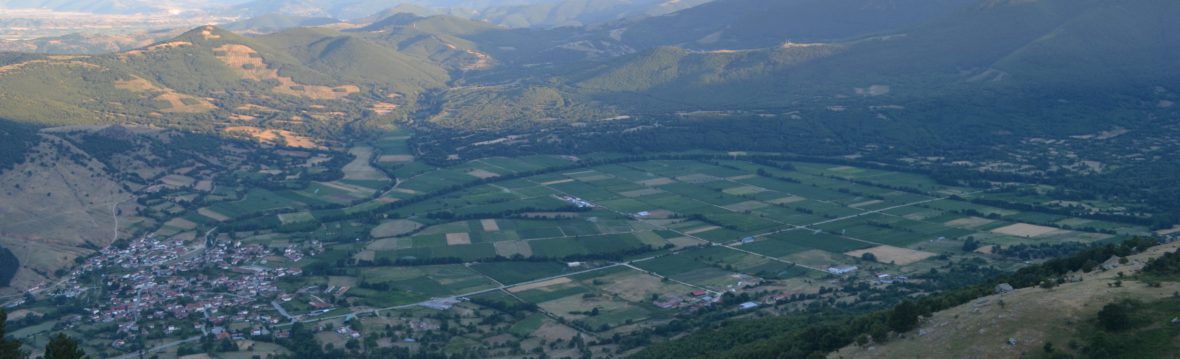

The original inhabitants to the present site of Sklithro-Zelenic first came from the settlement that was known as Sebalci on lake Zazari (Zazerci – Sarigol), present day settlement of Limnohori (Sveti Todori & Cerkeskoj). The inhabitants of this settlement fled the area after it was burnt down by the Ottomans in after 1371 (refer to the Medieval Period more specific information).
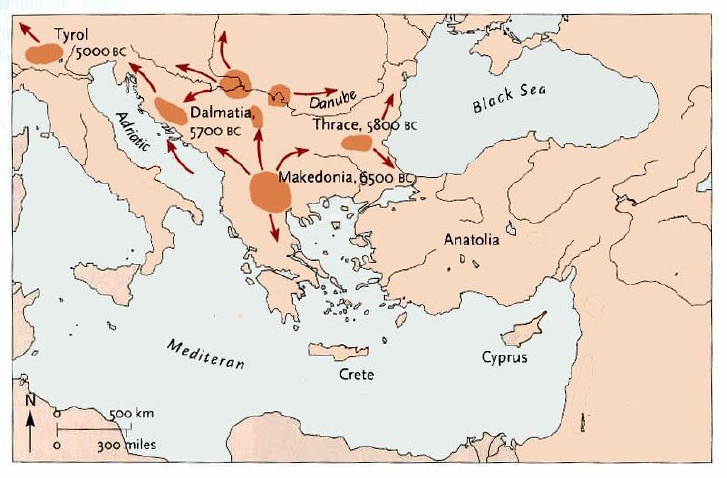
The area is known for its Neolithic and Iron Age settlement. Here are some findings in the area of Zazari and the other three lakes in the region. The “prehistoric” Macedonian period began in the early Neolithic era (ca. 6000 B.C.E.). Macedonian prehistoric archaeology is just beginning with finds on all three regions of Greece, Republic Macedonia and Bulgaria. This includes the Nea Nikomedia area in central Macedonia (ancient) area which is dated between ca. 6200-5300 B.CE. to the Late Neolithic period (ca. 4000-2800 B.C.E.) as the western and central areas of Macedonia became more extensively settled. The maps below indicate the neolithic sites that have been identified in the “Four Lakes’ region of ancient Eordaea, known as upper Macedonia. The red dot on (Sebalci) the north-east tip of lake Zazari is the location of the original inhabitants of Sklithro-Zelenic. It is also the site where 16 houses that belong in the Neolithic era were found by archaeologists.
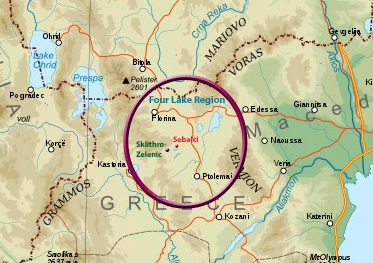
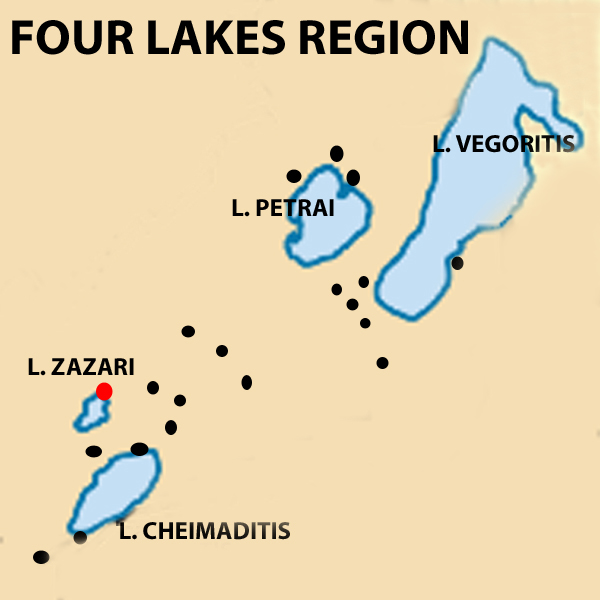
Cultures of 8,000 years and…”four lakes”
In the lake Zazari area there were 16 houses found that belong in the Neolithic era. These houses were in the lake and were exposed because of the decreased water level of the lake. That particular small settlement gives information about the society and the people in the Neolithic era. An example of this type of Neolithic settlement can be seen at the “Bay of Bones” on Lake Ohrid in the Republic of Macedonia about 2.5 hours north of the Lake Zazari location. Click here to also see a video of the site.
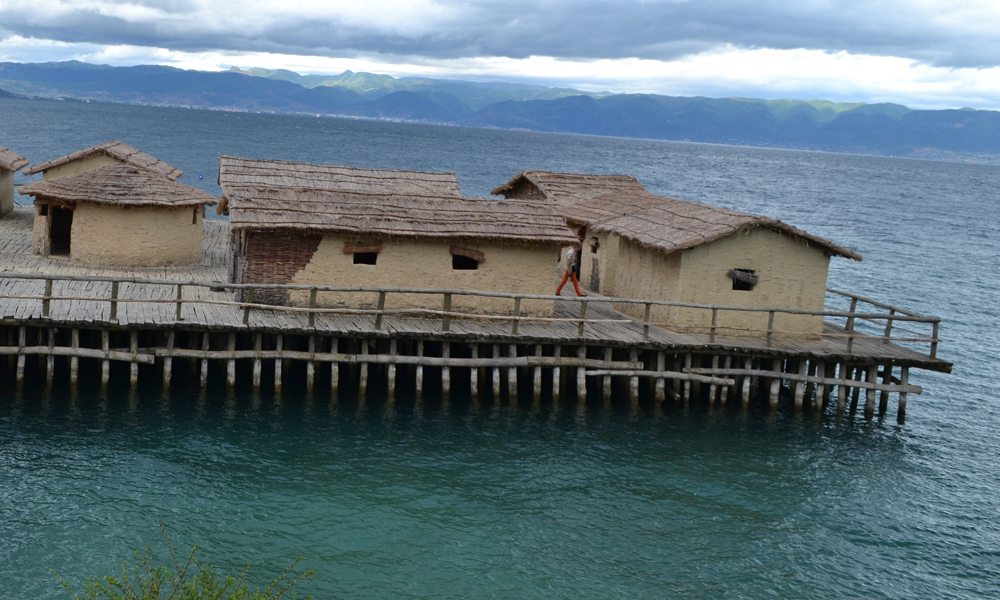
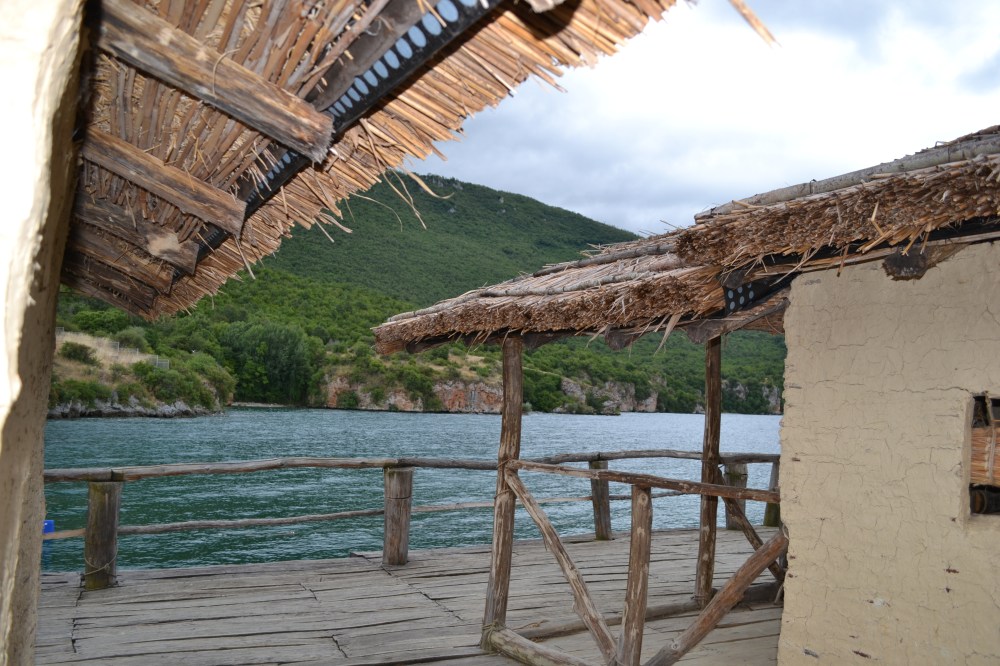
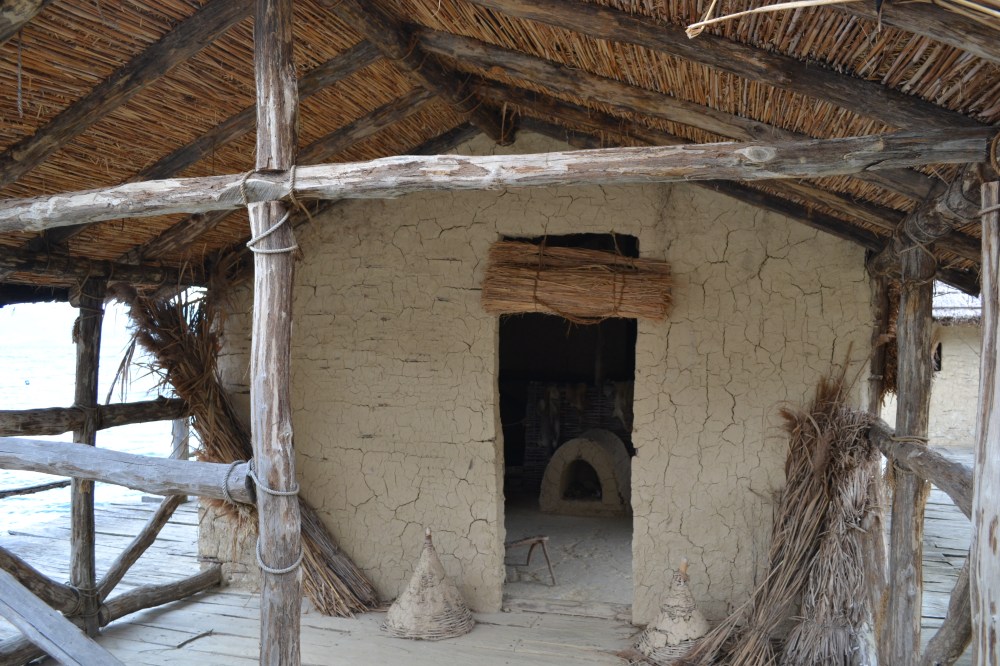
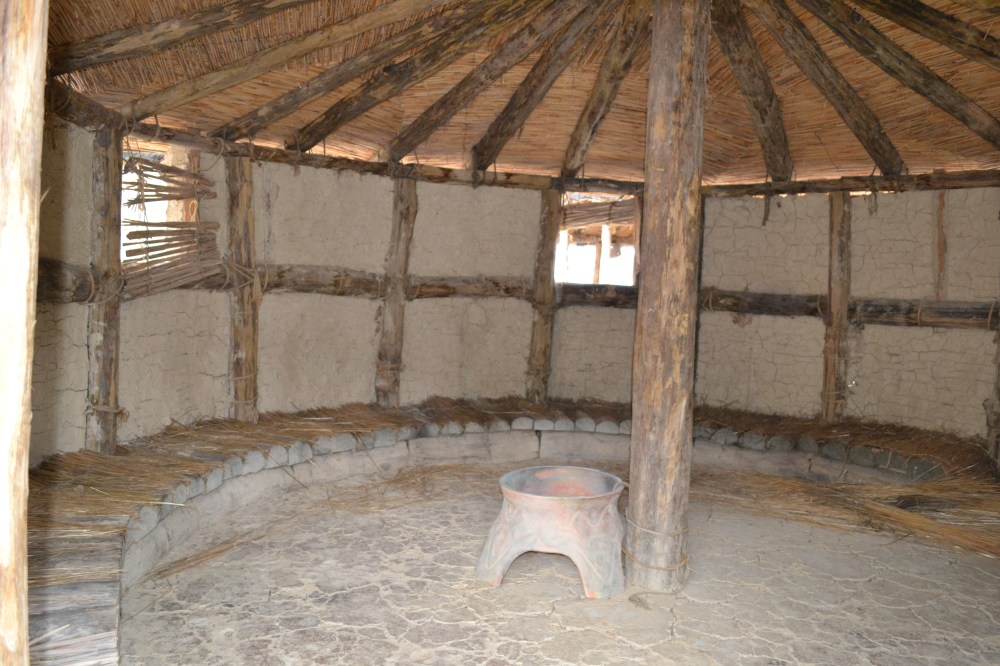
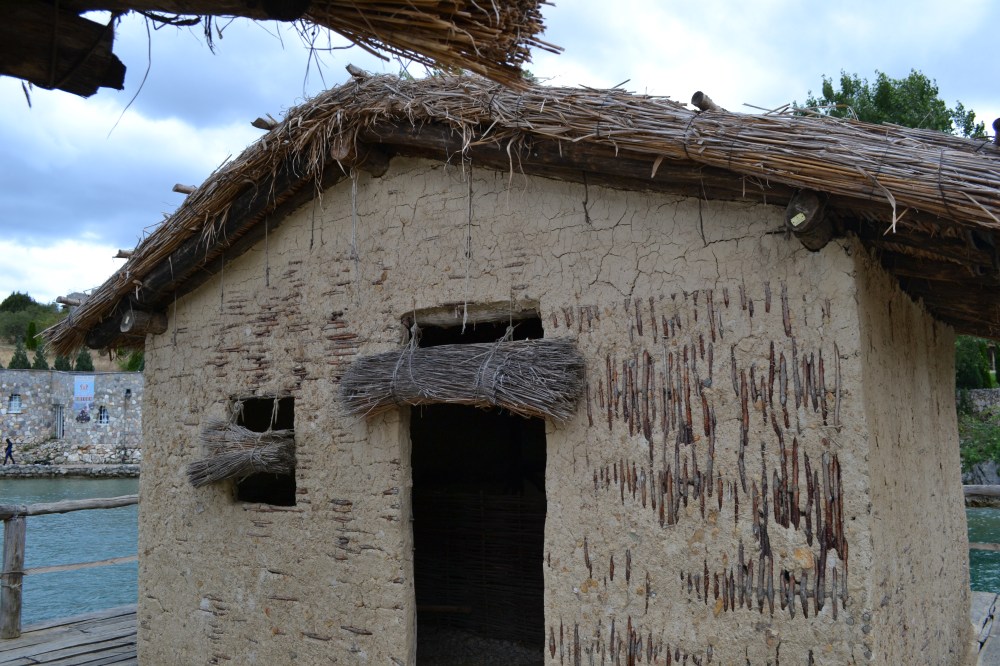
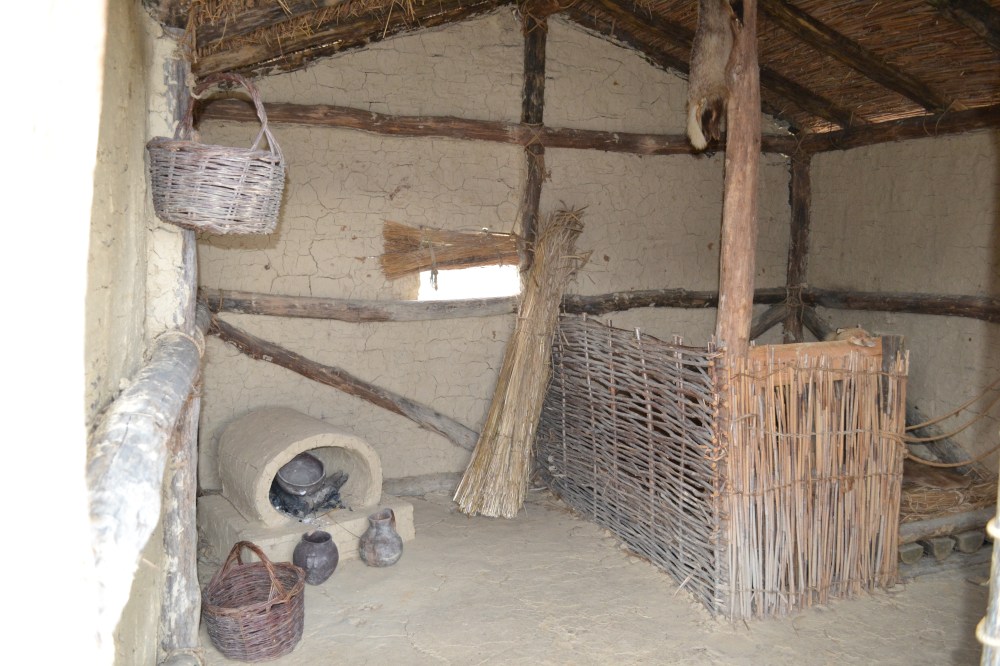
Elements from a culture that lasted for more than 8,000 years come to light through the widespread lignite mining works performed by the Greek Public Electricity Corporation- and perennial archaeological excavation in the “four lakes” area of Amyntaio, Florina.
“The Four Lakes Culture” is the title for 29th Ephorate archaeologist Panikos Chrysostomou’s (2013) lecture given during the annual conference for the Archaeological Work in Thessaloniki.
During the lecture, habits, architecture and people’s daily life, the chronological dip reaches as deep as 6500 BC, then following the track of the…water and every human activity in relation and in direct connection to it, up to the Iron Age and the 5th century BC.
“The first settlements were created during the second half of the 7th millennium BC, in or near lakes and bogs. Lake settlements of the next two millenniums were organised in neighbourhoods of three or six houses “built” on common platforms made of horizontally placed wooden beams. Usually, the houses were ground floored, with a two-sloped roof. However, the layers made of repetitive fires and the neolithic villages’ destruction’s that followed, show that many houses were distinguished for their size, they had doors and windows in every wall and they had two levels, while a balcony was built along each wall of the first floor. On the contrary, the inland settlements, spatial organization was characterized by the allocation of shafts and enclosures between retaining walls, while houses were developed in clusters of five or six”. , says Mr. Chrysostomou.
Through the study of destruction layers made by the fire-stricken neolithic houses’ remains, archaeologists found out about their internal spatial organization. As a result we know that every house had from one up to three rooms and contained an oven or a hearth used for preparing food and providing heating, cases and large storage jars for storing crops, pottery vessels for preparing, serving and storing food, benches, domestic utensils etc. At Limnochori settlement, a 7,500 year old four-post seat came to light while a number of ceramic shards dating from 6000 BC probably consisted a pot for mixing food and has been characterised as “an antique mixer”. Finally, jewellery formed by disc-shaped beads of various sizes and materials, pendants and bracelets were probably expressing the period’s sense of style as well as its symbolism.
Funerary customs were diverse according to the area and the period. As a result, while in the beginning of the Neolithic Period we meet only burials in a fetal position in the Amyntaion Basin, in the end of the period, at least in the Chimaditis Lake area, we find cremations and pithos burials (enchytrismoi), while sometimes the deceased’s ashes are kept in urns.
Stone, bone and bronze objects are also found from the Bronze Age (3100-1100 BC) while a fire at the end of the period destroys completely every element of life, sinking every housing remain on the lake’s bottom.
Neolithic settlements were relatively small, consisting of twenty to thirty houses located on mounds with clear drinking water and fertile soil for cultivating. Houses were built of vertical support beams and were coated with mud mixed with cattle manure as binding material.
Prehistoric lady figurines have been discovered almost regularly in houses, at places which were marked as cult points and designed as alter tables. Below you can see some examples of these figurines.
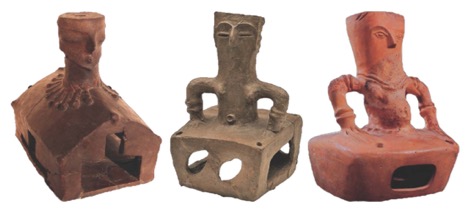
The philosophical concept is to depict the Mother as a life-giver and protector of the family and the home. The concept of the Great Mother has been artistically conveyed through an anthropomorphic cylinder on a rectangular base — a house. Her stretched hands are laid upon the roof as if she were emerging from it. In Macedonia the Great Mother (Magna Mater) was the most worshiped cult in the Neolithic period.
The cult of the Great Mother Goddess from Macedonia is probably one of the oldest of all known religions related to anthropomorphic gods. The religion included collective property, thus the Mother Goddess was protector of the wellness, home and family. The Neolithic Art was relevantly “Feminine”, on the difference from Paleolithic “Masculine” culture of hunter-gatherers who worshiped animalistic cults and deities.
Forgotten Pateli Necropolis
(Click on Title to view archeological report of the findings)
According to N.G.L. Hammond (1972) at the begging of the Early Iron Age the kingdom of which Pateli was the centre had burial practices of its rulers that were idiosyncratic by placing skulls as a frame around a complete skeleton. The rulers of the area were named the “Eordi” by Thucydides. The Eordi were the descendents of a Bronze Age people who were an unusually gifted and enterprising people and seem to have introduced into Macedonia the practice of building settlements upon piles. These people lived on the lakes of Ohrid, Prespa, Rudnik (Cheimaditis), Zazari and Kastoria.
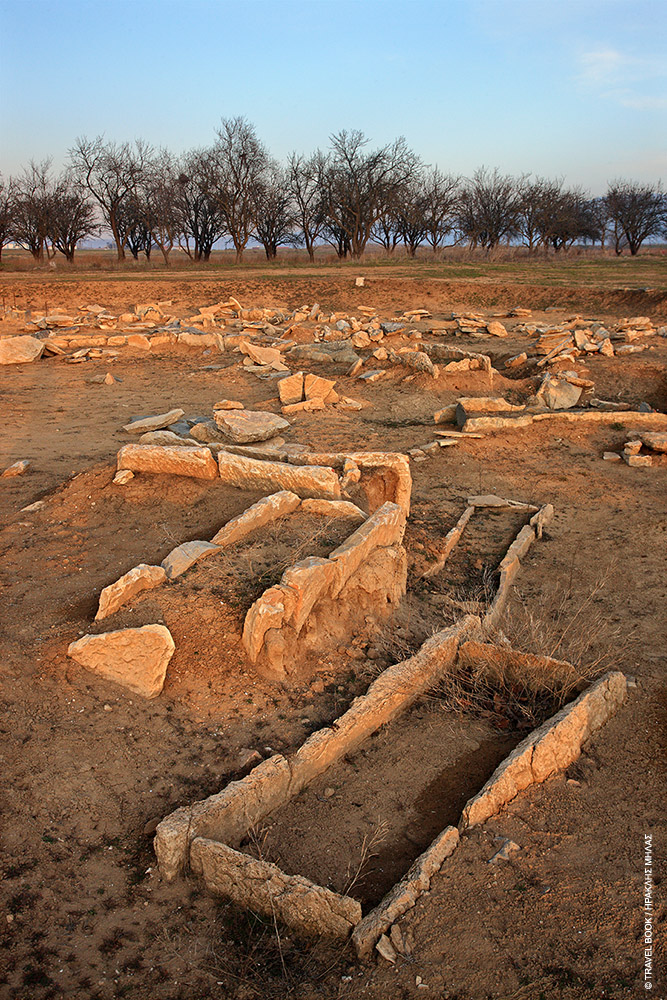
Archaeological Finding in Four Lake Region
- unknown civilization around four lakes that lasted from 6000 BC to 60 BC has been uncovered in two important excavations of a Neolithic and an Iron Age settlement in the Amyntaio district of Florina, northern Greece
- A 7,300-year-old home with a timber floor, remnants of food supplies and blackberry seeds are among the findings in a Neolithic settlement near the lakes of Vegoritis, Petres, Heimatitida and Zazari.
- Garments, women’s fashions and burial customs in northern Eordaia 3,000 years ago
- hundreds of funeral offerings in a forgotten necropolis dating from the Iron Age in western Macedonia. More than 100 years after the excavation at Aghios Pandeleimonas in Amyntaio in the Florina prefecture – known as the Pateli Necropolis
- found a total of 358 tombs dating from between 950 BC and 550 BC. Although the first discovery in 1898 of 376 graves, now in the Istanbul Museum
- the necropolis is between the lakes of Heimatitida and Petres
- The graves, mostly rectangular in shape and placed in a circular formation, contain hundreds of funeral gifts buried with the dead. Among them are:
- ceramic and bronze pots, jewelry, clothing accessories, iron and bronze weapons and tools
- pieces of jewelry, hairdressing and beauty aids in nearly all the women’s graves as well as those of little girls.
- bronze ribbon diadems and bronze and gold hair ornaments, bead necklaces of stone, bronze or shell, iron, ivory or leather belts decorated with bronze, a wide variety of bracelets and bronze rings for the middle or ring finger
- Inhabited from 6000 BC to 3100 BC in the region of Amyntaio
- the large number of objects indicate the economic activity, eating habits and daily activities of the inhabitants and include weaving looms, ceramic pots, 53 clay figurines, 25 small figures of humans and animals, a large number of jewelry items and charred remnants of plants (wheat, lentils, pomegranates and fruit seeds) which have been preserved for 7,300 years.
The Paleolithic Continuity Theory
The so called ‘late arrival’ of the Slavs in Europe can now be replaced by the scenario of Slavic continuity from the Paleolithic period, and the demographic growth and geographic expansion of the Slavs can be explained, much more realistically, by the extraordinary success, continuity and stability of the Neolithic cultures of South-Eastern Europe. (Alinei 2000a, 2003b)
The Paleolithic Continuity Theory since 2010 relabelled as a “paradigm“, as in Paleolithic Continuity Paradigm or PCP), is a hypothesis suggesting that the Proto-Indo-European language (PIE) can be traced back to the Upper Paleolithic, several millennia earlier.
The old version of the traditional theory assumed, as is known, the ‘arrival’ of the Slavs in historical times, following their alleged “great migration” in the 5th and 6th centuries. This thesis is now maintained only by a minority. The arrival of the Slavs is now placed earlier – in the Bronze or in the Iron Age.
Slavic specialists tend to justify it also by appealing to the recent dates of the
earliest attestations of Slavic languages (9th century, when the missionaries Cyril and Methodius invented the Glagolitic alphabet (from which derives the Cyrillic one), and translated parts of the Bible and of the orthodox liturgy into what is called Church Slavonic), as well as those of the earliest mentions of Slavic people, in the works of the historians of the 5th and 6th centuries.
However, overwhelming evidence (Alinei 1996, 2000), supports that the date of the earliest attestations and the earliest mentions of historians have absolutely no relevance for the problem of dating the ‘birth’ of a language or of a people. Writing is an entirely separate phenomenon from speaking, connected as it is to the forming of highly developed stratified societies, with a dominating elite needing writing to exercise its full power.
If the Slavs existed in Macedonia during the Paleolithic period, then can we assume that there is a connection between the ancient Macedonians and the Slavs?
Cumulative evidence shows a complete continuity between the Palaeolithic hunters and the Indo-European population known from texts: Celts, Germans, Slavs.
Alinei (2000, 2003) The totally absurd thesis of the so called ‘late arrival’ of the Slavs in Europe must be replaced by the scenario of Slavic continuity from Paleolithic, and the demographic growth and geographic expansion of the Slavs can be explained, much more realistically, by the extraordinary success, continuity and stability of the Neolithic cultures of South-Eastern Europe (the only ones in Europe that caused the formation of tells). Tell settlements were villages that where densely concentrated near wetlands and rivers. These communities were first inhabited in 6,000 BCE by agricultural societies.
Sources:
- Alinei, M. (2000). The Paleolithic Continuity Paradigm – Introduction. Retrieved from http://www.continuitas.org/intro.html
- Alinei, Mario (2003b), Interdisciplinary and linguistic evidence for Palaeolithic continuity of Indo-European, Uralic and Altaic populations in Eurasia, “Quaderni di Semantica” 24, pp. 187-216.
- Borza, Eugene N. In the Shadow of Olympus: The Emergence of Macedon. Princeton UP, 1992.
- Chrysostomou, Panicos & Giagkoulis, Tryfon & Maeder, Andreas. (2015). Chrysostomou, P., T. Jagoulis and A. Mäder 2015 The “Culture of Four Lakes”. Prehistoric lakeside settlements (6th – 2nd mill. BC) in the Amindeon Basin, Western Macedonia, Greece, in Archäologie Schweiz, 38.3, pp. 24 – 32. Archäologie Schweiz.
- “Cultures of 8,000 Years And…”four Lakes”.” Archaeology Wiki, 26 Mar. 2013, http://www.archaeology.wiki/blog/2013/03/26/cultures-of-8000-years-and-four-lakes/. Accessed 21 Nov. 2018.
- Forgotten necropolis, By Iota Myrtsioti – Kathimerini | Kathimerini. (2007, March 2). Retrieved from http://www.ekathimerini.com/47398/article/ekathimerini/news/forgotten-necropolis
- Forgotten necropolis. (n.d.). Retrieved from http://www.megalithic.co.uk/article.php?sid=2146412907
- Hammond, N G. L, et al. A History of Macedonia. Clarendon P, 1972.
- Kokkinidou, Dimitra, and Katerina Trantalidou. “Neolithic and Bronze Age Settlement in Western Macedonia.” The Annual of the British School at Athens, vol. 86, 1991, pp. 93-106.
- Neolithic settlements found in Greece. (2007, March 4). Retrieved from https://www.theage.com.au/world/neolithic-settlements-found-in-greece-20070304-gdplfd.html
- Online. (2013, March 26). Retrieved from http://www.archaiologia.gr/en/blog/2013/03/26/cultures-of-8000-years-and-four-lakes/
- PREHISTORIC MACEDONIAN FIGURINES | MIC – Macedonian Information Centre. (n.d.). Retrieved from http://micnews.com.mk/node/8051
- Proto-Indo-European Aryan Homeland of the Great Mother Goddess: Neolithic village of Tumba Mad’ari in Skopje, Macedonia. (n.d.). Retrieved from https://www.academia.edu/2624040/Proto-Indo-European_Aryan_Homeland_of_the_Great_Mother_Goddess_Neolithic_village_of_Tumba_Mad%C5%BEari_in_Skopje_Macedonia
- User, S. (n.d.). Agrapidia (Limnohori). Retrieved from http://www.thermalsprings.gr/index.php/en/west-macedonia/133-agrapidias-limnohori-en
Links:
 Sklithro-Zelenich-Sebalći