
Today, May 1st is most commonly associated as a commemoration of the achievements of the labour movement. It is known as International Worker’s Day or May Day and is marked with a public holiday in over 80 countries. The first May Day celebrations focused on workers took place on May 1st 1890 after its proclamation by the first international congress of socialist parties in Europe on July 14th 1889 in Paris, France. It dedicated May 1st every year as the “Workers Day of International Unity and Solidarity.”

As with many early holidays, May Day was rooted in agriculture. Springtime festivities filled with song and dance celebrated the sown fields starting to sprout. Sheep and cattle were driven to pasture, special bonfires were lit, and doors of houses as well as livestock were decorated with yellow May flowers.

May Day also has roots in astronomy as it is the halfway point between the spring equinox and the summer solstice. In ancient times, this day marks the midway points between the (four) solstices and equinoxes of the year.
In ancient Macedonia, the start of May was celebrated for the arrival of longer days and the start of the farming season. The celebration today is a combination of traditions that have evolved since ancient Greek, Macedonian and Roman times. Ancient celebrations were in regard to the agricultural season when May was viewed as a month for preparing, planting, and growing things anew.
The Goddess of what is now May Day goes back to ancient times, in Anatolia, Greece, Macedonia and Rome. Spring goddesses came to be venerated at two Roman holiday festivals that led to our May Day. The Roman Empire is important here because it took over much of Europe and the British Isles. Its mythology, associated rituals, and holidays spread and merged with local conditions, mythologies, holidays, and customs. Our culture has deep mythological roots in this holiday going back to the ancient world.
The Festival of Flora: Roman World
The Romans marked this with the Festival of Flora, a five-day ceremony to honour the Roman goddess of flowers. She was a goddess of flowers, vegetation, and fertility, and the festival was marked by dancing, gathering flowers, and theatrical performances. Eventually, it was declared a Roman holiday by Julius Caesar.

In most of medieval eastern Europe (Eastern Roman Empire), May 1 was the beginning of summer. By then the seeds for crops had just been sown and it was time to drive cattle and sheep out to their summer pastures. Both the sprouting crops and the soon-to-be pastured cattle needed divine protection from the dangers of the natural and supernatural worlds, which is why May Day developed as a holiday and took on the associated rituals and mythology that it did.
Zelenich-Sklithro:
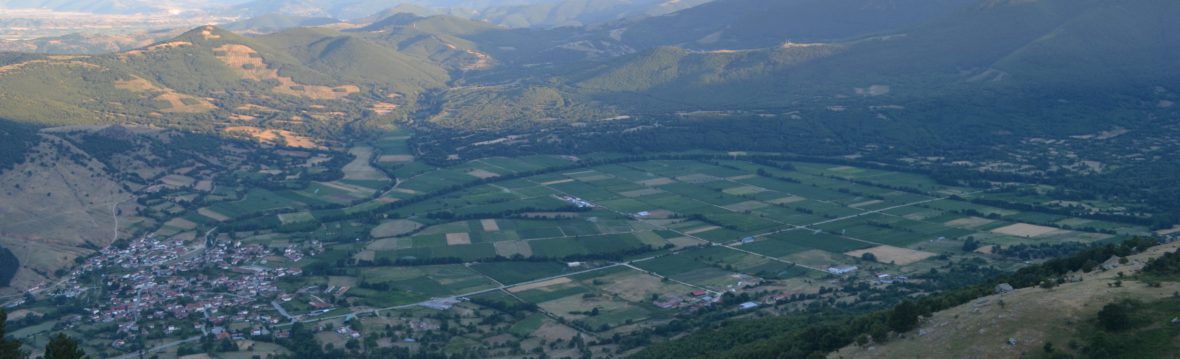
May Day is a popular folk holiday that continues its pagan character with roots deep in antiquity. It is based on the ancient festivals that still remain with the people of the Balkans. The custom of welcoming May in Zelenich and later Sklithro continues to reflect this ancient ritual.
The girls and the boys on that day would wake up early in the morning and depart for the mountains and the meadows of the local region. They would participate in this ritual in separate groups and enjoy an excursion in the flora and fauna of the valley and surrounding mountains.

There, like the older times, they participated in the rebirth of nature with symbolic rituals they would try to receive the power from creation. So, the girls would place flowers in their hair, paint their cheeks with poppies to be ruby red, go to the springs, drink water and wash to be cool, and dance and sing songs.
The role of the boys in this ritual is to celebrate with songs and to gather green vegetation that will be adorned on the doors of their homes, gates to their yards and doors of their barns to bring good health, protection and rebirth of nature for a good harvest.

May Day in Western Macedonia is associated with a variety of mainly fertile customs, and songs. In Kozani, the children cut beech branches and bring them to the hills around the village, where mainly the girls set up dances, “catching May,” and decorate their waists with wicker, so that it does not hurt them in June in the harvest. They decorate the doors of the houses with greenery, and hang a green branch in the fountain and eat something morning – morning, so that “the cuckoo does not crush them”.
In the city of Florina in the morning they go up to the hill of St. Panteleimon and compete who will be the first to collect flowers, to make wreaths that they crown themselves and take care of and hang them first on the front door of their house and to be the first to catch in May, for good, for good luck. There on the hill, the people of Florina traditionally enjoy nature until today, dancing and singing. They also invoke St. Jeremiah, who celebrates May Day, to leave their homes with mice, snakes, etc. with the arrival of May. So hitting the mass, a member of the family, turns the whole house on the eve and his auxiliary spaces shouts among other things: “Jeremiah, contribution to mice (or snakes, etc.)”, or “leave cats, snakes, mice, why May is coming “.
And in the songs of May Day, the inhabitants of Western Macedonia consider May as the preeminent month of spring and the forerunner of summer. So the following well-known and widespread song is sung on May Day in Kozani and elsewhere, when families return decorated with green flowers from the countryside.
The custom around Macedonia on May 1, is to decorate the doors of houses with flower wreaths, as a way of welcoming the power of nature and upcoming summer into the home. The wreath is made from various flowers, handpicked and knitted together. In some parts of Asia Minor, people put on each wreath, except flowers, garlic for the evil eye, a thorn to protect the house from enemies and for a good harvest.
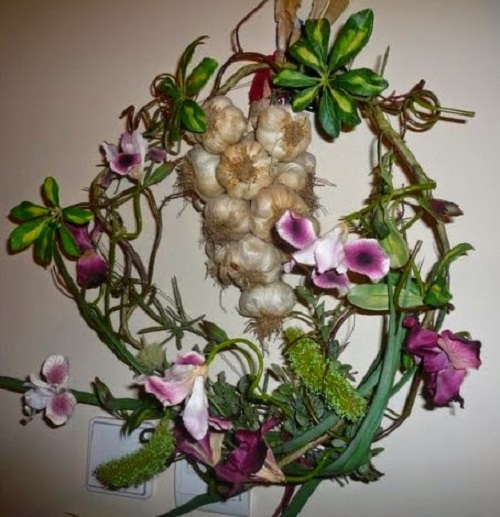
Today, people usually spend time with their families, and go to the countryside for picnics and wildflower picking which they then use to make a wreath. The day is celebrated as a national holiday in Greece and all shops are closed.

May First celebrations began as a triumph over winter and rebirth of spring and summer. Today, most celebrate it as International Workers Day but many still go back to its roots and reconnect with nature.
The May festivities all over Europe are permeated with symbolical allusions to fertility, and such an appeal to the spirits of the water would harmonize well with the analogous appeals to the tree-spirits, exemplified by the wreaths already mentioned. The divining’s by the flower petals are also obviously connected with a similar idea.
Sources:
Abbott, G. F. (2011). Macedonian folklore. Cambridge University Press.
Arkarditsa. (2017). May Wreath [Photograph]. Artkarditsa.gr. http://www.artkarditsa.gr/index.php/pages/ethima/1786-protomagia-ta-ethima-to-magiatiko-stefani-kai-ta-arxegona-latreftika-stoixeia
Canuckguy. (2013, May 10). Observance of International Workers’ Day. Commons.wikimedia.orb. https://commons.wikimedia.org/wiki/File:Observance_of_International_Workers%27_Day.svg
Codingest. (2020, May 1). Τα Έθιμα της Πρωτομαγιάς από την Αρχαιότητα μέχρι σήμερα!! Mykonos Ticker. https://mykonosticker.com/ta-ethima-tis-protomagias-apo-tin-arxaiotita-mexri-simera
Couleur. (n.d.). Dandelion Wreath [Photograph]. Pixabay. https://pixabay.com/photos/dandelion-wreath-bound-headdress-4816134/
George, A. (2017, April 26). The mythology of May Day I: The goddess of May Day. Mythology Matters. https://mythologymatters.wordpress.com/2015/04/29/the-mythology-of-may-day-i-the-goddess-of-may-day/
Gova Stileta. (2019, May 1). Τα ήθη και τα έθιμα της Πρωτομαγιάς | Γόβα Στιλέτο. govastileto.gr. https://www.govastileto.gr/life-in-the-city/ta-i8i-ke-ta-e8ima-tis-protomagias/
GTP. (2002, July 26). Εορτές & πανηγύρια ΔΥΤΙΚΗ ΜΑΚΕΔΟΝΙΑ (Περιφέρεια) ΕΛΛΑΔΑ. Τουριστικός οδηγός της Ελλάδας – GTP. https://www.gtp.gr/LocInfo.asp?InfoId=16&Code=EGRW00a&PrimeCode=EGRW00a&Level=5&PrimeLevel=5&lng=1
InEvros. (2017, September 2). Η άλλη Πρωτομαγιά: Ο Ζαφείρης, τα μαγικά ξόρκια & το αμίλητο νερό. InEvros.gr. https://www.inevros.gr/2017/05/01/protomagia-zafeiris-xorkia/
Jakubke, I. (n.d.). Wreath [Photograph]. Pixabay. https://pixabay.com/photos/autumn-old-wreath-flowers-2779494/
Kirou, I. (2019, April 30). Πρωτομαγιά στον Κρόκο. Πρωινός Λόγος. https://www.prlogos.gr/%CF%80%CF%81%CF%89%CF%84%CE%BF%CE%BC%CE%B1%CE%B3%CE%B9%CE%AC-%CF%83%CF%84%CE%BF%CE%BD-%CE%BA%CF%81%CF%8C%CE%BA%CE%BF-2/
Novus, S. (2019, May 2). May Day’s weird and wonderful Pagan roots. Ancient Origins | Reconstructing the story of humanity’s past. https://www.ancient-origins.net/news/may-day-s-weird-and-wonderful-pagan-roots-001608
 Sklithro-Zelenich-Sebalći
