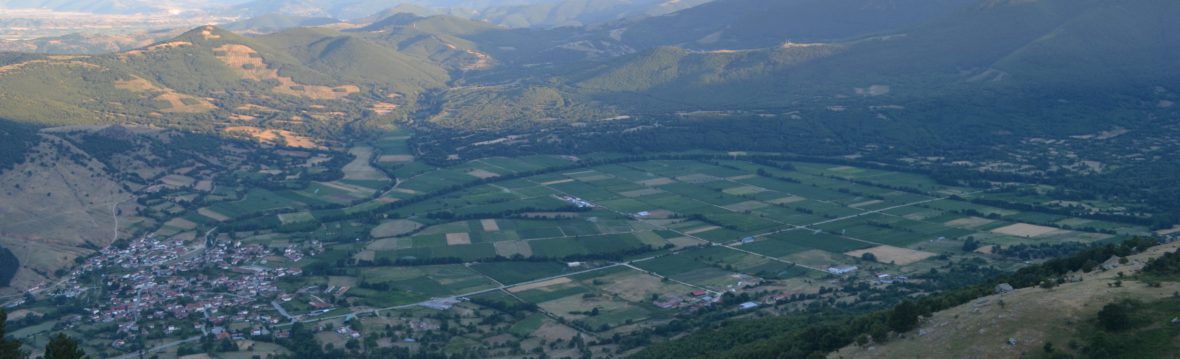


By the Late Neolithic period (ca. 4000-2800 B.C.E.) movements of people became more pronounced as the western and central areas of Macedonia became more extensively settled. These settlements were mainly small and agricultural. In the Early Bronze Age (ca. 3000 B.C.E.) more movements of people came from the east as they settled in central Macedonia, Eordaea, Lyncus, and Pelogonia. This period witnessed the introduction of the horse into central Macedonia. The beginning of the Middle Bronze Age (ca. 1900 B.C.E.) is marked by the emergence of the Indo-Europeans.
According to historians, much of central and parts of upper Macedonia were settled by Paeones and Phrygians who were fellow inhabitants or neighbours of the Macedonians. According to Borza (1990), ” the theory of the “Dorian invasions” is largely an invention of nineteenth-century historiography and is otherwise unsupported by either archeological or linguistic evidence.”
From the 2nd to the 1st millennium B.C.E. much of what is known about the culture of the people who inhabited Macedonia derives from a study of grave goods and possession of ruling groups. The excavated village site in the Pateli (Agios Panteleimonas) Necropolis is just one of those sites.
The early “Iron Age” (ca. 1050-650 B.C.E.) saw the establishment of the basic ethnic pool from which the historical Macedonian derived. Archaeological finds reveal that there was a continuity of agricultural products produced, suggesting no major disruptive invasions. The Eordi are among those people who are said to have survived as a separate group during this period.
Around ca. 800 B.C.E. Caranus establishes the ancient Macedonian kingdom and is the first known Macedonian king (808-778 BCE). Macedonians from lower Macedonia (Emathia and Pieria) moved to secure their position and acquire more land and moved west into Eordaea through the Kara Burun Pass west of Edessa. Macedonia gained possession of Eordaea around 520-510 B.C.E , as this canton (region) served a a strong buffer zone against people of upper Macedonia, thus closing the main route of entry to Lower Macedonia through the pass of Kara Burun west of Edessa. The following 3 maps illustrate the stages of Macedonian expansion.

The first stage of expansion started around 650 B.C.E. to 550 B.C.E. In 520 B.C.E. they moved into the Eordaea region west of Mt. Vemion as Eordaea was the junction of important routes between the Bitola – Kozani corridor, the main east-west route (Via Egnatia in Roman times) and the Klisoura Pass which led westward from Eordaea to Lake Kastoria and Orestis.

Alexander I “Philhellene” (498-454 BC) expend the kingdom and fight as Persian ally in the Greek-Persian wars. Alexander’s son Perdiccas II (453 – 413 BC) instigates a conflict between Athens and Sparta which turns into a 27 year long Peloponnesian War resulting in a near exhaustion of almost every Greek city-state. Archelaus (413-399 BC) turns Macedonia into an economic power and reorganizes the Macedonian army.

Philip II (359-336 BC) raises Macedonia into the greatest European Power after subduing all of Macedonia’s neighbors. The Battle of Chaeronea where the Macedonians defeat the Greeks on August 2, 338 BC, marks an end of Greek history and the beginning of the Macedonian Era. The ancient Greek writer Theopompus declares Philip “the greatest man that Europe had ever given.”
Philip’s son Alexander III the Great (356-323 BC) carries the Macedonian armies into Asia and conquers the Persian Empire. Macedonia becomes the world’s largest Empire stretching from Europe, to North Africa and India.
The death of Alexander the Great plunges the Macedonian nation into a civil war as the leading Macedonian generals fight over the rule of the Empire. By 300 BC, the Macedonian Empire is carved up between the dynasties of Alexander’s generals Antigonus I (Macedonia and Greece), Ptolemy I (Egypt), and Seleucus I (Asia).
Ptolemy, a Macedonian from Eordaea, was a close and loyal friend of Alexander. It has been written that Ptolemy was half brother of Alexander (son of King Philip II of Macedon). Ptolemy I Soter (366 BCE – 282 BCE) was one of the successor kings to the empire of Alexander the Great. He served not only as king of Egypt but also the founder of the Ptolemaic dynasty, a dynasty which included the infamous Cleopatra VII. This then makes Cleopatra a blood relative of Alexander’s.

Under Antigonus II Gonatas (276-239), the grandson of Antigonus I, Macedonia achieves a stable rule and strengthens its occupation of Greece. His grandson Philip V (222-179 BC) clashes with Rome that begun expanding eastward. The two “Macedonian Wars” against the Romans end up in defeat of Philip V’s armies. Macedonia loses the whole of Greece and is reduced to its original borders. In the third “Macedonian War”, Rome defeats the Macedonian army under the last Macedonian king, Philip’s son Perseus (179-168 BC). Perseus dies prisoner in Italy, a rebellion against the Roman rule fails, and by 146 Macedonia is a Roman province.
During the Ancient Macedonia period, the region of Eordaea became a key canton in Macedonia affairs and today it has given us increasing evidence to confirm the notion of continuity from prehistoric to historic periods. The Macedonian and Hellenistic (Macedonic) Ages are only now coming to light as new evidence is being unearthed. Being located on a major source of water, the town of Sebalci and its people must have played some type of role in the region.
The fact that there still exists today an ancient Macedonian bath in the same location as the Neolithic discovery, gives one reason to ask about those ancient inhabitants of the area.
Curative Natural Resource Agrapidia (Limnohori)
The Limnohori – Agrapidia curative spring gushes in the environment of the lake Zazari Amyntaio. Throughout the years, the shore of lake Zazari has been an ideal residential area, as we deduce from the remains of settlements from the Neolithic Era and the Bronze Age found there.
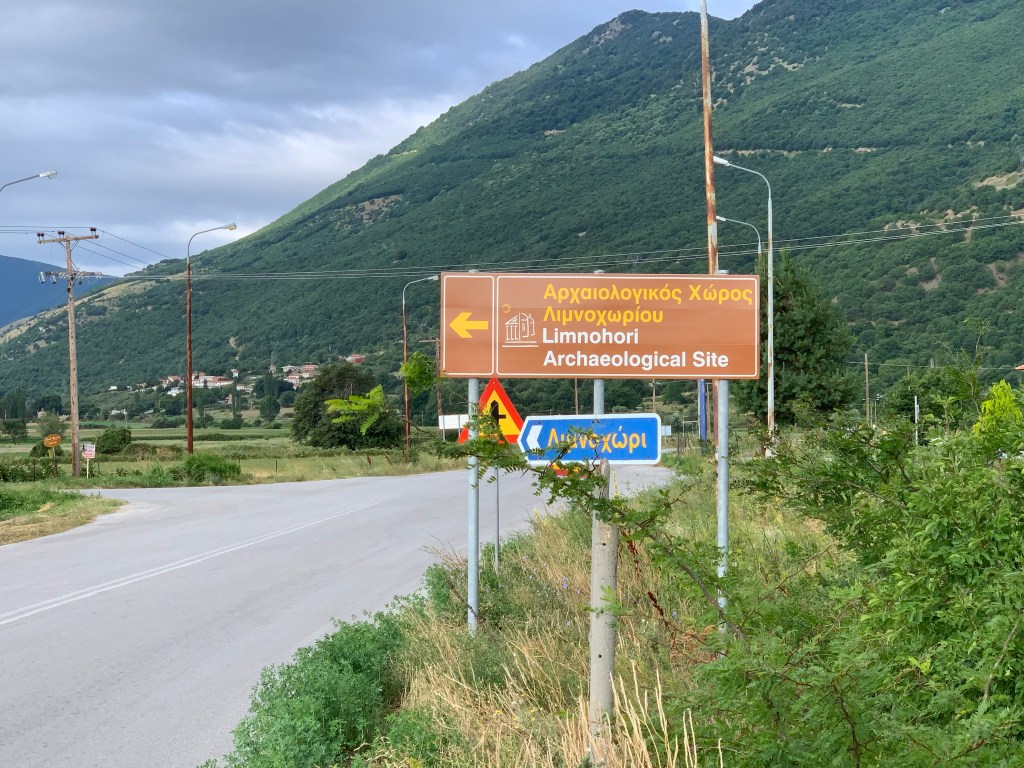

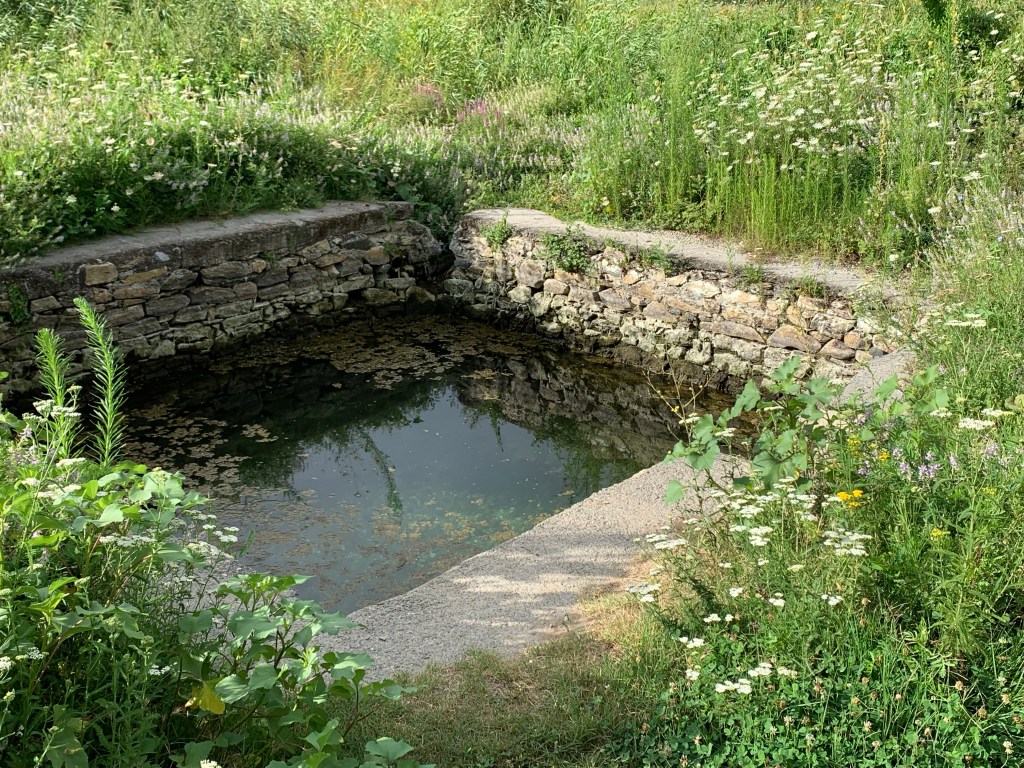
The old bath, a small, outdoor, stone built tank is located at the foot of the hill and springs from its bed. It is said to be an old Macedonian then Roman bath during ancient times. We will continue to update our site as new material is discovered and presented in an unbiased manner.
Sources:
- Borza, Eugene N. In the Shadow of Olympus: The Emergence of Macedon. Princeton UP, 1992.
- Chrysostomou, Panicos & Giagkoulis, Tryfon & Maeder, Andreas. (2015). Chrysostomou, P., T. Jagoulis and A. Mäder 2015 The “Culture of Four Lakes”. Prehistoric lakeside settlements (6th – 2nd mill. BC) in the Amindeon Basin, Western Macedonia, Greece, in Archäologie Schweiz, 38.3, pp. 24 – 32. Archäologie Schweiz.
- Hammond, N G. L, et al. A History of Macedonia. Clarendon P, 1972.
- Hammond, N G. L, and Guy T. Griffith. A History of Macedonia. Clarendon P, 1979.
- Hammond, N G. L, and F W. Walbank. A History of Macedonia. Clarendon P, 1988.
- “Uncategorized – Page 2 – Luctor Et Emergo.” Luctor Et Emergo, aureliomadrid.wordpress.com/category/uncategorized/page/2/.
- User, Super. “Agrapidia (Limnohori).” Home Page, http://www.thermalsprings.gr/index.php/en/west-macedonia/133-agrapidias-limnohori-en.
 Sklithro-Zelenich-Sebalći