

The Term “Kijani”
- In Macedonian village life, киjani (sometimes written kijaní or kijani) refers to people (usually women) who spun wool into thread.
- The name comes from the tool кија (kija) — a wooden distaff or spindle used for spinning fibers.
- So, a kijani was essentially “one who works with the kija,” i.e., a thread spinner.
Weaving Time: The Manaki Brothers’ Baba Despina (1905) — The First Macedonian Film
Baba Despina (1905), also known as The Weavers, is a one-minute silent black-and-white film created by Yanaki and Milton Manaki, recognized as the first Macedonian cinematographers and pioneers of motion-picture art in the Balkans. Filmed in their native Aromanian-Macedonian village of Avdella, then part of Ottoman Macedonia, the film portrays their 114-year-old grandmother, Despina Manaki, serenely spinning and weaving wool. Though simple in composition—a single, continuous shot—it holds profound cultural and historical weight, symbolizing the endurance of Macedonian rural life, women’s traditional craft, and intergenerational continuity. Today, Baba Despina is celebrated as the first film ever shot on Macedonian soil, marking the birth of Macedonian cinema and preserving an authentic moment of village heritage just as modernity entered the Balkans.
Cultural Role in Macedonia
- Spinning was central to traditional household economies. Villages often relied on self-produced textiles for clothing, bedding, and trade.
- The kijani would gather in вечеринки (vecherinki, evening gatherings), especially in winter, to spin wool, sing songs, and exchange news.
- These gatherings often carried a social and even ritual function — reinforcing communal bonds, transmitting oral tradition, and preparing dowries.
Folkloric & Historical Notes
- Many Macedonian folk songs mention spinning and the spindle, sometimes linking it to courtship or to symbols of fate (threads of life).
- In some regions, kijani women were hired to spin for families who had more wool than the household could handle.
- These traditions tied into broader Balkan textile crafts, but each village (including those in Florina district, like Zelenich/Sklithro) had its own songs, styles, and spindle types.
Folk Songs about Spinning (Kijani Motifs)
Spinning (предење, kijanje) appears in Macedonian folk poetry and song as a symbol of women’s work, patience, and fate. Some recurring examples:
- Love and Spinning: In songs, a girl at her kija (distaff) is often the scene where a suitor sees her beauty. The spindle turning becomes a metaphor for the turning of fortune or love.
- Example line (Florina/Bitola area): „Преле ми девојче пред кумови врата, ѕиркајќи го момче низ ајван врата.“ (A girl spins at her godfather’s gate, peeking at the boy through the doorway.)
- Lament and Workload: Spinning was also a heavy duty. A song from Kostur/Florina laments: „Сите спијат, јас предам, рацете ми горет, срцето ми плаче.“ (All sleep, but I spin; my hands burn, my heart cries.)
- Symbolic Fate: In epic and ritual songs, women who spin are compared to the Moirai (Fates) — threads of life being spun, cut, or knotted.
The Tool: Kija (Distaff/Spindle)
- Kija (кија): A straight, carved wooden stick, often decorated, used to hold unspun wool. It could be tucked into the belt or held upright.
- Vreteno (врéтено): The spindle itself — a slim rod weighted with a whorl (disk or carved weight) where spun thread was wound.
- Pradelka (предилка): A general word for a woman who spins.
- In Macedonia, kijas could be plain for everyday work, or decorated with carved geometric or floral patterns when given as part of a dowry.
Kijani Gatherings in Florina Villages (incl. Zelenich/Sklithro)
In the Florina district villages (including Zelenich/Sklithro, Banitsa, and others):
- Winter Spinning Bees (Вечеринки / Предење): Women and girls gathered in one house during long winter evenings. Each brought her kija and wool, and while spinning, they told stories, sang, and sometimes young men would stop by to joke, flirt, or sing antiphonal songs.
- Preparation of Dowries: Spinning was essential for миразот (dowry). Girls had to prepare bed linens, woven rugs, and clothing — so kijani gatherings were also a form of social training.
- Zelenich Example: Oral accounts (e.g., collected by Van Boeschoten in Songs of Life, Songs of Death, and Florina district ethnographers) mention that in Zelenich, spinning gatherings often combined with Lazarine song rehearsals and Koleda (Christmas) group meetings, since the same young women took part.
- Village Economy: In smaller hamlets like Sari Gol (near Zelenich), kijani might also spin wool for others, earning small pay or exchange in grain or cheese.
- Village practice in Florina/Zelenich shows kijani as communal hubs of female labour, dowry-making, and cultural transmission.
Macedonian Spinning Songs (Zelenich-type tradition)
Девојче преде (A maiden spins)
Original (Macedonian):
“Преде девојче пред куќата,
преде и песна си пее,
низ село момче минува,
јој, девојче му се насмеа.“
English Translation:
“A maiden spins before the house,
she spins and sings a song,
a young man passes through the village,
oh, the maiden smiled at him.”
(A typical courtship scene: the spindle turns, the girl’s song and smile invite the boy’s glance.)
Сите спијат, јас предам (All are asleep, but I spin)
Original (Macedonian):
“Сите спијат, јас предам,
раце ми горет, срце ми плаче.
Предам за мираз, за бело платно,
за свадба моја, за домот нов.“
English Translation:
“All are asleep, but I spin,
my hands are burning, my heart weeps.
I spin for dowry, for white linen,
for my wedding, for my new home.”
(This kind of song was common in Florina/Zelenich: girls prepared their dowries at night, often exhausted.)
Преле ми девојче (A girl spins)
Original (Macedonian):
“Преле ми девојче на месечина,
преле и мисли за момчето.
Момчето тргна по патот долу,
ќе ја побара за љубов своја.“
English Translation:
“A girl spins by moonlight,
she spins and thinks of the boy.
The boy sets out along the lower road,
he will ask her to be his love.”
(The moonlight + spinning motif shows up often — spinning wasn’t just labor, but tied to dreams of love and fate.)
Со вретено и песна (With spindle and song)
Original (Macedonian):
“Со вретено и песна, девојки седат,
нишат се куде, љубовни збори летат.
Кој ќе дојде вечерва, момчето младо,
ќе ја избере невестата крај него.“
English Translation:
“With spindle and song, the girls sit,
wool twists, and love words fly.
Who will come tonight, the young lad,
he will choose the bride beside him.”
(Girls spin and sing together; the gathering is also a moment of courtship, as a young man may arrive and choose his bride.)
Notes for Zelenich Context
- In Zelenich/Sklithro, these spinning gatherings (вечеринки) were remembered as key community events. Girls brought wool, sang, and joked. Young men sometimes joined to tease them or test their quickness in antiphonal singing.
- Many of these lyrics are short, repeated in cycles, with improvisation. Often a single couplet was expanded with new lines.
- Themes: work + love, dowry + marriage, longing + fatigue.
Sources:
Ethnologia Balkanica. (1997–present). Sofia: International Association for Southeast European Anthropology. Selected articles on Balkan textile and women’s labor. Retrieved October 2, 2025, from https://www.degruyter.com/journal/key/ethbal/html
Folklore Museum of Velventos. (n.d.). Folklore Museum of Velventos. In Wikipedia. Retrieved October 2, 2025, from https://en.wikipedia.org/wiki/Folklore_Museum_of_Velventos
Macedonian Folklore Museum (Goumenissa). (n.d.). Macedonian Folklore Museum. In Wikipedia. Retrieved October 2, 2025, from https://en.wikipedia.org/wiki/Macedonian_Folklore_Museum
Manaki, M., & Manaki, Y. (Directors). (1907). Housework – Women Spinning Wool [Film]. Avdella. Retrieved October 2, 2025, from https://en.wikipedia.org/wiki/Housework_-_Women_Spinning_Wool
Manaki. (2021, October 15). Баба Деспина (1905) Baba Despina (Manaki Brothers) [Video]. YouTube. https://www.youtube.com/watch?v=v1d-W0T6N6E
Manaki Brothers. (2025, May 27). The Weavers (1905) aka. Grandmother Despina [Video]. YouTube. https://www.youtube.com/watch?v=v1d-W0T6N6E
Risteski, L. (2016). The achievements of ethnology in investigating folk religion and mythology in Macedonia. Academia.edu. Retrieved October 2, 2025, from https://www.academia.edu/32088845/THE_ACHIEVEMENTS_OF_ETHNOLOGY_IN_INVESTIGATING_FOLK_RELIGION_AND_MYTHOLOGY_IN_MACEDONIA
Sarakatsani Folklore Museum. (n.d.). Sarakatsani Folklore Museum. In Wikipedia. Retrieved October 2, 2025, from https://en.wikipedia.org/wiki/Sarakatsani_Folklore_Museum
Van Boeschoten, R. (1993). Minority languages in northern Greece, report to the European Commission. Academia.edu – Find Research Papers, Topics, Researchers. https://www.academia.edu/40399950/Minority_Languages_In_Northern_Greece_Report_to_the_European_Commission
Unknown author. (2020). Phenomenology of folk region: Examples from Macedonian folk tradition. ResearchGate. Retrieved October 2, 2025, from https://www.researchgate.net/publication/339651263_PHENOMENOLOGY_OF_FOLK_REGION_EXAMPLES_FROM_MACEDONIAN_FOLK_TRADITON
Unknown author. (2023). Reconstructing the folk costume of N. Macedonia. Academia.edu. Retrieved October 2, 2025, from https://www.academia.edu/106208633/Reconstructing_the_Folk_Costume_of_N_Macedonia
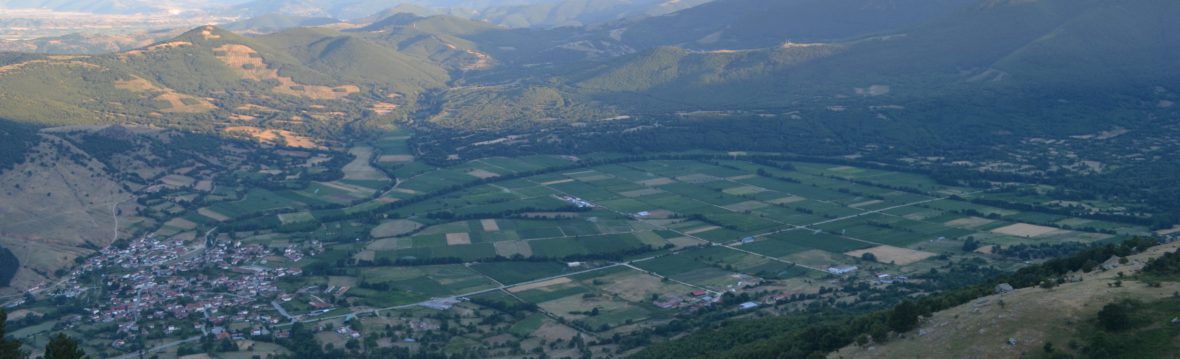
 Sklithro-Zelenich-Sebalći