
It was the month of August,
With rains and raging storms;
Everyone hurried to their homes,
Leaving their daily cares behind.
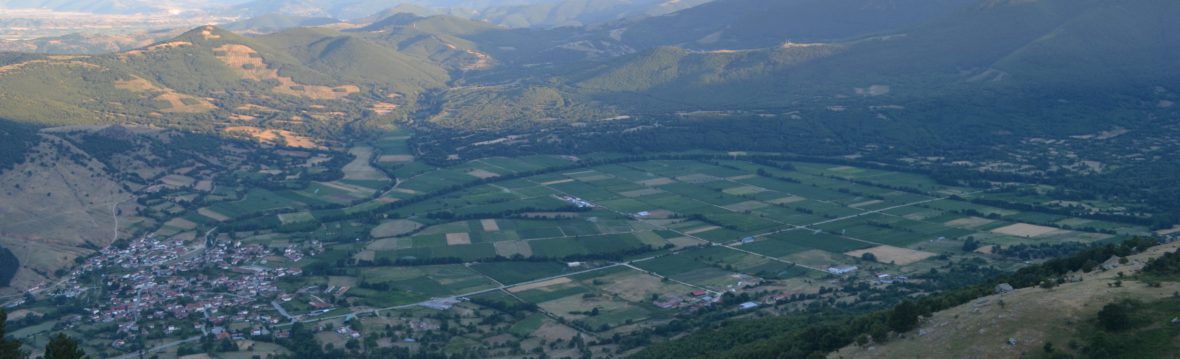
The three rivers joined as one
Near Saint Dimitrios’ shrine,
Flooding everywhere and everything,
Reaching close to Stasos’ house.
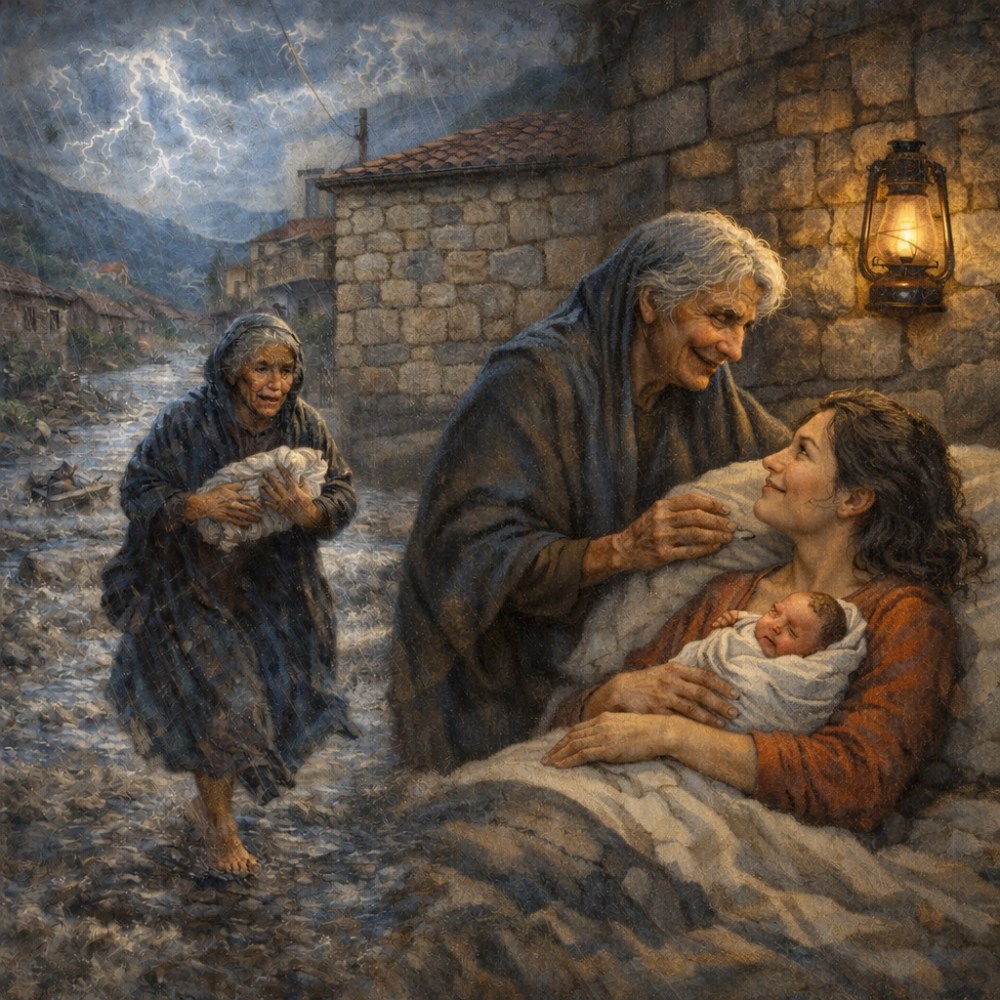
We saw an old woman running,
Barefoot through the rain;
And though the downpour did not cease,
She entered Stasos’ yard.
Geraka came out alone
And ran toward the Porios;
The torrent had swollen wildly,
Like some enormous bird of prey.
It was held as superstition
That the midwife must go alone,
So no one would grow suspicious
And the mother’s birth be light.
While the rain continued falling,
The Porios rose in fury;
Then the blessed moment came—
A tiny cry was heard.
“May the child live long,” said the midwife,
“A beautiful little girl;
May her fortune be a good one,
White as a gentle dove.”
And so the midwife carried on,
Grandmother Geraka the strong,
With her kind and generous soul
And her unbreakable resolve.
This old woman, Geraka,
With neither herbs nor magic charms,
Only the Virgin as her companion—
Her hands themselves were holy.
On the third night she would return
With a plate of fried pitoulitsi*,
And a little shirt she had sewn,
Measured carefully by the cubit.
The plate was sent back to her
With words of gratitude;
The little shirt they dressed the child in—
Now it seems a mystery to us.
The shirt was sewn without
An opening for the head;
They burned one through with embers
So the spirits would flee elsewhere.
No one could ever tell me,
Though I asked so many,
How she became midwife to us all—
As if by God’s own will
To grant life to everyone.
Perhaps because she could not save
Her own child’s life,
She dedicated all her remaining years
To helping other children be born.
Geraka the midwife
Had once been young—
Beautiful, dark-haired,
Tall and courageous.
She was married very young,
Only fourteen years old;
They had a child together
Who died after ten days.
Her husband too fell gravely ill
With an incurable disease;
They searched everywhere for a cure,
Running here and there in vain.
Her husband died as well,
Leaving her a widow
At only sixteen years old—
So fate had written for her.
People worried whom she would marry,
Such were the times then:
“Blind, crippled, or hunched—
You must accept whoever comes,”
As if hunger were not enough.
Another villager appeared;
They married through matchmaking.
He too was a widower,
And he too had no children.
Together they had two sons,
Two tall young lads;
Then her husband left for foreign lands
To gather a few dollars. (1912)
War broke out,
And Stefo Stasos was lost,
Along with many others
Who shared the same fate.
The mother raised the children alone
With love and compassion;
And then, one night, the prodigal returned
After twenty-five long years.
*Pitoulítsi – In Macedonian village custom, pitoulitsi were small fried breads or pancakes prepared after the birth of a child.
They were:
- offered to visitors who came to wish health and good fortune to the newborn and mother,
- part of the ritual of welcoming life into the community,
- a gesture of gratitude and blessing rather than simple hospitality.
The sharing of pitoulitsi symbolized:
- prosperity,
- protection for the newborn,
- and the reintegration of the mother into social life after childbirth.
Ethnographic Note: The Protective Birth Shirt
In traditional Macedonian village culture, newborn children were believed to be especially vulnerable during the first days of life, existing in a transitional state between the spiritual and human worlds. As a form of protection, the midwife or an elder woman would sew a small shirt for the infant shortly after birth. This garment functioned not merely as clothing but as a ritual object intended to safeguard the child from illness, misfortune, and harmful supernatural forces.
The shirt was intentionally sewn without an opening for the head, symbolizing a sealed protective barrier. Rather than cutting an opening with a blade, a hole was burned through the fabric using live embers (žar). Fire was understood as a purifying and protective element capable of warding off malevolent beings, commonly referred to in local belief as samovili. Burning the opening transformed the garment through purification, ensuring that harmful forces would be driven away from the child.
Such practices reflect a blending of Christian devotion—often invoking Presveta Bogorodica (the Virgin Mary)—with older pre-Christian Balkan protective rites centered on birth, transition, and communal safeguarding. The ritual highlights the important social and spiritual role of the village midwife, who served not only as a birth attendant but also as a guardian of inherited cultural knowledge.
Today, these customs survive largely in memory and oral tradition, which explains the poem’s reference to the practice as something that now appears mysterious to later generations.
Cepenkov, M. K. (1972). Makedonski narodni običai i veruvanja (Macedonian national customs and beliefs). Skopje: Makedonska kniga.
 Sklithro-Zelenich-Sebalći