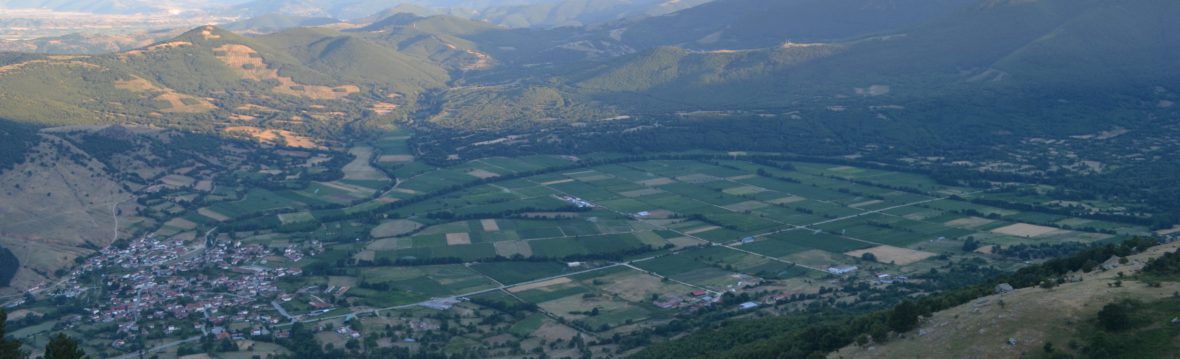

Vestiges of ancient Macedonian customs are almost unchanged in some rural areas of the Balkans. Indigenous folk beliefs and traditions of these ritual activities, although to some extent are similar with the customs of other ancient peoples, it is the modern-day Macedonians who continue to practice the specific features that characterize the folk tradition of the past. The practice of these traditions are a sign and symbol in becoming the guardians of the Macedonian identity.
The traditions that are today tied to the Christian calendar are, inherently, entirely devoted to nature and its relationship to humans. Christians celebrated Christmas and Epiphany on the same day but from the 4th century on wards, the Church decides to separate the feasts in order to give religious context and to oppose the two great pagan rituals of the “Sun God” and “Water.” Epiphany is a large annual Christian holiday of the Baptism of Jesus Christ in the Jordan River by St. John the Baptist. It is celebrated on January 6 and is the third and last holiday of the Twelve Days (Christmas holidays).
The festival holiday connected with “water” is celebrated around Epiphany, and there is an obligatory presence in the cold waters of a river, lake or sea. The Christian feast of Epiphany is very close to this custom, but it brings the memory of the ancient rituals that the people of these lands were doing at this time of the year. The most important thing about them is the ritual washing (cleansing) away of bad spirits with icy waters to be reborn and clean for the new life in the spring and summer.
The origin theory comes from Egyptian worshippers of a mysterious religion celebrating the appearance of Time or Saturn through the waters of the Nile on January 6. This was one of the many pagan “Surfaces”. It is clear that Christians in Egypt began to give their own answer as to what the true “Surface” of God is through the waters: that of the baptized Jesus.
On the contrary, the “Surface” of the waters or the god-Sun, during the winter solstice, was the climax of the circular natural flow of the world. In Rome, the celebration of Christmas had begun in the first decades of the 4th century (c. 330-340) in response to the pagan Brumalia or Saturnalia, which was the worship of the resurrected Sun, the day after the winter solstice.
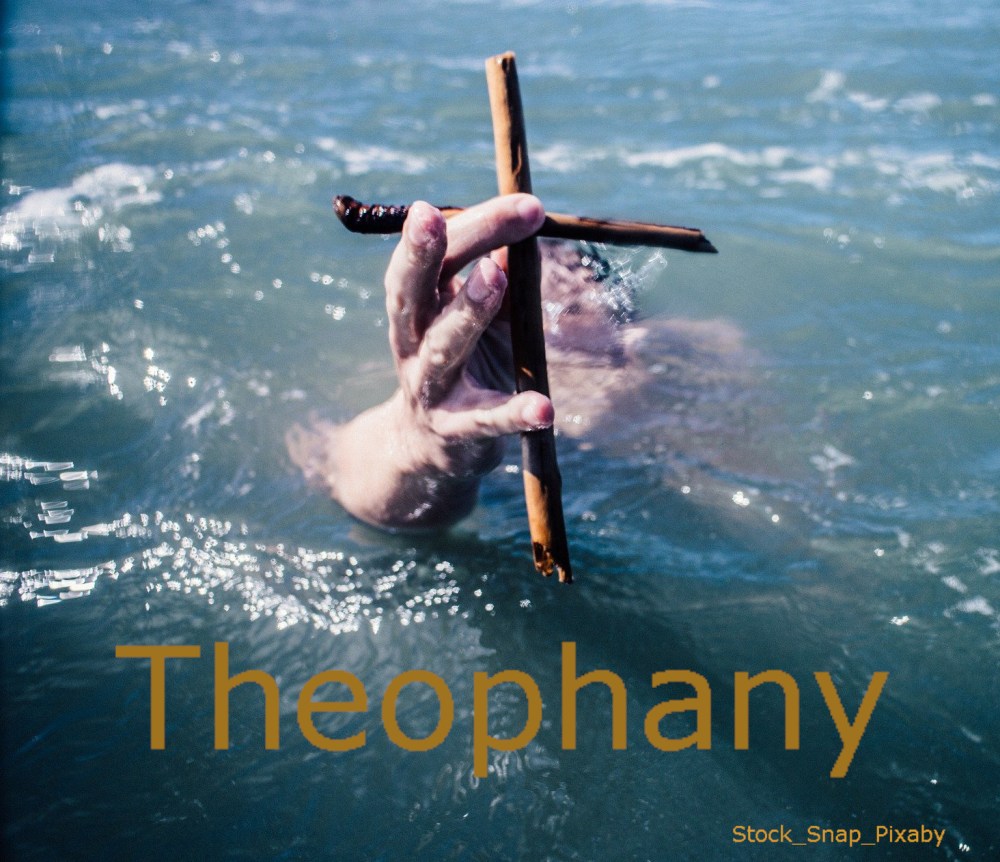
In the Christian tradition, it is the last celebration of the “Twelfth Day” – the start being Christmas (Koleda), New Year’s and St. Basil (Eshka) and lastly, Theophany (Water). In the West the feast goes by the name “Epiphany” and celebrates the visit of the Magi and in the East it is called Theophany and celebrates the appearance of God at the Baptism of Jesus.
One of the most popular celebration of Epiphany is revived each year in the city of Kastoria (Kostur) the custom of “ragoutsaria”,where the inhabitants dress up to exorcise evil. They wear scary masks that have a symbolic character and roam the streets making deafening noises with their bells. They tend to ask people for their reward, because as they used to say, it is the price to drive out evil spirits. In Zeleniche, this takes place at New Year’s Eve as it did during ancient times.
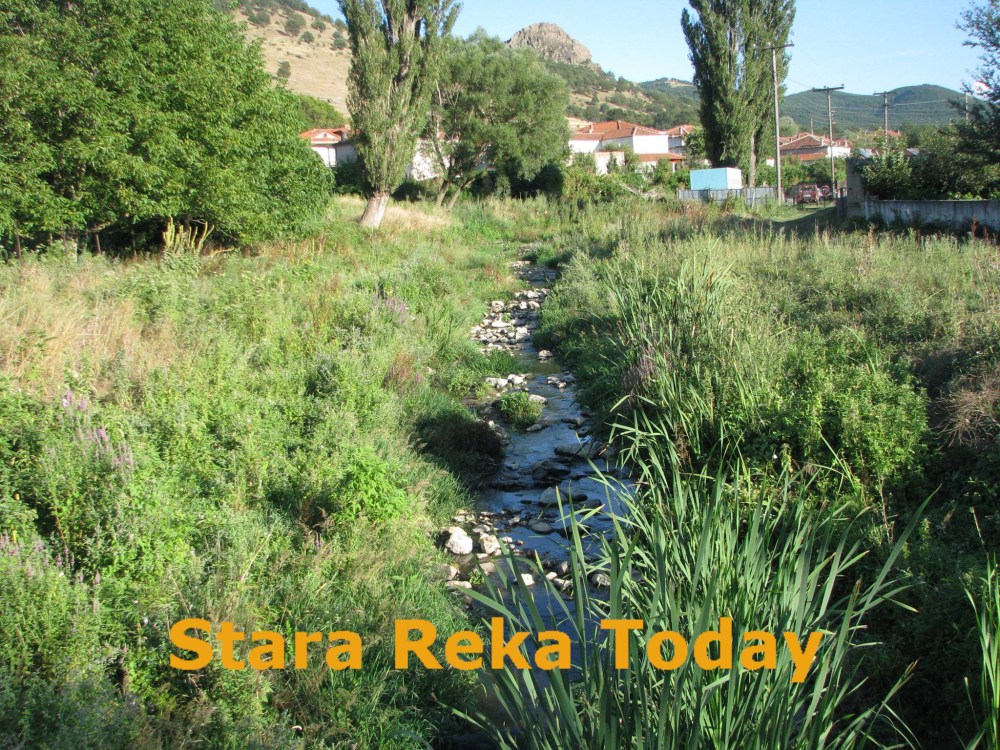
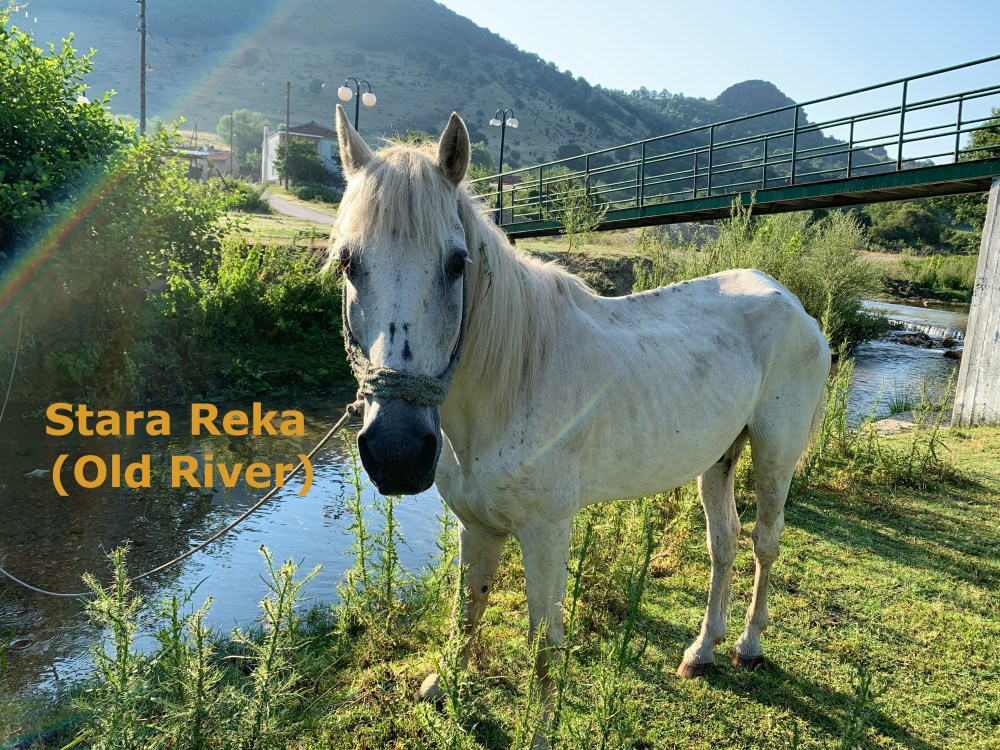
The ancient ritual of cleansing occurred during the celebration of “Surfaces – Water” in Sklithro-Zelenić, and according to oral tradition some families interviewed remember the washing/cleansing of various kitchen and religious items. But for the most part, Christian traditions have taken over the festivity of “Waters” (Theophany). Days before January 6th, young men of the village would dig a whole by the bridge of “Stara Reka” (Old River). In this whole they would divert water from the river to fill, creating a pool.

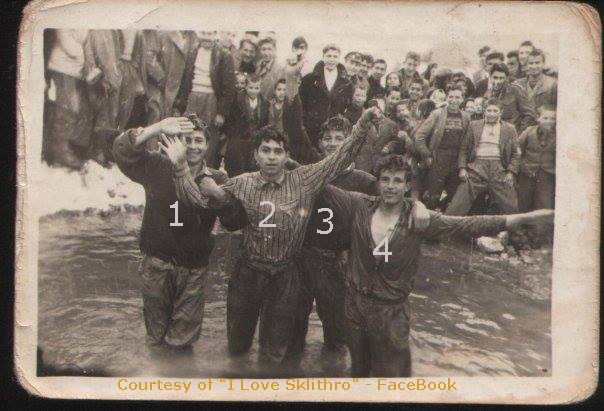
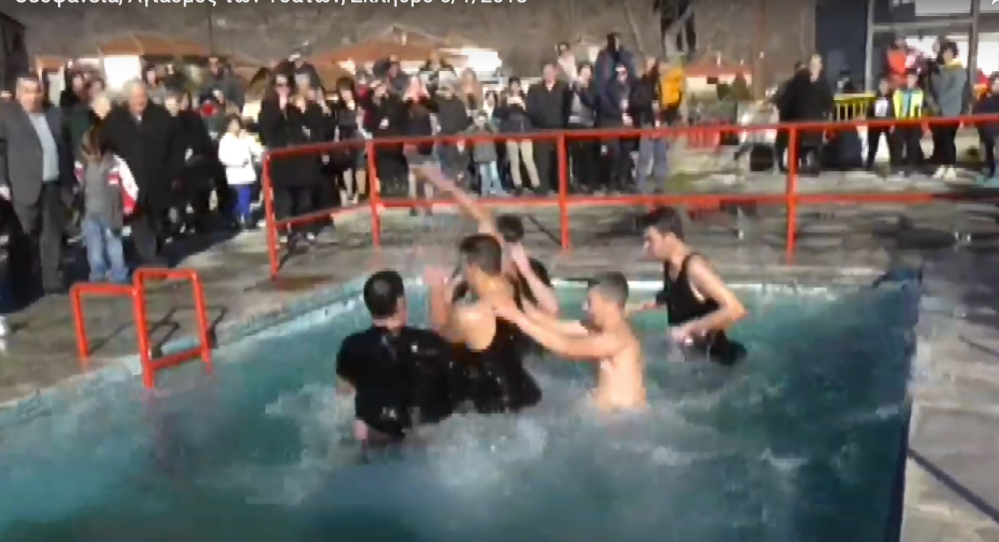
On January 6th, after the morning service, the priest would walk to the pool followed by the whole village, all the while, singing and chanting in the orthodox tradition. At the pool, a number of volunteer single men would encircle the pool waiting to dive into the water and retrieve the cross. A short ritual service would take place and at the end of the ritual, the priest would toss the cross into the pool. The young single men would dive into the pool and the one who happened to capture the cross first would have good luck bestowed onto him for the whole year.
Courtesy of “I Love Sklithro” FaceBook page

Immediately after the event, all the young single men who participated in the ritual would change into dry clothes and begin the next phase of the festivity by going to each house in the village, and singing religious songs. They would be awarded food, drink and money from each house they visited. At the end of the event, the young men would share equally the money they had gathered, with one exception, the one who retrieved the cross, would receive a little more than the rest.
In the rural areas (certain towns and villages) of the Balkans especially, former Ottoman Macedonia, symbolic rituals take place at Epiphany that coincide with the Orthodox Christian holiday of the baptism of Christ. The Blessing of the Waters (Pagan ritual) and the custom of diving for the cross (Epiphany) has become an ecclesiastically sanctioned form of a folk-ceremony.
The indigenous locals (Macedonians) saw no contradiction between the pagan character of their customs and their Christian context, since these rituals are meant to be “a praise to a fertile and good year,” a gesture which in turn “rests on the pillars of fruitfulness and productivity.”
Sources:
Abbott, G. F. (2011). Macedonian folklore. Cambridge University Press.
Atlantic Religion. (2014, December 31). Epiphany – The Atlantic religion. The Atlantic Religion. https://atlanticreligion.com/tag/epiphany/
Atlasofhumanity.com. (n.d.). Dionysus celebration in Greece. Atlas Of Humanity. https://www.atlasofhumanity.com/dionysuscelebration
Jacobs, H. (2014, January 14). This ancient Pagan celebration in Macedonia looks truly bizarre. Business Insider. https://www.businessinsider.com/ancient-pagan-celebration-in-macedonia-2014-1
Miles, C. A. (1912). Christmas in ritual and tradition: Part II. Pagan survivals: Chapter XVI. Epiphany to candlemas. Internet Sacred Text Archive Home. https://www.sacred-texts.com/time/crt/crt20.htm
Newsbomb. (2017, January 5). Πώς προέκυψαν οι ονομασίες Θεοφάνεια και Φώτα;. https://www.newsbomb.gr/ellada/ekklhsia/story/759979/pos-proekypsan-oi-onomasies-theofaneia-kai-fota
Papaskevopoulou (Παρασκευοπούλου), X. (2020, January 6). Έθιμα των Φώτων στη Μακεδονία. Parallaxi Magazine. https://parallaximag.gr/thessaloniki/reportaz/ethima-ton-foton-sti-makedonia
Shirleytwofeathers.com. (2017, January 1). Epiphany. shirleytwofeathers.com. https://shirleytwofeathers.com/The_Blog/pagancalendar/epiphany/
TaNea. (2020, June). Τι γιορτάζουμε τα Θεοφάνια – Ήθη και έθιμα αναλλοίωτα στον χρόνο – ΤΑ ΝΕΑ. ΤΑ ΝΕΑ. https://www.tanea.gr/2020/01/06/greece/ti-giortazoume-ta-theofania-ithi-kai-ethima-analloiota-ston-xrono/
Valente,, F. R. (2019, March 22). 7 Pagan festivals we still celebrate today. Through Eternity Tours. https://www.througheternity.com/en/blog/history/7-pagan-festivals-still-celebrate.html
 Sklithro-Zelenich-Sebalći