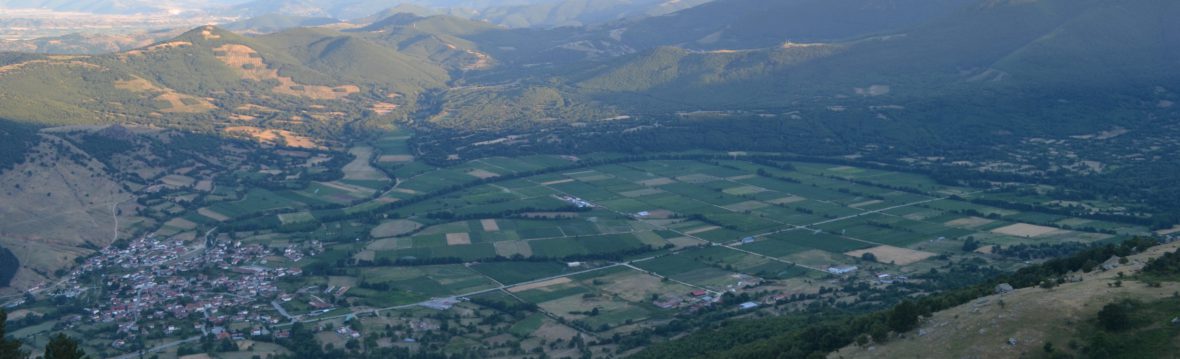


Just before midnight,
on a summer night,
our windows half-open,
yet not a single word was heard.
From the mountain opposite
the moon was rising.
A shadow appeared in the alley
beside the marketplace.
Footsteps were heard in haste,
heading toward the river.
Someone had gone to fetch
Babo Geraka, the midwife.
Labour pains seized the mother,
and she said her prayer.
She wished for nothing else
but that her child be born safely.
Babo Geraka arrived
and sent all the men away;
only the mother’s mother remained,
and they brought in two lamps.
Just before dawn,
upon a spotless white sheet,
small cries were heard —
a boy was born.
While they awaited one baby,
a strong little child,
another one came into the world —
and he too was a boy.
On their first day upon the earth,
at the dawn of their lives,
may their fate be kind,
may the unknown favour them.
Sweet breads were shared through the neighbourhood,
“May they live long,” everyone said.
Children gathered little drachmas,
and all of nature rejoiced.
The younger was named Theodoros,
the other Panagiotis.
The whole village admired them —
they were first in their class.
Whatever one had, he shared,
as if they were one body.
Nothing could ever separate them
in this lifetime.
They grew tall and handsome
like cypress trees,
and all the village girls
quarrelled over them both.
They awaited Easter in the village;
the whole country would celebrate.
Everyone said
the storm of war had ended.
No sooner had the village breathed again
after the world war’s struggle,
mortars were heard on the mountain —
the mountain ridge flashed with fire.
Unrest spread
throughout the village.
A young boy was killed
up on the mountain.
Guerrillas had killed him
while he was tending his sheep;
they took his flock
along with his horse.
One night the guerrillas came
to Astiotis’s café.
They took eight young men,
and Panagiotis among them.
Theodoros and other boys
were working in Amyntaio,
living in a cellar
to earn a suit for Easter.
Returning to the village
late at night,
they saw no one in the streets —
only deep darkness.
“Where is Panagiotis, mother,
so I may go find him?”
“The guerrillas took him, my child,
into that cursed war.”
Some time passed,
and Theodoros became a soldier.
His mother gave him jasmine
so he would never lose courage.
They placed him in the infantry,
on the front line.
He thought of nothing
but not killing Panagiotis.
In the morning the guerrillas left,
the soldiers arrived.
“Which side are you on, woman?
You feed cornbread to the rebels.”
The rebels took one child;
the other became a soldier.
My heart weeps for Theodoris,
it weeps for Panagiotis.
Kosmas Yotis (Κοσμάς Γιώτης)
English translation by Sassa Nitsev, published with the author’s permission.
Original: Poetry Collection of Kosmas Yotis