
A personal account by Dr HN Brailsford in Macedonia: Its Races and their Future Methuen & Co., London, 1906, p193-194.

I remember well our first meeting. We began our conversation in Greek, but in a few minutes we discovered that we had been at a German University together and the man I had taken for a Byzantine assumed the guise of a Berliner. Education is rare among the Greek bishops and I had never met a man among them who spoke a western tongue. His Beatitude seemed a modern of the moderns. Could this be the fanatic who persecuted Bulgarian peasants to force them into his church? Could this be the raging partisan who massed his people to drive the schismatic Macedonian bishop from the town? In five minutes he had professed himself a philosopher. In ten minutes he had avowed himself a free-thinker.
But there, above my head, on the wall, in a conspicuous place hung the photograph of a ghastly head, severed at the neck, with a bullet through the jaw, dripping blood. And then I remember the tale. That head belonged to a Macedonian chief. A band of bravoes in the Archbishop’s pay had murdered him as he lay wounded in hiding. And the tale went on to tell how the murderers carried the bleeding trophy to the Palace and how the Archbishop had had it photographed and paid its price of fifty pieces of gold. And there, over my head, hung the photograph. Somehow, we stopped talking moral philosophy.
We met once again, and this time in the Konak of the Turkish Kaimakam and once more a photograph caught my eye. It showed the Turkish authorities standing in full-dress round a Turkish cannon and in their midst, handsome and conspicuous with an air of mastery and command, was the Archbishop himself. And then I remembered another tale which told how his Grace had sent his bravoes to guide the Turkish troops in their work of massacre and blessed the cannon that was to batter the Macedonian villages to dust
The leaders of the Greek Orthodox Church were the most crazed supporters of the Greek state’s plan to eliminate the schismatic element from Macedonia. This allegiance to a program of human genocide is typified by the actions of the Metropolitan Bishop Germanos Karavangelis.
Information on Karavangelis’s psychotic behaviour is available directly from his very own autobiography “Pinelopa Delta”, published in 1959 by the Salonica Institute for Studies. In that work we note the following (and many more) admissions and comments by Karavangelis
He was the first and most fervent champion of the emergence of the andarts’ (Greek cut-throats, murderers etc) movement in Macedonia.
For seven years (1900-1907), as Metropolitan Bishop of Kostur, he maintained the slogan “let no Bulgarian remain alive”.
Together with Vardas, a Greek army officer, he inspired and helped organise the massacres at Zeleniche (Lerin) and Zagorichane (Kostur). Massacres which shocked the international community by the level of depravity and sadism which occurred.
Karavangelis regularly used assassins to eliminate people he had pre-selected. These killers were paid 5 pounds by Karavangelis, on delivery of the person’s severed head. So proud was Karavangelis of his actions, that he had one of these “trophies” photographed and displayed in his office.
As the level of andart activity increased, he writes in his autobiography
“I kept regular contact with them through the consulate in Bitola and the Metropolitan bishops. I personally met them and instructed them to kill all priests and Bulgarian teachers.”
It is surprising that the Greek Church has not sought to canonise Karavangelis for his unswerving duty to God and country. But then perhaps they already have.
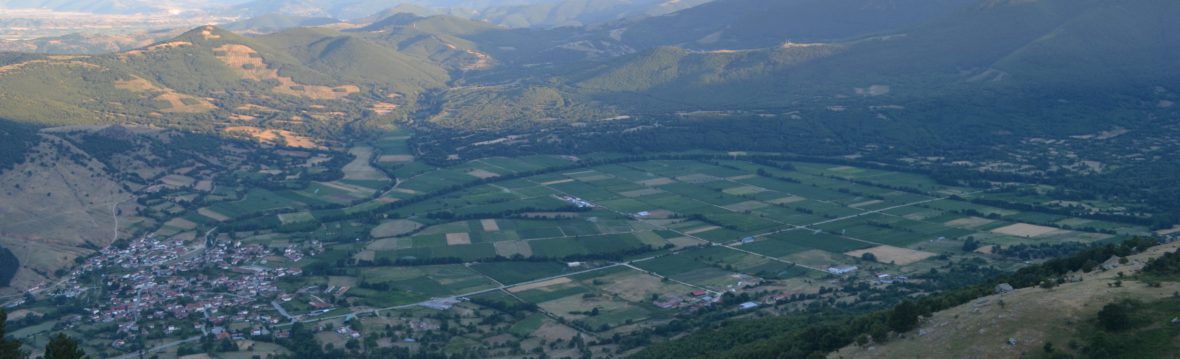
 Sklithro-Zelenich-Sebalći