
In early 20th century and especially after the failed uprising of Ilinden (July 20, 1903 – August 3 Old Calendar) the competition between the neighbours in Macedonia began to dominate as a means of pressure on residents of the area. Greek guerrillas came from the Greek state and became involved in open war with competing Bulgarian and Serbian armed groups. All the armed groups were pushing the villagers to orient themselves with their own national movement.
In the first half of 1904 as a reaction to the negative attitude of the Greek propaganda institutions towards the Uprising, especially their cooperation with the local Ottoman authorities against the population, one could notice massive transfers of many families, and later on entire villages to the Exarchate church. The Greek bishops, open allies of the Ottoman authorities, with even greater eagerness than before encouraged their priests and teachers to betrayal and spying. The consular officers of the Greek state as well as the clergy of the Constantinople Patriarchate who were constantly reporting of the “catastrophic state of Hellenism” and the need of armed intervention, but not against the Ottoman regime, but against the forces of IMRO.
The expansionist efforts of the Greek state to the north, collided with the Macedonian autonomous movement of the IMRO (Internal Macedonian Revolutionary Organization) which attracted the majority of the Christian population. Next to these populations were large Muslim populations (Turkish-speaking, Albanian-speaking), Romanian-speaking (Vlachs and Roma), Christian (Exarchic and Patriarchal) where Greek nationalist propaganda was not easy to accept by these populations.
Under these circumstances, and the fact that both Exarchic and Patriarchal Macedonians worked together in defeating their Ottoman overlords, the Greek state became very concerned. They decided to form groups of armed mercenaries led by Greek officers and sent them to Macedonia with the main goal of terrorizing the Macedonians and supporting the Ottoman state in order to prevent the formation and evolution of a strong Macedonian ethnogenesis. With the failure of the Macedonian uprising, the Patriarchists who had supported the insurrection were now being brided by Greek agents especially, Ion Dragoumis in Monastir (Bitola) and the Bishop of Kesriye (Kastoria), Karavangelis.
The massive participation of the Macedonian Orthodox Christian population
from western Macedonia, being Exarchical and patriarchate, in the Ilinden
Uprising caused a surprise and anxiety in Greece and among the Greek representatives in the Ottoman Empire.
The Secretary of the Greek Consulate in Bitola at the time, Ion Dragumis in a letter addressed to his father Stephanos dated 25 July 1903 concluded:
“we have a Slavic uprising in Macedonia… All the Slavophones listen to the Committee (IMRO) both Orthodox Christians and Schismatics (Exarchists) and most of them voluntarily.”
Ion Dragumis before the revolution concluded:
“So the majority of the Macedonian people will foment an uprising… What do they care about Hellenism? We shall remain a minority in being stripped … I pity them, they want neither Bulgaria nor Greece, but they want their own freedom, the freedom that attracted them and made them fanatics.”
In a letter to Pavlos Melas he states that:
“They (IMRO) claim… that they are not fighting to make Macedonia Bulgarian, but to create an autonomous state (Macedonia to the Macedonians).”
Greek historian, Gregorios Modis also states:
“Their slogan was ‘Macedonia to the Macedonians’ and they tirelessly waved the flag.”
Metropolitan of Karavangelis of Kastoria (Kostur) writes about the 30 Cretan terrorists he was in charge of:
“I personally met with them and advised them to kill all the priests and Bulgarian (Macedonian) teachers. “
What concerned them was the fact that the majority of that population
did not want to follow the policy of Greek propaganda, but had a consciousness
and patriotism in accepting and following the IMRO policy of liberty and of its
own Macedonian state. The participation of a great percent of the Macedonian patriarchate population in the Uprising, which by the Greek policy was declared to be of Greek ethnic origin in the Ottoman Empire.
Early in 1904, the Greek government in Athens weary of repeating their defeat with Turkey in their armed struggle of 1897, and preventing another uprising from forming, began to devise clandestine plans in acquiring Macedonia. They appointed military officers to consulates in Macedonia as intelligence agents. These men were to study the Macedonian question, to learn the Macedonian language, to collect military and cartographic data, statistics of agricultural production and information on individuals who would be a threat to their plan.
At the same time, the Bulgarian government began trying to present the Macedonian revolutionary movement as a work of the “Macedonian Bulgarians”. This in essence
made it easier for the Greek state in confronting the structures of IMRO. Greece created an excuse for justifying their own armed intervention, which allegedly was provoked by the “Bulgarian movement, which was against the Greek nation and the Ecumenical Patriarchate”.
Greek propaganda by presenting the IMRO as an armed phase of Bulgarian propaganda and justified an appropriate reaction by the Greek side. In that sense the Greek Consul in Thessaloniki, N. Evgeniadis, at the beginning of 1904 advised the General Administrator Hilmi Pasha that “Bulgarian chetas could be destroyed by creating Greek ones, which would also establish order”.
They also, began bribing key individuals with a monthly salary and free schooling for their children in Athens if they joined the Greek side against their own people. Two of these renegades at odds with their organization as a result of personal grievances were Vangel Naćev from Strebreno (Asprogia) and other Kote Ristov Saroski from Rulia, as an independent chieftain who never stopped vacillating between his new patrons and former comrades.
Both were however lost by mid- 1904 − the first killed in an IMRO ambush, the second betrayed by the bishop Karavangelis to the Ottoman authorities and hanged by them for his earlier misdeeds as a komitadji.As early as 1878, the first Greek agents entering Macedonia sent letters to the local authorities saying that they would not clash with the Turks, that their only goal was the Bulgarians (Macedonians) and that they would cooperate with the authorities. They had strict orders not to strike with Turks.
The Greek government decided to send four officers to study the situation in Macedonia. These officers were Alexandros Kontoulis, Pavlos Melas, Anastasios Papoulas and Georgios Kolokotrones. Each officer was allowed to take a companion and the four selected were, Efthimis Kaoudis, Georgi Perakis, Apostolis Tragas and Georgi Dhikonimos Makris. Also traveling from Greece were Kota (Kote Ristov Saroski) from Rulia, a Macedonia IMRO member who switched sides and helped the Greek cause for his own greed.
Originally, Kota was a Macedonian brigand who roamed the surrounding mountains of Roulia robbing travelers (mostly Turks and wealthy Christians). He was highly regarded by even Goce Delcev but in the end, even Delcev felt he was a liability since he had no principles for freeing his own people, just for lining his own pockets. After Ilinden, Kota became an agent for Bishop Karavangelis from Kastoria by being promised a salary of 8-10 Turkish liras a month and the free education of his sons in Athens.
No sooner was Kota used to train and educate the foreign Greek officers of the terrain of Western Macedonia and also introduce these agents to other unscrupulous Macedonians, Kota was betrayed by his Greek associates along with four of his band as they were caught on the 22nd of June 1904 by a Turkish detachment and taken prisoner. Bishop Karavangelis informed the authorities of Kota’s whereabouts since he became hostile to Kota on account of the latter’s refusal to assassinate a fellow Macedonian brigand, Kole from Pateli. Just as Goce Delcev gave the order to assassinate Kota, the Greeks too, became weary of his intensions, “once a brigand, always a brigand.”
The Bishop of Kastoria (Karavangelis) sent money to Kota in prison and had asked him whether he was prepared to lead Turkish detachments against the Exarchists. Kota had replied that he would sooner remain in prison. Greek policy was to work always through the Turks in combatting the Macedonians. Greek authorities were afraid Kota would disclose information concerning the mission in Macedonia of the four Greek officers. He chose to remain silent, knowing that the Greeks and the Turks were one in the same and he possibly feared for the safety of his family.
Karavangelis had many opportunities to pay for his release but chose to leave him in jail in Monastir, where he was tried, condemned to death and hanged on October 10th, 1905. In the end, Kota was instrumental in opening up the Western Macedonian frontier to the Greek atrocities that would soon be inflicted upon the villages of Kostur (Kastoria) and Lerin (Florina).
Today, Kota is presented as the preeminent Greek-speaking Macedonian warrior and is considered a Greek hero, but it is the Greeks he dealt with especially Karavangelis who, condemned him to death.
German Karavangelis – The Devil of Kastoria and Pontus
The door was now open for the Greek insurgents to take back all the villages that had gone to the Exarchist side. The first Greek irregulars dispatched in Macedonia were ten Cretans, recruited and financed by the network of Dragoumis-Melas. They arrived at Kastoria on the eve of Ilinden, merged with the Gendarmerie escort of the local bishop and engaged in intimidating both the Macedonian Exarchist and Patriarchist villagers into acts of submission. During the uprising, they actively participated in its suppression as an informal auxiliary unit of the Ottoman army.
Pavlos Melas was the leader of this clandestine group of terrorists as he and his bands ravaged the Macedonian villages first with bribes and then violence, killing those who stood in their way. Melas showed no concern for the Turkish forces as it was not Turkish policy to seek out and destroy Greek bands which were relieving the Turks of the task of hunting down the Macedonian freedom-fighting commitadjis.
Pavlos Melas, the figure who became a hero in the Greek national historiography, a few days before his death, writes to his wife the following:
“..Τώρα εννόησα, ότι δεν ημπορώ εγώ να διευθύνω τοιαύτην εργασίαν. Έτρεμα και είχα ρίγος, ησθανόμην τον εαυτόν μου ένοχαν πρίν ακόμη εγκληματίσω. Έβλεπα τα μαυρισμένα και κοκκαλιάρικα χέρια μου και μου εκίνουν φρίκην (…) Το βράδυ… επήγα εις την εκκλησίαν του μοναστηρίου, την χαμηλήν, παναρχαίαν εκκλησίαν. Και εκεί μόνος εις το σκότος έκλαυσα με απελπισία. Ησθανόμην ως εις την κόλασιν και εντελώς μόνος. Ελησμόνησα όλον το ωραίον, το υψηλόν και το ευγενές μέρος της αποστολής μου και έβλεπα μόνον φόνους αγρίους, δολίους, ερήμωσιν οικογενειών, απελπισίαν γονέων, τέκνων, αδελφών.“
Translated:
“.. Now I understand that I can not direct this work . I was shaking and shivering, I felt guilty before I even committed a crime. I saw my blackened and bony hands and they make me horrified (…) At night I went to the church of the monastery, the low, ancient church. And there alone in the darkness I wept in despair. I was in hell and completely alone. “I forgot all the beautiful, the high and the noble part of my mission and I saw only savage murders, deceit, desolation of families, despair of parents, children, brothers .”
If Pavlos Melas felt such guilt and despair, what of those innocent Macedonians who he and his band terrorized and murdered?
On Friday September 17, 1904, Melas and his group enter Prekopana (Perikopi) and kill the priest and the teacher. In his letter to his wife, he describes his feelings as they leave the village, “All the while I was walking around drunk, crying almost constantly. I think of you all with despair, with despair. I thought that the beautiful and noble work that I undertook would be performed only with noble and beautiful deeds, without thinking about the hard deeds, to which I wanted to answer and their terrible details . It’s been 24 hours and I still cry when I think about it.”
On October 13th, 1904, Melas met with other Greek bands (Kirou and Kaoudis) in Statista (Melas). But Melas’s movements were known to Mitre Vlach who, send a messenger with a letter written in Greek, to a Turkish force in the area that, Mitre Vlach was in Statista. Due to a price on his head, Mitre calculated that the Turkish officer would investigate the tip and enter the village. Upon doing so, the Turkish force engaged in a fire fight which resulted in killing Pavlos Melas and not Mitre Vlach.
Pavlos Melas had strict orders not to strike the Turks but, he is eventually killed by them. The Turks did not know they had killed Melas until the news was announced in Athens. Up to that point, the Macedonian issue was the concern of a few wealthy Greeks but after, it became a national struggle prompting many fellow Greek officers to go to Macedonia to seek vengeance for his death. This vengeance was not towards the Turks that had killed him but, the Macedonian Exarchists.
As a result of the letters to his wife, some speculate that Pavlos Melas did not have the stamina to carry out such brutal acts of violence against the Macedonians and that Kaudis and his gang of thugs devised a plan to get rid of Melas because he was becoming a liability and would compromise the secret mission. One fact that we do know is that Melas was just wounded by the Turks and as a result his group of mercenaries were more concerned in saving their own lives so they may have dealt the final blow by killing him in order to secure a hasty and quick retreat. They would not have been able to do so if they had to carry him to safety.
Thus, began the so-called Macedonian Struggle in Greek national history with the death of Pavlos Melas. This struggle was actually a “Greek anti-Macedonian struggle” which from 1904 to 1908, supported the Ottoman Empire in the systematic effort by the Greek state to strike at the national-democratic separatist movement of the Macedonians.
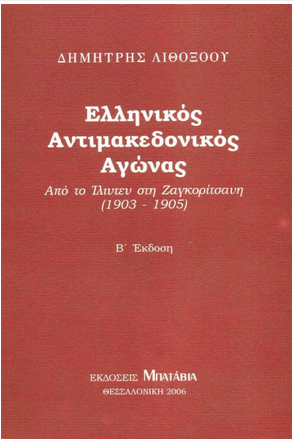
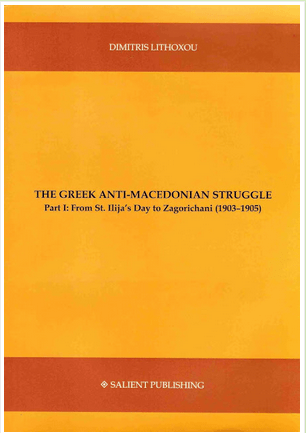
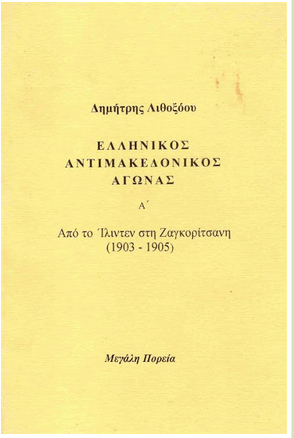
In this struggle, the Greek state and nationalist parastate allied with the Ottoman authorities. Plenty of money and weapons were allocated for the formation and sending of armed mercenary groups to non-Greek-inhabited Macedonian lands, in order to terrorize the Macedonian population and to stop the process of Macedonian ethnogenesis.
Greek mercenary groups, led by Greek officers and non-commissioned officers, slaughtered, raped and looted. They sowed horror and death in the Macedonian villages and tried, unsuccessfully, to prevent the development of the Macedonian national ideology and the democratic-separatist struggle of the Macedonians.
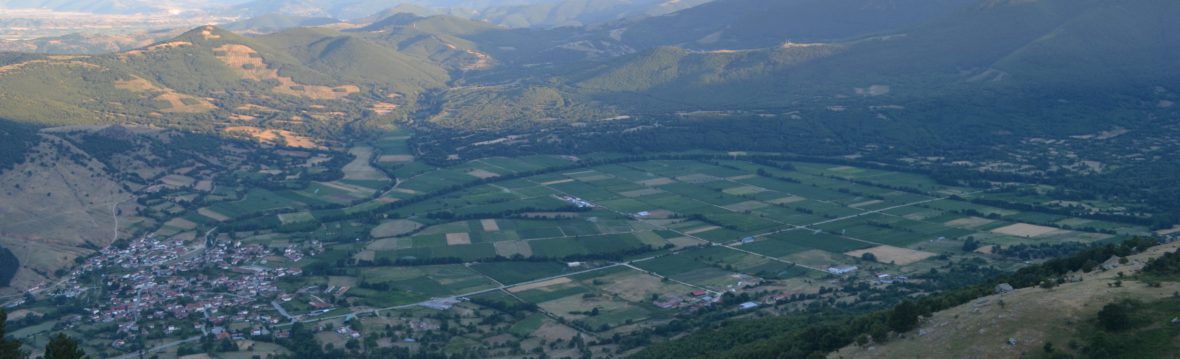
The first “shots” to be taken by this now public movement were taken in the village of Zelenich (Sklithro) at the “Bloody Wedding” known as the ‘Krvava Svadba.”
The Bloody Wedding – Krvava Svadba in Zelenić[h]
The village of Zelenich, as many other Macedonian villages in western Macedonia belonged to the Ohrid Archbishopric which up until 1767 administered this area with the use of “Old Church Slavonic.” When the Greek Patriarchate convinced the “Porte” (Ottoman administration) to outlaw all the other eastern churches and elevate the Greek church and use of Greek in all Balkan churches, all peoples of the Ottoman occupied Balkans began to organize and resists this change.
The Greek Patriarchate sent Greek Bishops and priests to most of the cities and towns to change the very fabric of the indigenous populations but, they did not have enough clergy to occupy the small towns and villages. As such, Zelenich continued to use “Old Church Slavonic” (Macedonian). Even Kostur (Kastoria) Bishop Karavangeli mentioned in 1903, that Zelenich did not have a Patriachist service since the formation of the Exarchist church in 1870s. This made Zelenich a target and the “Exarchist” wedding became a reason to exploit the Macedonian village for its choice to align themselves with the Exarchist church and use their native tongue in religious services.
On November 13, 1904, Lena Kaleva the granddaughter of Giorgi Kalev-Kaleas, the exarchate priest from the village was to marry Trifon (Turpche) Gotev, son of one of Zeleniche’s most prominent citizens. Greek Bishop Karavangelis was informed of the wedding and devised a plan to take revenge for the death of Pavlos Melas and send a message to Macedonian Exarchists that their choice to switch church affiliation would be dealt with violence. As a result, a band of Greek terrorists attached the wedding celebration and murdered nineteen and wounded three, who eventually died of their injuries. In total, 21 people were murdered.
The terrorists could not have achieved their goal of terror with local assistance from paid criminals from the villages of Eleovo (Lehovo), Strebreno (Asprigia) and Zelenich (Sklithro). Captain Evtimio Kaudis with the guidance of Bishop Karavangelis proposed the attack and was supported by deputy Georgios Katehakis (Captain Rouvas), who had a detachment of 60 people who entered Macedonia on October 20, 1904 and settled in the village of Lechovo.
There, on November 9, Kaudis got word from two convicts from the village of Zelenich, a Turkish gendarme named Soulio and a Christian named Kosmas Grameni (later Hellenized to Grammenopoulos), that on Sunday, November 14, Zeleniche’s ex-priest was to marry his grandaughter. *Even though written sources state that Kosmas Grameni/Grammenopoulos was the person who helped the Greek terrorists, oral history identifies Stefi Vangeleff (later changed his name to Stefanos Gramenopoulos)as the one who actually assisted the terrorists.* Kaudis had sent one of his Lehovo informants to Zelenich by horseback to make sure the plan was in place. He travelled via the old road which meandered along the “Stara Reka” old river and went to the Grameni (Grammenopoulos) house. Outside the house the Lehovo man said to Kosmas Grammenopoulos in Albanian, “is the plan on,” Grammenopoulos replied, “it’s on.”
At the same time, “Baba Eleovska” happened to pass by and being from Lehovo, she understood Albanian. She told her husband and he informed the two families and told them to put guards outside the houses but, he was told that the “Greeks” would dare not attack since they had the Turkish Agha attending the wedding as well as Ali Bey from Gortsko (Agrapedias). He was the only one with a weapon and the memoirs of Karavitis and Kaudis are manufactured when they wrote that there was return shooting back at them.
Saturday night, Soulios goes to Lehovo and leads them to his village. They arrive at the priest’s house but only find an old woman thinking it is the priest’s wife. One of their group asks her where the priest is and she replies, “ne znam” in Macedonian (for I don’t know). Apparently the wedding celebration was taking place at the grooms house. They quietly head for the other house where they are met by Stefo Vangeleff (married to a Gramenopoulos), four other Grammenopoulos (Grameni) men and the Turk Souli who also lived in the village.
Stefo Vangeleff managed to get into the house by speaking Macedonian to the woman who opened the door, since the Greeks could not communicate with the villagers at all. As the woman opens the door, she is stabbed in the stomach by one of the men, most likely Stefo Vangeleff. This woman happened to be pregnant. Once inside, they go up the staircase and open the door leading to a big room where the wedding celebration is taking place. As they open this door they point their rifles through the opening and systematically kill as many as they could before leaving the village. On the side of this door is 14 year old Kuzi Tsilkov, he froze in horror seeing such a deathly event. Just before the attack, Georgi Karayani had gone to the cellar to bring up wine, a fate that saved his live but would eventually be the cause of the death of his two sons. The sock in thinking their father was killed eventually caused them both to die from cardiac arrest.
The list below was compiled from documented sources as well as oral history stories from the villagers of Zelenich.
- Stojan Gotev – 44 years – brother of the bridegroom;
- Gligor Gotev – 19 years – son of Stojan Gotev
- Dosi Stojnov – 38 years;
- Vladimir Stojnov – 13 years
- Mikhail Puchov – 32 years;
- Lambro Stoykov – 23 years;
- Pando Mechkarov – 35 years old member of IMRO;
- Dori Almanov – 42 years old;
- Argir Pandilov – Grandmother – 45 years;
- Maria Pandilova – 10 years;
- Lazar Kostichinin – 11 years;
- Dosta Lazova – 50 years
- Hussein Abdullah Kerim – 50 years
- Dori Olymata (came same day from Istanbul)
- ?, Dosev (Tsitsos) – Dori Dosev’s relative
- ?, Dosev (Tsitsos) – Dori Dosev’s relative
- ?, Frengo(s)
- ?, Frengo(s)
- Ali Bey – from Gortsko (Agrapedias)
- 3 of the wounded would later die as well
One of the men killed was Dori Olymata, husband of Maria (Karayanche). Maria went to look for her husband and found his body under ten other dead bodies. Later, at the trial of this crime in Bitola, Maria identified one of the murderers. She pointed at Stefo Vangeleff, and angrily shouted, “Ti, bre kuche, ti beshe.” (You, you dog, you pig, it was you.) The guilty parties, however, spent very little time in jail. Stefo Vangeleff was imprisoned for his involvement in the crime, until the end of July 1905, along with four other Grammenopoulos men.
In TOTAL – 22 PEOPLE WERE MURDERED IN COLD BLOOD – this is the number mentioned in the oral history of the village. After the crime the perpetrators boasted that 43 were killed, some had the number as low as 13 and as high as 47. Some informants living in the United States remember their parents mentioning 19 people killed. Most likely there were individuals that were wounded and some of them may have died of their injuries. The Turkish authorities were not interested in persecuting those who committed the crime. They knew of the attack and did nothing to prevent it. Only when Austrian and Russian Consuls visited the village and got involved and they put pressure on the Ottoman authorities in Monastir (Bitola) to prosecute the four Grammenopoulos men and Stefo Vangeleff who incidentally changed his name to Grammenopoulos probably to protect his own relatives.
It was said that the newlyweds Elena (Kaleva) and Turpche Gotev escaped to Ioannina and later they returned to Zelenich where their only child (daughter) Genka was born. Genka would then marry Lambo Pliakov (Pliakes), son of the former village teacher, Vani and mother to Stefo (Steve) Pliakes, a Macedonian patriot in Canada.
Elena Goteva (bride) would later say: “This wedding was a folk wedding. There were no Macedonian revolutionaries at the wedding. They were all peaceful villagers. There was not a single Greek in our village. Karavangelis from Kostur and the Greek Andartes killed us to scare us and say that we are Greeks … “
The links below are on various published memoirs and diaries of the Greek terrorists, a number of Greek anecdotal historical documents, published news reports from the Republic of Macedonia [North], as well as anecdotal first and second hand accounts from villagers of the Anti-Macedonian nature of the Greek struggle.
Click on the button to read the reports
The overall motive of the criminal act committed by Greek terrorists and supported by Macedonian criminal informants and collaborators (bribed for their loyalty), was to strike a civilian event in order to inflict terror upon the Macedonian people. The Greek coward terrorists, did not attack an armed revolutionary group (Cheta), they attacked a wedding celebration because the people of Zelenich chose to align with the Bulgarian Exarchist Church and not the Greek Patriarchist Church.
Making the News:
- The news about the bloody marriage arrived in the American press [The San Francisco Voice, 18/12/1904];
- The Salt Lake Herald, 18/12/1904]
- The body of Lieutenant George Katehaki Rouvas killed 47 people who enjoyed marriage in the home of an outlying family [Lithoxos, and Dakin].
- The newspaper EMPROS wrote that the guests did not resist the Greek fire, that “the women and the children were literally beginning to fall on the stairs, the songs were stopped and the dance stopped and the room was steeped in the corpses in a few seconds” [EMPROS, 22/11/1904].
- Macedonian Comitato, that the Greeks killed 42 people [Tsamis].
- After the slaughter, he was imprisoned for his involvement in the assault, until the end of July 1905, along with five other Grammenopoulos (Bardas)
- On July 30, 1906, the Greek organization murdered the Priest of Zelenich [Consulate of Monastiri, 5/8/1906, Document 511]
- At the end of September 1906 the village, according to the Dakin, received a new assault by a Greek corps [Dakin]
- Bardas noted in his diary on April 13, 1907 that he was informed of the murder of another eight detainees in Zelenich, “under the people” [Bardas]
Protests were made by Austrian and Russian ambassadors and also by the English Chargé d’ Affaires. They all protested strongly to the Turks at Istanbul (Constantinople) about the affair at Zelench, pointing out that nearby troops at Neveska (Nymphao) did nothing. This was confirmed by their consuls in Bitola. In reply the Turks explained that it was difficult to get onto the track of the bands and that the protests would be more appropriate if directed to Athens, Sofia and Belgrade. It was obvious that the Turks welcomed the appearance of the Greek and Serbian bands as they were some sort of check upon the Macedonian revolutionary movement. They did not go out of their way to restrict the activities of the Patriarchists.
At that time, a member of the Macedonian Revolutionary Organization, Georgi Pop Hristov, was in Ekshi Su (Xeno Nero) and learned of the attack on the village of Zelenich. He, along with other IMRO officials, decided to bolster village militias and ordered all villages to be protected and to attack Greek terrorist troops if they saw them. However, the number of Greek detachments soon increased, mostly with mercenaries from Crete.
The failure of the 1903 insurrection resulted in the eventual split of the IMRO into a left-wing (federalist) faction in the Seres and Strumica districts and a right-wing faction (centralists) in the Salonica, Monastir, and Uskub (present-day Skopje) districts. The left-wing faction opposed Bulgarian nationalism and advocated the creation of a Balkan Socialist Federation with equality for all subjects and nationalities. The Supreme Macedonian Committee was disbanded in 1903 but the centralist faction of the IMRO drifted more and more towards Bulgarian nationalism as its regions became increasingly exposed to the incursions of Serb and Greek armed bands, which started infiltrating Macedonia after 1903.
The years 1905–1907 saw much fighting between IMRO and Turkish forces as well as between IMRO and Greek and Serb detachments. Meanwhile, the split between the two factions became final when in 1907 Todor Panitza killed the right-wing activists Boris Sarafov and Ivan Garvanov. The armed Albanian bands of Çerçiz Topulli cooperated and were on good terms with armed groups of Bulgarian-Macedonian revolutionaries operating in the Lake Prespa region and Kastoria area, a bond formed due to their hostility toward Greeks.
During 1905, between 800 and 1,000 people were active in the Bitola vilayet, and the attacks continued to increase in the following years. In the attacks on the village of Zagorichani alone on March 25, 1905, as well as during the attack on the second bloody wedding in the village of Nevoljani in October 1905, about 110 Macedonians were killed. Then the attacks spread to all parts of southern and central Macedonia, where Greek armed bandits behaved more fiercely and more aggressively towards the peaceful Macedonian peasant population.
In his article “Which Macedonians and which Macedonia” Vassilis Georgakis (Ποιοι Μακεδονομάχοι) states that, the story behind Macedonia has become the Achilles heel of the Greek narrative. He goes on to state that there is abundant evidence available and no serious scholars refuse the fact that Macedonia was never Greek but, it was made Greek (Hellenized). This process of assimilation began its violent phase with the terrorist acts of Greek mercenaries after 1903 and followed by the Greek state to Hellenize the part of Macedonia that suffered after the Balkan Wars.
The Greek government distorted the character of the Macedonian revolutionary movement and began a Holy War against Macedonian independence. Greek terrorist bands, assisted by consuls and Greek bishops, took advantage of the Macedonian defeat of 1903 as they were also assisted by the Turks who allowed them to attack Macedonian villages.
The years 1905–1907 saw much fighting between IMRO and Turkish forces as well as between IMRO and Greek and Serb detachments. Meanwhile, with over 50 of the most active Zelenić men jailed after Ilinden, and escaping captivity in 1904, most continued their activities but in different regions of Macedonia. Infighting between the two Macedonian factions became final when in 1907 Todor Panitza killed the right-wing activists Boris Sarafov and Ivan Garvanov.
From the end of the Ilinden Revolution (1903) the Centralist and Supreme Committees of IMRO were in constant disagreements over the character of the movement as both were being manipulated by the Germanic Bulgarian King Ferdinand and the government. The only true Macedonian revolutionary left was Yane Sandanski in eastern Macedonia. Western Macedonia (Zelenić area) was virtually open for the incursions of foreign Greek, Serbian, and Albanian mercenaries.
The increase in lawlessness followed the conversions from Patriachism to Exarchism and vis-a-virsa as villages became exposed to violence. Kidnapping, ransom, mass-theft of animals, blackmailing, threatening letters, the unconcern of Ottoman authorities and bribery became the norm.
In those turmoiling years it was not an unique phenomenon that family-members turned against each other when they decided to adhere to a different national identity. Sometimes these decisions were motivated simply by the need of self-subsistence, sometimes other phenomena were in the background. The influence of national ideas was so strong, that personal decisions were able to destroy traditional family structures.
Metropolitan Karavangelis a Bloodthirsty Monk
Posted on 04/07/2011 by Roidis – His criminal activity in Macedonia
- Karavangelis in an article in the “New Day” (14-1-1904), accused the Macedonians who supported the Bulgarian Exarchate of persecuting and killing Greek priests, forgetting that he did the same.
- Karavangelis was denounced by the international press (London; Paris; Vienna) as being indignant with his crimes, denies … wandering around the mountains of Kleisoura, burning villages, exterminating, stalking, killing “Bulgarians” – Macedonians who followed the Exarchist Orthodox Church
- In 1908, the Ottoman government demanded the removal of the provocative Karavangelis, who took over as Metropolitan of Amasya in Pontus.
- However, his strong nationalist criminal activity there, especially among the Turkish Orthodox of Pontus, slaughtered and looted Turkish villages in the Russo-Turkish war of 1916 simlilar to his murderous exploits in Macedonia.
- His responsibility for the extermination of Pontic Hellenism is enormous, as he thought that the Russians would defeat Turkey undermined the latter’s defense by inciting the Turkish nationalists to barbaric retaliation against the Pontic people.
- The behavior of the Metropolitan of Amasya (Karavangelis) was misguided and served as an occasion for the deterioration of the situation and became the consul of many evils for the Greeks of Amisos and Pontus.
- In 1921, Karavangelis had run for patriarch without success, and later, sentenced to death in Turkey, he came to Greece and proposed himself as archbishop of Athens.
- In 1923 he became a despot in Ioannina, but in ’24 the Greek Govenment exiled him from Greece.
No one wants to have an uncontrollable brutal murder at their feet, which has carried out the “national” dirty work in Macedonia, but has also caused enormous damage to the Hellenism of Pontus.
He died in 1935 in Vienna but the State refused to pay for his funeral, and it was not until 1959 that his remains were moved to Kastoria on the initiative of a niece. Today, the memory of this murderer has faded, and he is honored as a Greek national hero.
The period between 1904 and 1908 has been classified in Greek historiography as ‘the Macedonian Struggle’ but in reality, it was the ‘Greek Anti-Macedonian Struggle.’ The element of terror introduced by the foreign Greek mercenary bands in forcing Macedonian villages into the Patriarchist fold had reached alarming proportions especially in Western Macedonian and Zelenich.
Thus began the emigration of Macedonians to the Americas. Between 1907-1915 more and more men from Zelenić migrated from the village to the USA and on their arrival there on Ellis Island the following eleven people declared themselves to be national Macedonians:
- Canas Petseff in 1907;
- Vasil Kostoff in 1909;
- Yane Kotortcheff in 1910;
- Lazar Tasseff, Stayan Miteff, Stoyan Passil, George Frengo, Stefan Georgieff, Giorgie Petroff and Stefan Vangeleff in 1912.
The “heroic” action of the Macedonians was thwarted by the criminal acts of the Greek, Serbian and Bulgarian terrorist bands that worked to preserve the Turkish yoke upon the people of Macedonia. Battles between all these external mercenary forces, the Macedonians and the Turkish reprisals led to the more and more pressure from the European Imperial powers to protect the Christian population. This pressure reached a climax with the “Young Turk Revolt” which on July 24, 1908, the bloodless revolution by which the rule of Abdul Hamid was overturned by the Young Turk regime.
The belief of the Young Turks that a regeneration of the Empire was necessary to prevent the inevitable and irretrievable loss of European Turkey precipitated the revolution of 1908, and the paramount plank in the program of regeneration was the solution of the Macedonian problem. The policy which was adopted to solve the Macedonian problem was to strengthen the Moslem element and to enrol Christians in the army. Under these conditions the Christian elements preferred exile, and between 1909 and 1914 Turkey lost hundreds of thousands of its best subjects by emigration.
Sources:
Abbott, G. F. (1903). The tale of a tour in Macedonia. London, E. Arnold.
Anderson, Frank Maloy and Amos Shartle Hershey, Handbook for the Diplomatic History of Europe, Asia, and Africa 1870-1914. Prepared for the National Board for Historical Service. Government Printing Office, Washington, 1918.
Anderson, F. (1918). The Macedonian question, 1908-1912. Mount Holyoke College |. https://www.mtholyoke.edu/acad/intrel/boshtml/bos132.htm
Brailsford, H. N. (1906). Macedonia; Its races and their future. London, Metheun.
Brancoff, D.M. .(1905) La Macedoine et se chretienne, Paris.
Egejska [Sklithro-Zelenić]. (2019, February 20). Зелениче – Zeleniche – Sklitro – Σκλήθρο [Егејскиот дел на Македонија – Aegean part of Macedonia]. Facebook. https://www.facebook.com/Egejska/posts/10157031895943670
Florina History. (2010, October 1). Σκλήθρο Φλώρινας Sklithro florinas. https://florina-history.blogspot.com/2010/10/blog-post.html
Georgakis, V. (2018, January 30). Ποιοι Μακεδονομάχοι;. ΑΡΧΙΚΗ – Βαβυλωνία | Πολιτικό Περιοδικό. https://www.babylonia.gr/2018/01/30/poioi-makedonomachoi/?print=print
Katin, S. (2013, July 17). Крвава зеленичка свадба. Македонска нација. https://www.mn.mk/istorija/7977
Karakasidou, A. N. (2009). Fields of wheat, hills of blood: Passages to nationhood in Greek Macedonia, 1870-1990. University of Chicago Press.
Kazakis, Dimitris. (2006) Macedonia – their tribes and their future, Athens.
Lithoxu, D. (2006). Ελληνικός αντιμακεδονικός αγώνας Από το Ίλιντεν στη Ζαγκορίτσανη (1903 – 1905).
Lithoxu, D. (2006, January 1). Δημήτρης Λιθοξόου. Δημήτρης Λιθοξόου. https://www.lithoksou.net/t/ethnika-kai-aethna/ellinikos-antimakedonikos-agonas
Lithoxu, D. (2010, April 28). Ελληνικό αντιμακεδονικό αγώνα. Makedonika. https://www.makedonika.org/whatsnew/Greek_Anti_Macedonian_Struggle.pdf
Lithoxu, D. (n.d.). Greek Anti-Macedonian Struggle. Volume one (1903-1905) – Ελληνικός Αντιμακεδονικός Αγώνας. Τόμος πρώτος (1903-1905). Δημήτρης Λιθοξόου. https://www.lithoksou.net/search/label/%CE%9C%CE%B1%CE%BA%CE%B5%CE%B4%CE%BF%CE%BD%CE%AF%CE%B1.%20%CE%91%CE%BD%CF%84%CE%B9%CE%BC%CE%B1%CE%BA%CE%B5%CE%B4%CE%BF%CE%BD%CE%B9%CE%BA%CF%8C%CF%82%20%CE%91%CE%B3%CF%8E%CE%BD%CE%B1%CF%82%201903-1905%20%281%CE%BF%CF%82%20%CF%84%CF%8C%CE%BC%CE%BF%CF%82%29
Livanios, D. (2016). ‘Conquering the souls’: nationalism and Greek guerrilla warfare in Ottoman Macedonia, 1904-1908. Cambridge University Press.
McNeill, W. H. (1969). The Greek struggle in Macedonia 1897-1913. Douglas Dakin. The Journal of Modern History, 41(3), 417-419. https://doi.org/10.1086/240441
Mela, Natalia. Pavlos Melas , Athens – Ioannina 1992, Dodoni Publications
Makedonska Naćija. (2017, November 15). Изминаа 113 години од крвавата зеленичка свадба. Македонска нација. https://mn.mk/istorija/13859-Izminaa-113-godini-od-krvavata-zelenicka-svadba
Margaritis, Giorgos. Wars, the “History of Greece 20 th century”, Ed, Chris Hadjiiosif Athens 2009 Editions Vivliorama.
Moore, F. (1906). The Balkan trail. New York : The Macmillan company.
Nikolaidis, N.. Periskopio. (2014, January 4). Σκλήθρο – (Ζέλενιτσ*)... ΠΕΡΙΣΚΟΠΙΟ. https://eperiskopio.blogspot.com/2014/01/blog-post_4.html
Roidis. (2011, July 5). Μητροπολίτης Καραβαγγέλης ένας αιμοσταγής καλόγερος [3]. Ροΐδη και Λασκαράτου Εμμονές. https://roides.wordpress.com/2011/07/04/4jul11/
Super User. (2019, February 2). Ελληνικός Αντιμακεδονικός Αγώνας: Οι πρώτες ελληνικές ένοπλες ομάδες μισθοφόρων στη Μακεδονία. Αρχική – elaliberta.gr. https://www.elaliberta.gr/%CE%B9%CF%83%CF%84%CE%BF%CF%81%CE%AF%CE%B1-%CE%B8%CE%B5%CF%89%CF%81%CE%AF%CE%B1/%CE%B9%CF%83%CF%84%CE%BF%CF%81%CE%AF%CE%B1/5015-%CE%B5%CE%BB%CE%BB%CE%B7%CE%BD%CE%B9%CE%BA%CF%8C%CF%82-%CE%B1%CE%BD%CF%84%CE%B9%CE%BC%CE%B1%CE%BA%CE%B5%CE%B4%CE%BF%CE%BD%CE%B9%CE%BA%CF%8C%CF%82-%CE%B1%CE%B3%CF%8E%CE%BD%CE%B1%CF%82-%CE%BF%CE%B9-%CF%80%CF%81%CF%8E%CF%84%CE%B5%CF%82-%CE%B5%CE%BB%CE%BB%CE%B7%CE%BD%CE%B9%CE%BA%CE%AD%CF%82-%CE%AD%CE%BD%CE%BF%CF%80%CE%BB%CE%B5%CF%82-%CE%BF%CE%BC%CE%AC%CE%B4%CE%B5%CF%82-%CE%BC%CE%B9%CF%83%CE%B8%CE%BF%CF%86%CF%8C%CF%81%CF%89%CE%BD-%CF%83%CF%84%CE%B7-%CE%BC%CE%B1%CE%BA%CE%B5%CE%B4%CE%BF%CE%BD%CE%AF%CE%B1
Tsamis, Pavlos. (1975)Makedonikos Agon , Society for Macedonian Studies, Thessaloniki.
Vakalopoulos, Apostolos. (1987). The Macedonian Struggle (1904 – 1908) as the leading phase of the Greek struggles for Macedonia , in The Macedonian Struggle. Thessaloniki.
 Sklithro-Zelenich-Sebalći