
The Ottoman empire steadily showed signs of decline from the end of the 16th century and the beginning of the 17th. This was not the case for people living in Macedonia, especially around Kastoria (Kostur), Florina (Lerin), and Bitola (Monastir).
Bands of Albanian brigands/outlaws made ceaseless raids upon the area while the oppression of the Turkish detachments sent to track them down was equally intolerable. This was to continue for the inhabitants right up to the 20th century.
The origin of Albanians has long been a matter of dispute among historians. Arguments for an Illyrian origin is challenged on archaeological and linguistic grounds. In any case, they were a people who were tugged back and forth between being originally Christian to converting to Islam. Between the Ghegs in the north and the Tosks in the south, the origins of this race of people has been suggested to have come from Asia. The ancient Macedonians, the Romans, and the Ottoman moved whole groups of people from one part of their empire to another in order to quell rebellion in one region and to change the demographics and influence in another area through conquest. Were Albanians, or those who call themselves Albanian today, descendants of such a group? Only more research will answer this question.
Added to all this were the rebellions of various pashas and other petty tyrants resulted in the lawlessness and plundering on the part of Turkish soldiers who had deserted or who were returning from various fronts, after victory or defeat as the case may be. Roads leading to major towns and cities were full of bandits hiding and ready to rob those who traveled alone or were unprepared to defend themselves.
To protect Christians against provocative actions by the Ottomans and Albanian outlaws, Macedonian peasants formed their own bandits or freedom fighters to protect their people. The term hajduk (ajduk – Macedonian) was used to describe bandits and brigands of the Balkans.
In the 17th century they were firmly established in the Ottoman Balkans, as this was related to increased taxes, Christian victories against the Ottomans, and general security decline. Hajduk bands predominantly numbered one hundred men each, with a firm hierarchy under one leader. They targeted Ottoman representatives and rich people, mainly rich Turks, for plunder or punishment to oppressive Ottomans, or revenge or a combination of all.
In Balkan folkloric tradition, the hajduk (hajduci) is a romanticised hero figure who steals from, and leads his fighters into battle against, the Ottoman. authorities. They are somewhat comparable to the English legend of Robin Hood and his merry men, who stole from the rich (which as in the case of the hajduci happened to be also foreign occupants) and gave to the poor, while defying seemingly unjust laws and authority.
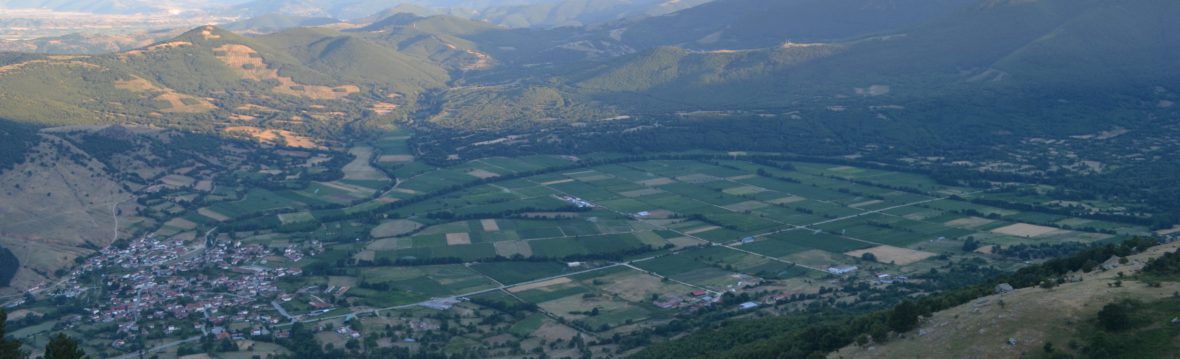
Since the village of Zelenic was isolated and it had a mix of Christian and Muslim people, banditry was kept in check by shear will to live in peace and harmony. Once people realized they needed each other to survive not only the harsh physical environment, but also, the constant encroachment of other people and lawless Ottoman. The inhabitants of Zelenic developed a bond and understanding that if they were to protect their interests, it would have to be coordinated together. There are numerous stories of this alliance that will be identified in the 1800’s and 1900’s sections.
The valley and land which Zelenic controlled and occupied stretched from the northern mountain below Nymfaio (Neveska) to the western boundary south of Lehovo (Eleovo) and the southern boundary just north of Variko (Mokreni). In fact, according to oral history, when a group of Albanians came into the valley searching for a place to settle, they were discovered by the inhabitants of Zelenic. Instead of running them out of the area, the elders gave them land on the slopes of the western mountains of the valley. They said, “give them the left side of the mountain – na levo strana. ” Hense the word “Eleovo.“ The same may have occurred with the Macedonian settlers of Asprogia (Srebreno). We can assume that the inhabitants of Asprogia settled in this area after the Zelenic inhabitants due to the fact that they own very little land in the valley as they are pushed up against the mountainside. The villagers of Zelenic were able to exert their influence and control of the valley not only because they were the first inhabitants, but also because they had a mix of Muslims who may have presented an intimidating factor to any encroachment into the valley. Even though the inhabitants of Zelenic ruled over the valley, life was very difficult.
To be sure, conditions in the rural areas of Macedonia were deplorable. For many years, life had been rendered intolerable by the various forms of oppression, the tax-burdens, the plundering and the extortion practised to the detriment of the Christian inhabitants and even of the poorer Muslims. To complete the picture of this grim period one must add the countless fears, large and small, that beset the lives of the non-Muslim inhabitants, and the frequent epidemics that ravaged the cities, like the one that swept Kastoria, Skopje, Bitola, Veroia and other places in 1611.
The political situation in Macedonia emerges from the accounts of travellers and Turkish documents of that period. The resistance offered by the inhabitants of the region was bristling with brigand activity that made travelling a real danger.
Amid such conditions of unrest, it was only to be expected that every form of violence and fraud should thrive. As a result, the Sultan in 1619-1620 issued a ferman (was a royal mandate or decree issued by a sovereign – a form of secular and administrative law considered to be a valid extension of religious law as a result of the ruler’s right to exercise legal judgment on behalf of the community) instructing the Kadis (refers to judges who presided over matters in accordance with Islamic law) of Monastir (Bitola), Prilep, Florina (Lerin), Kastoria (Kostur), Argos Orestikon (Hrupista), Naselic, Veles, Kicevo, Prespa, Ohrid, Djuma, Pazari, Sari Gol (Zelenic area) and Servia to take the necessary measures to deal with the situation. Between 1622-1645 various Hayduks (Macedonian brigands) were active in north-west Macedonia.
From the study of various Turkish documents, aspects of the life of the inhabitants details the history of the Macedonia people of the region. Such aspects as:
- the appointment of muezzins (the person appointed at a mosque to lead and recite the call to prayer for every event of prayer and worship in the mosque) and teachers
- loans contracted by individuals or more usually, by villagers
- about lease, purchase, or sale of property
- complaints from inhabitants
- verdicts of the Muslim courts
- restrictions on tobacco growing
- pronouncements about the activities of brigands
- the arrest and sentencing of robbers
The situation was clearly anything but favourable for a normal economic development of the rural areas, small towns, or the larger cities. Crop failures, famine and high prices alternating with good harvests and low prices indicated a lack of economic organization. The routes of communication were far from safe, and the development of trade met with severe obstacles.
On account of the activities of the brigands and rebels, a large number of the inhabitants were leaving the cities and villages as they moved to other locations. In their efforts to survive, those who stayed behind drew closer together within the reassuring circle of the community and the church, where the old Macedonian Byzantine way of life was still preserved.
Up to this moment (middle of the 17th century) the situation regarding the ecclesiastical affairs in the archbishopric of Ohrid had been relatively free from trouble. However, the economic troubles saddled the archbishopric with many debts, for the Turks had seized many of its estates and bled it with the continual levying of taxes. Various missions from Macedonia (Kastoria -Kostur in 1648) travelled to Russia to solicit donations for the restoration of monasteries and churches.
From 1676, moreover, there is a marked tendency on the part of the Patriarchs to interfere in the internal affairs of the archbishopric and to set up their own candidates who were not Macedonian. The new ‘foreign’ archbishops of Ohrid (Phanariots – Greeks) were the cause of a great deal of ill-feeling. The constant interference by the Patriarch from Istanbul (Constantinople) violated the right or freedom of the Autocephalous Macedonian Archbishopric of Ohrid. Under Turkish rule, the independent Macedonian church guarded the Macedonian nation and its national civilization from the influence of the Greek Church, just as it had guarded them from the Turks. This was to change – in a bid to neutralize the Macedonian Ohrid Archbishopric, the Greek Patriarchate took steps to abolish them in 1767. (Refer to the 1700s section)
By the end of the 1600s, even though many Macedonian villages had been abandoned due to either Ottoman policies, Albanian bandit attacks, or repeated violence by Yoruks (descendants of the first Ottoman conquerors), Zelenic remained peaceful. Oral history claims of the harmony between both the Muslims and the Christians of the village.
This was not the case in the rest of western Macedonia. The complaints of the Christians raised against these Turks were noticed by the Sultan, that on December 27, 1695, he declared a firman, according to which the Sultan ordered that a stop should be put to the violence practiced by some Yokuk bandits.
Travellers Accounts of Kastoria (Kostur), Florina (Lerin) & Bitola (Monastir)
Travellers accounts covering Macedonia at this time period documented that the Macedonian inhabitants retained numerous traditions harking back to the illustrious kingdom of the ancient Macedonian rulers, Philip and Alexander the Great. They continued to keep alive, by way of centuries old tradition, the splendid legend.
Florina (Lerin) – was divided into six districts containing 1,500 houses in all, spaced widely apart. It had 14 mosques, 3 madrases (islamic school), a tekke (monastery) of dervishes (who chose or accepted material poverty), 7 elementary school, 2 bath houses and 2 large inns. The town did not posses a covered market, but had about a hundred business premises. Florina was full of gardens, watered by a tributary of the river Erigon. The majority of the villages around Florina were inhabited by Yoruk Turks according to Evliya Celebi. The Yokuks of the Egri Budjak district lived in the old military style and enjoyed their old tax privileges. Evliya praised the coarse woolen cloth they wore and their handsome cloaks.
In the same district Evliya Celebi came upon the little hamlet of Sari Gol, with 300 houses. It was the hass (estate) of the Sultana Fatima, the daughter of Sultan Ahmed I (1603-1617). Zelenic is located in the Sari Gol area and this may be the original site of Sebalci with its ancient Macedonian, then Roman and finally Turkish hot spring.
Kastoria (Kostur) – was yet another Hass of the Sultana, consisting a kaza of 150 akces with 110 villages within its jurisdiction. A garrison commander with a force of 50 soldiers was based in its imposing castle, which was built on the western edge of the Lake. The houses of Kastoria (Kostur), which numbered some 2500, looked towards the lake. The number of Christian churches was large (Evliya Celebi says there were 70) and they had a host of priests and other clerics. There was a single Muslim school, since the Muslims were few in number. In the majority of its 100 shops fish-paste and various kinds of general groceries were sold. The wine must which came from the vineyards of the surrounding mountains was especially famous. The Macedonian bandit Pano was active in this region as he inflicted terror upon the Turks. The mountains surrounding Kastoria (Kostur) were inhabited by a stock of people derived from a mixture of Macedonians and Vlachs.
Bitola (Monastir) – a large city, full of greenery and built on the lower slopes of Pelister mountain above the River Crna (Erigon). It was divided into 21 districts, with 3000 houses that were mostly two storied and roofed with tiles. it too had a hass belonging to Fatima and was administered by her voivoda (warlord). It was moreover, the capital of the surrounding region and had 360 villages under its jurisdiction. The government officials in residence included the kahya of sipahis, the Serdar of Janissaries, the voivoda of the city and the kahya of the city. According to Evliya Celebi, there were 70 mosques and 9 medreses. This did not prevent a certain Macedonian “hayduk” (brigand) named Pano from making a secret entry into the city with 500 men, breaking down the market gates and running off with items valued at a high rate for the time period. This happened while the traveller Evliya Celebi was in town. Of the 900 business establishments, in the city, those of the turners, and the tailors were particularly outstanding. Bitola (Monastir) was famous for its flax, which was finer that that from Egypt. Another traveller named Hadji Kalfa states that its inhabitants were mostly Macedonians.
Lerin, Kostur and Monastir (as they were know back then) would have been the major urban areas that the inhabitants of Zelenic would have travelled to either buy/sell goods or even find work. Since Kostur was the centre that Zelenic was administered by, one would presume the villagers would have traveled to this city more often. According to Ottoman statistics, Kostur was a city where Christians comprised from 90 to 100 % of the population. In the mid-sixteenth century Kostur had 1,003 Christian households, 57 Muslim, and 17 Jewish. The major breakdown of revenue from Kostur was yielded from vineyards and to a lesser extent, from cereals. Just as Kostur administered the area around Zelenic, the vilayet of Monastir was in charge of the region, which included, Lerin, Veles, Prilep, Kostur, Prizren and Tetovo. All three cities also had a Jewish element that contributed to the guilds and trade sectors. This may be why some present day Macedonians have a Jewish connection on their DNA tests.
Activities of Brigands (Hayduks) during the second half of the 17th Century: during this period, disorder and anarchy was rife throughout the rural areas of Macedonia. The situation brought fearful economic and social repercussions . These troubled conditions persisted up to the end of the 17th century as a large number of inhabitants (Macedonians) became brigands. The appearance of brigands mainly in Western Macedonia [Kostur (Kastoria), Lerin (Florina), Sari Gol clearly bears the stamp of retaliation against the conqueror. In 1669, the traveller Brown, mentions the Macedonians in the Pindus mountains as brave, daring and desperate, and that they never failed to find an opportunity to attack the Turks. In the dangerous passes, the local communities used to station men with drums up on the heights, who by means of drumming communicated that all was safe and thus reassured the travellers who passed with uneasy minds through the mountains.
To combat the high levels of bribandage the Ottoman created a militia called the Armatoli. This was a military/police that had its origins in the Byzantine period of Macedonian history. These regions were difficult for Ottoman authorities to govern due to the inaccessible terrain, such as the Pindus mountains of Western Macedonia, where the first Armatoli were established in the 15th century. Over time, the roles of the armatoli and brigands became blurred, with both reversing their roles and allegiances as the situation demanded, all the while maintaining the delicate status-quo with the Ottoman authorities. They were armed men who were enforcing the law according to their desires where police and military functions were provided in exchange for titles of land. By 1699, in the reign of Mustafa II (1695-1703) Christian Armatoli were replaced with Muslims, but this measure does not appear to have any success.
For the inhabitants of Zelenic, life could not have been any more complicated. Both Christians and Muslims had to juggle the hardships encountered from the struggle for survival to the oppressive nature of the system that enslaved them both.
Sources:
- Agoston, G. (2009, May 21). Hajduk. Retrieved from https://www.wikizero.com/en/Hajduk
- Georgevitch, T. R. (1918). Macedonia. London, England: George Allen & Unwin Ltd.
- Inalcik, H. (1973). The Ottoman Empire: The Classical Age 1300-1660.
- Todorov, N., & Todorov, N. T. (1983). The Balkan City, 1400–1900. Seattle, WA: University of Washington Press.
- Vakalopoulos, A. E. (1973). History of Macedonia, 1354-1833. Thessaloniki: Institute for Balkan Studies.
 Sklithro-Zelenich-Sebalći